

Why Virtual Coaching Certification is Your Gateway to a Thriving Career
Virtual coaching certification is an online training program that equips you with the skills, knowledge, and credentials to become a professional coach from home. If you’re exploring certification options, here’s what you need to know:
Quick Overview: What to Look for in Virtual Coaching Certification
- Accreditation: Choose programs recognized by the International Coaching Federation (ICF) for global credibility.
- Duration: Programs range from 3-day intensives to 6-month comprehensive courses (60-175+ training hours).
- Cost: Expect to invest between £90-£4,200+ depending on program depth and accreditation level.
- Format: 100% online with live virtual sessions, self-paced modules, and mentor coaching.
- Career Paths: Life coaching, executive coaching, career coaching, wellness coaching, and leadership coaching.
The shift to virtual learning is a revolution. The e-learning market is projected to reach $60 billion in 2025, as professionals like you choose flexible, accessible paths to career change. According to a Statista report on e-learning, online learning platforms continue to see rapid global growth.
Virtual coaching certification lets you learn from world-class instructors while maintaining your current life commitments. You can connect with aspiring coaches globally, practice skills in real-time, and build a supportive community—all without leaving home.
However, not all virtual certifications are created equal. With many programs available, choosing the right one means understanding key factors like ICF accreditation, hands-on practice, mentor coaching, and post-certification support. As one small business owner confidently stated about their program: “Anyone who goes through this course and uses the tools will have excellent coaching skills.”
The journey to becoming a confident professional starts with selecting a certification program that matches your learning style, career goals, and personal values.
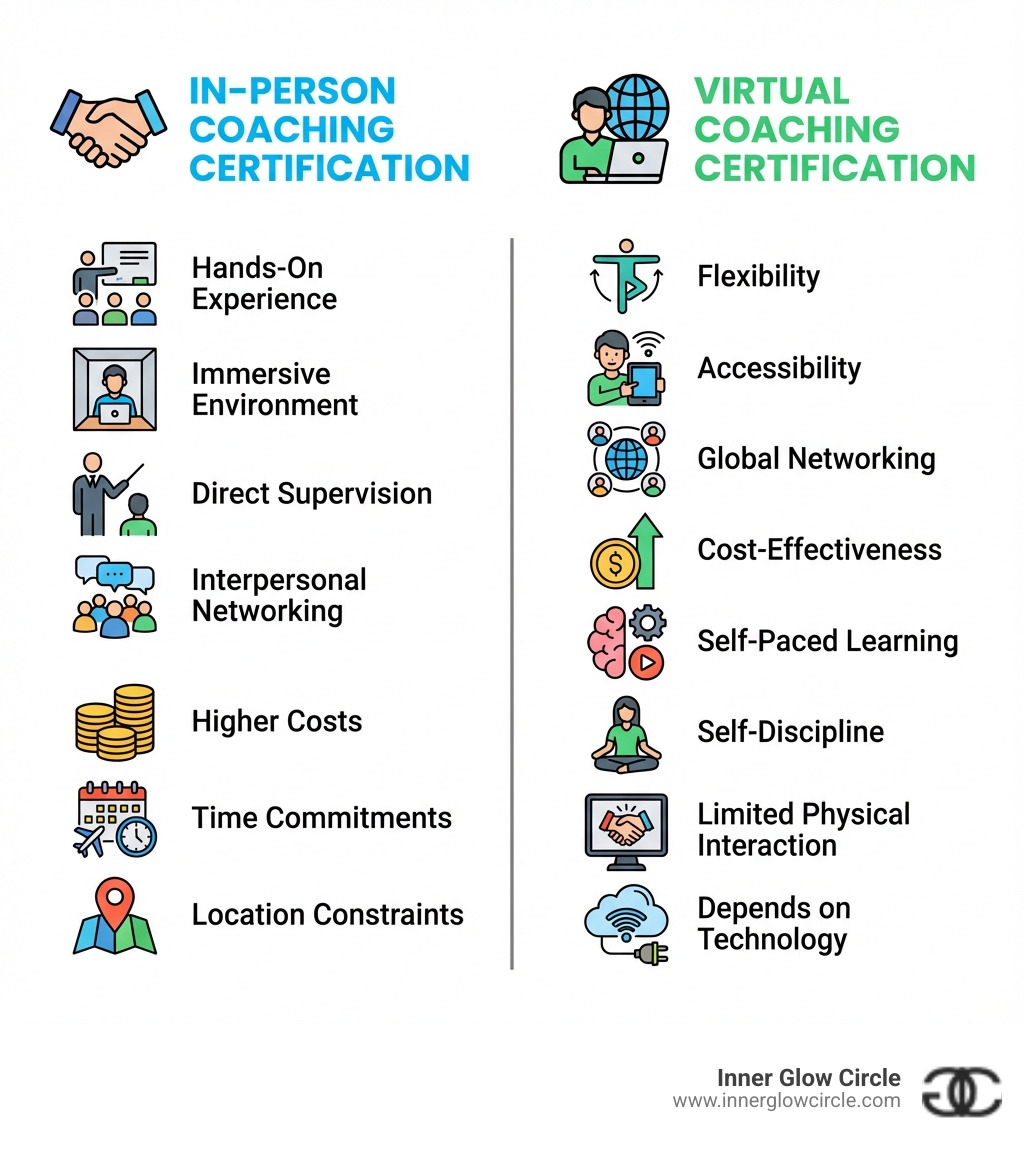
Virtual coaching certification terms made easy:
The Rise of Virtual Learning: Benefits vs. Challenges
Professional development is more accessible than ever. This is especially true for virtual coaching certification, which has seen a surge in popularity as part of a fundamental shift in how we learn and grow.
Unlike traditional programs that require physical attendance, virtual certifications use technology to deliver education remotely. This allows you to learn from anywhere with an internet connection. This distinction brings a host of benefits and a few challenges to consider.

Key Benefits of Pursuing a Virtual Coaching Certification
Choosing a virtual coaching certification offers compelling advantages for aspiring coaches:
- Flexibility and Accessibility: Virtual programs allow you to learn while juggling your job, family, or travel. You can tailor your learning schedule to fit your life, making it ideal for busy professionals or those with geographical limitations.
- Cost-Effectiveness: Virtual programs often reduce costs by eliminating expenses for travel, accommodation, and daily commutes. These savings can make a significant difference to your budget, allowing you to invest more in your education.
- Global Networking Opportunities: Online learning connects you with a diverse cohort of students from around the globe. This helps you build a professional network that spans cultures and industries, offering varied perspectives and potential partnerships.
- Diverse Learning Resources: Virtual platforms provide a rich mix of materials, including interactive modules, videos, digital libraries, and online forums. This multimedia approach caters to various learning styles, making the experience more engaging.
- Self-Paced Learning (Often): Many programs include a self-paced component, giving you control over your learning speed. This can reduce stress and improve comprehension, ensuring you master the material.
Potential Drawbacks of Online Certification Programs
While the benefits are plentiful, it’s important to consider the potential challenges of virtual coaching certification:
- Need for Self-Discipline and Motivation: Online learning demands a high degree of self-discipline. You are responsible for managing your time, staying on track, and engaging actively without direct physical supervision.
- Potential for Distractions: Your home environment can be full of distractions. Creating a dedicated, quiet study space is crucial to minimize interruptions and stay focused during virtual sessions.
- Limited Physical Interaction: Some people miss the spontaneous energy of in-person interactions. Building rapport through a screen can feel different, which may be an adjustment for those who thrive on face-to-face networking.
- Technology Dependency: Successful virtual learning depends on reliable technology. A stable internet connection and a functioning computer are non-negotiable. Technical glitches can be disruptive, so good tech support is essential.
Key Factors for Choosing Your Virtual Coaching Certification
So, you’re convinced that a virtual coaching certification could be your path to a fulfilling career. With so many options, how do you find the program that’s right for you? We’ve identified some critical factors to consider:
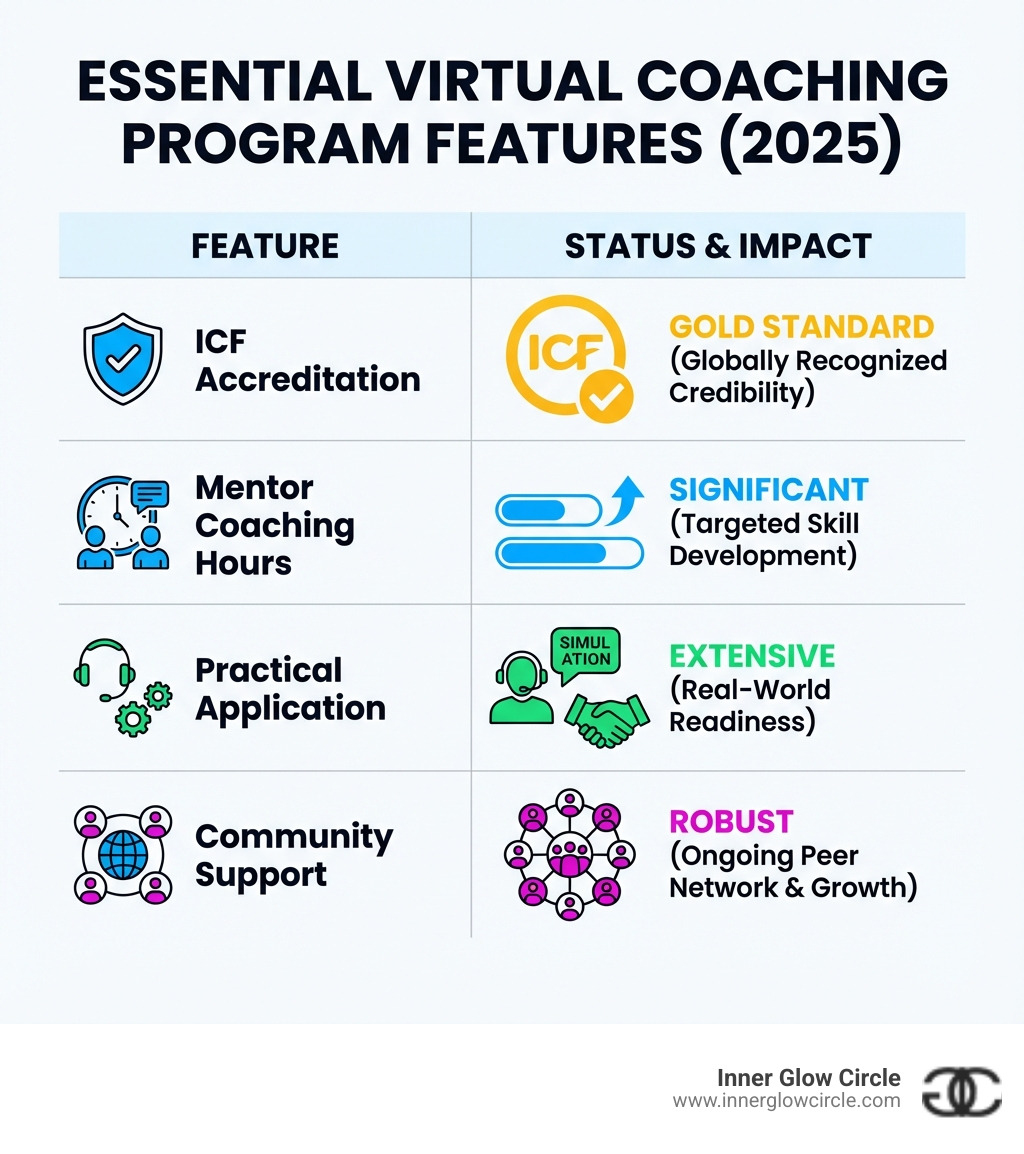
The Critical Role of Accreditation
For a virtual coaching certification, accreditation is the bedrock of your professional credibility. It’s the gold standard that shows clients and employers your training meets rigorous, internationally recognized benchmarks.
The undisputed leader in this space is the International Coaching Federation (ICF). For over 30 years, the ICF has shaped the coaching landscape. An ICF-accredited program has undergone a thorough review to ensure its curriculum, instructors, and methods align with the highest industry standards.
Why does this matter?
- Credibility and Trust: An ICF-accredited certification instantly boosts your credibility. As one institution states, choosing an ICF-accredited institute is “one of the wisest choices a life coach can make.”
- Professional Standards: Accreditation ensures your training covers core competencies and ethical guidelines essential for effective coaching.
- Global Recognition: ICF credentials (like ACC, PCC, and MCC) are recognized worldwide, opening doors to global coaching opportunities.
- No Distinction for Virtual: The ICF makes no distinction between virtual and in-person training for credentialing. A virtual certification is just as valuable as an in-person one.
As you research programs, always look for their ICF accreditation status.
Understanding the Curriculum of a Virtual Coaching Certification
Beyond accreditation, the heart of any virtual coaching certification is its curriculum. A robust curriculum should be comprehensive, engaging, and applicable to real-world coaching.
Here are key components of a high-quality curriculum:
- Core Coaching Competencies: These are the fundamental skills every coach needs, including active listening, powerful questioning, creating awareness, and managing client progress.
- Ethical Guidelines and Professional Practice: A strong program will thoroughly cover coaching ethics, confidentiality, and professional responsibility to ensure you coach with integrity.
- Coaching Models and Methodologies: You’ll learn various frameworks and psychological theories (e.g., from NLP, positive psychology) to build a versatile toolkit for diverse client needs.
- Practical Skill Development and Application: Coaching is a hands-on profession. Look for programs that emphasize practice through:
- Live Virtual Practice Sessions: Opportunities to coach and be coached by peers in real-time.
- Mentor Coaching: Required by many accredited programs, this involves guidance and feedback from experienced coaches.
- Supervised Coaching: Observation and feedback from instructors to ensure effective skill development.
- Business Builder Modules: Many top programs include modules on the business of coaching, covering topics like branding, marketing, client acquisition, and setting rates.
- Niche Specializations: Some programs offer specializations in areas like executive, leadership, career, or wellness coaching, which can help you target your services.
- Self-Study and Reflection: A good curriculum encourages independent learning through readings, journaling, and self-assessment to foster continuous self-development.
Is an Online Certification Right for Your Goals and Learning Style?
Choosing a virtual coaching certification is a personal decision. It’s not about whether online is “better” than in-person, but about finding the format that best suits you. Before applying, take some time for self-reflection.
Here are key questions to ask yourself to determine if a virtual program is the right fit:
- What are my learning style preferences? Do I prefer the flexibility of self-paced learning, or do I thrive in a more structured environment? Am I comfortable with videos, online discussions, and virtual practice?
- How do I manage my time and self-motivation? Am I good at setting my own schedule and minimizing distractions at home? Online learning demands a high degree of self-discipline.
- What are my specific career objectives? Does the program’s curriculum and accreditation align with the type of coaching I want to do and the clients I want to attract?
- How comfortable am I with technology? Do I have a stable internet connection, a reliable computer, and a willingness to use online platforms like Zoom? A certain level of tech-savviness is beneficial.
- What’s my budget? Consider the tuition, required software, and the time you’ll be dedicating to the program.
- How important is in-person networking for me? While virtual programs offer global communities, some people prefer the face-to-face interactions of in-person events.
If you value flexibility, global connections, and self-directed learning, a virtual coaching certification is likely a fantastic fit. The goal is to choose a program where you’ll feel supported, engaged, and empowered to learn.
Navigating Your Career After Certification
Congratulations on completing your virtual coaching certification! You’ve honed your skills and are ready for what’s next. The beauty of coaching is its versatility, and a virtual certification opens up a world of possibilities for your career.
Career Paths for Certified Virtual Coaches
Your virtual coaching certification is a passport to a variety of fulfilling roles. Here are some common and emerging career paths:
- Life Coach: Help individuals achieve personal goals, improve relationships, and find purpose. A virtual certification allows you to coach clients anywhere.
- Executive Coach: Work with leaders and managers to improve leadership skills, strategic thinking, and team dynamics. Virtual executive coaching is in high demand.
- Career Coach: Guide clients through career transitions, job searches, and professional advancement.
- Business Coach: Support entrepreneurs in developing strategies, improving performance, and achieving business growth.
- Wellness Coach / Health Coach: Focus on clients’ physical, mental, and emotional health, including nutrition, fitness, and stress management.
- Leadership Coach: A specialized form of executive coaching focused on leadership development and fostering strong team cultures.
- Digital Wellbeing Coach / Virtual Team Building Coach: A growing niche helping individuals and teams thrive in remote work environments and prevent burnout.
The skills you gain are transferable, allowing you to tailor your practice to your passions.
Leveraging Your Virtual Coaching Certification for Business Success
Turning your virtual coaching certification into a thriving business requires strategic action. Here’s how to leverage your new credentials:
- Build a Strong Online Presence: Create a professional website and establish a presence on relevant social media platforms like LinkedIn to showcase your expertise.
- Use Your Certification for Credibility: Highlight your ICF accreditation on your website and marketing materials to signal professionalism and build trust.
- Define Your Niche and Ideal Client: Specializing helps you stand out. A clear niche makes your marketing more effective and attracts the right clients.
- Set Your Rates Confidently: Research what other coaches in your niche are charging. Your certification empowers you to command professional rates for the value you provide.
- Develop a Client Acquisition Strategy: Actively seek clients through virtual networking, offering findy calls, or collaborating with other professionals.
- Accept Continuing Professional Development: The coaching world is always evolving. Stay current by attending webinars, reading industry research, and pursuing advanced training.
- Join Coaching Communities: Engage with alumni networks for ongoing support, peer coaching, and business collaborations. Many programs offer continued business growth support.
Frequently Asked Questions about Virtual Coaching Certifications
Here are some of the most common inquiries we hear about virtual coaching certification:
How long does it take to get a virtual coaching certification?
The duration of a virtual coaching certification program varies significantly. Accelerated programs can be as short as a few days or a couple of months, focusing on foundational skills. More comprehensive, ICF-accredited programs typically range from 3 to 6 months or longer, requiring 75-175+ hours of training that includes live sessions, self-study, and mentor coaching. The key is to look at the total number of training hours and how they are structured.
Is a virtual coaching certification as valuable as an in-person one?
Absolutely. A virtual coaching certification is on par with an in-person one. Here’s why:
- Accreditation is Key: The value comes from the program’s accreditation, not its delivery method. The International Coaching Federation (ICF), the leading global credentialing body, makes no distinction between virtual and in-person training when assessing programs or granting credentials (ACC, PCC, MCC).
- Employer and Client Perception: Many clients and organizations now prefer virtual coaching for its convenience. A virtual certification also demonstrates your proficiency in online environments, a crucial skill for modern coaches.
- Skill Application: The core coaching skills you learn are universal and apply equally whether you’re coaching in person or online. Virtual training provides excellent practice for building rapport in a digital context.
The choice between virtual and in-person comes down to your learning style and practical needs, not the inherent value of the certification.
What is the difference between being ‘certified’ and being ‘credentialed’?
This is a common point of confusion. Here’s the difference:
- Certified: You become “certified” by a specific training institution after completing its program requirements. You receive a certificate from that school.
- Credentialed: This designation comes from an independent professional body, like the International Coaching Federation (ICF). To become credentialed, you must complete an approved training program, log a specific number of client coaching hours, receive mentor coaching, and pass a performance evaluation or exam.
Think of it this way: certification is like a diploma from a university, while a credential is like a professional license. Pursuing an ICF credential demonstrates a higher commitment to professional standards and expertise.
Your Coaching Journey Starts Now
Starting a career as a coach is a transformative experience. A virtual coaching certification offers a flexible, global pathway into this dynamic field.
As we’ve explored, the key to finding your perfect program lies in considering these crucial elements:
- Accreditation: Prioritize ICF-accredited programs for global recognition and high professional standards.
- Curriculum: Look for comprehensive training covering core skills, ethics, practical application, and business development.
- Personal Fit: Choose a program that matches your learning style, motivation, and comfort with technology.
- Community: Value programs that foster a supportive network of peers and mentors.
At Inner Glow Circle, we understand the power of a supportive, transformative space for women to achieve confidence and success. We believe in empowering you to become the best coach you can be, ready to make a profound impact on the world.
Are you ready to lift your skills, connect with a vibrant community, and step into your power as a certified coach?
Start your journey to becoming a paid coach


