

Why Understanding Self-Assessment Matters for Your Growth
Self assessment definition: Self-assessment is the process of evaluating your own abilities, performance, skills, and progress against specific criteria or standards. It involves actively reflecting on your work, identifying what you’ve done well and where you can improve, and making informed decisions about your next steps for growth.
Quick Answer:
- What it is: Judging your own performance, skills, or work
- Key components: Setting criteria, reflecting honestly, making adjustments
- Primary goal: Improving yourself through active, intentional reflection
- Where it’s used: Education, workplace, personal development, coaching
Have you ever felt stuck, unsure if you’re moving in the right direction? Maybe you’re wondering if you have what it takes to launch that coaching business or if your skills measure up. You’re not alone. That nagging self-doubt often comes from not having a clear, honest picture of where you truly stand.
Self-assessment is your tool for clarity. It’s not about harsh self-criticism or perfectionism. Instead, it’s about taking control of your own learning and growth by becoming a realistic judge of your own performance. When you master self-assessment, you open up the ability to identify your genuine strengths, spot areas that need work, and chart a path forward based on reality—not fear or wishful thinking.
This matters because you can’t improve what you don’t measure. Self-assessment develops your metacognitive skills—your ability to think about your own thinking. It transforms you from a passive learner waiting for someone else’s validation into an active architect of your own success.
Whether you’re a student evaluating an exam, an employee preparing for a performance review, or an aspiring coach building confidence in your abilities, self-assessment gives you the power to understand yourself deeply and grow intentionally. It’s the foundation of lifelong learning and professional development.

What is the Core Self-Assessment Definition?
At its heart, the self assessment definition revolves around an individual’s active engagement in evaluating their own performance or learning. It’s a dynamic process, not a one-time event, where we reflect, judge, and then act to improve. Panadero and Tapia (2017) highlight this beautifully, stating that self-assessment “refers to the process in which learners actively reflect on and decide if their work has met the given criteria and standards, with the purpose of forming timely adjustments and improvements.” This means we’re not just looking back; we’re looking forward, too, planning how to do better next time.
The process often involves comparing our work against predefined standards or criteria. This isn’t about guesswork; it’s about making informed judgments about the extent to which we’ve met those criteria. This involvement in identifying standards and making judgments is a defining characteristic, as noted by Boud (1995).
We can think of self-assessment as falling into two main categories: formative and summative. Formative self-assessment is like checking your GPS during a road trip – you’re constantly adjusting your route to stay on track. It’s about ongoing reflection and immediate adjustments to improve performance while learning is still in progress. Summative self-assessment, on the other hand, is like reviewing your entire journey after you’ve arrived, to see how well you did overall and what you learned for future trips. It involves evaluating a completed product or performance, often to assign a final judgment or grade. While both are valuable, formative self-assessment is particularly powerful for continuous growth.
The Academic Self-Assessment Definition
In an academic setting, the self assessment definition takes on a specific meaning, emphasizing the student’s central role. As Sargeant (2008) explains, “Self-assessment is a wide variety of mechanisms and techniques through which students describe and possibly assign merit or worth to (i.e., evaluate) the qualities of their own learning processes and products.” This isn’t just about getting a grade; it’s about developing a deeper understanding of one’s own learning journey.
The core idea is student involvement in identifying and applying criteria to their work. Boud (1995) famously stated that “The defining characteristic of self-assessment is the involvement of students in identifying standards and/or criteria to apply to their work and making judgments about the extent to which they have met these criteria and standards.” This involvement is crucial for developing what we call self-regulation and metacognition.
Self-regulation refers to the ability to monitor and control our own behavior, thoughts, and emotions to reach our goals. Self-assessment helps students set goals, track their progress, and flexibly adjust their plans—all hallmarks of self-regulation. Metacognition, or “thinking about thinking,” is improved as students critically analyze their own learning strategies and outcomes. This ability to objectively reflect on and critically evaluate their own progress and skill development is vital for students to identify gaps in their understanding and capabilities, and ultimately, to learn how to improve their performance independently.
A Practical Self-Assessment Definition for Everyday Life
Beyond the classroom, the self assessment definition expands to encompass every aspect of our lives. It’s about taking a holistic look at ourselves, our aspirations, and our current reality to ensure we’re living authentically and purposefully. This is where personal growth truly begins.
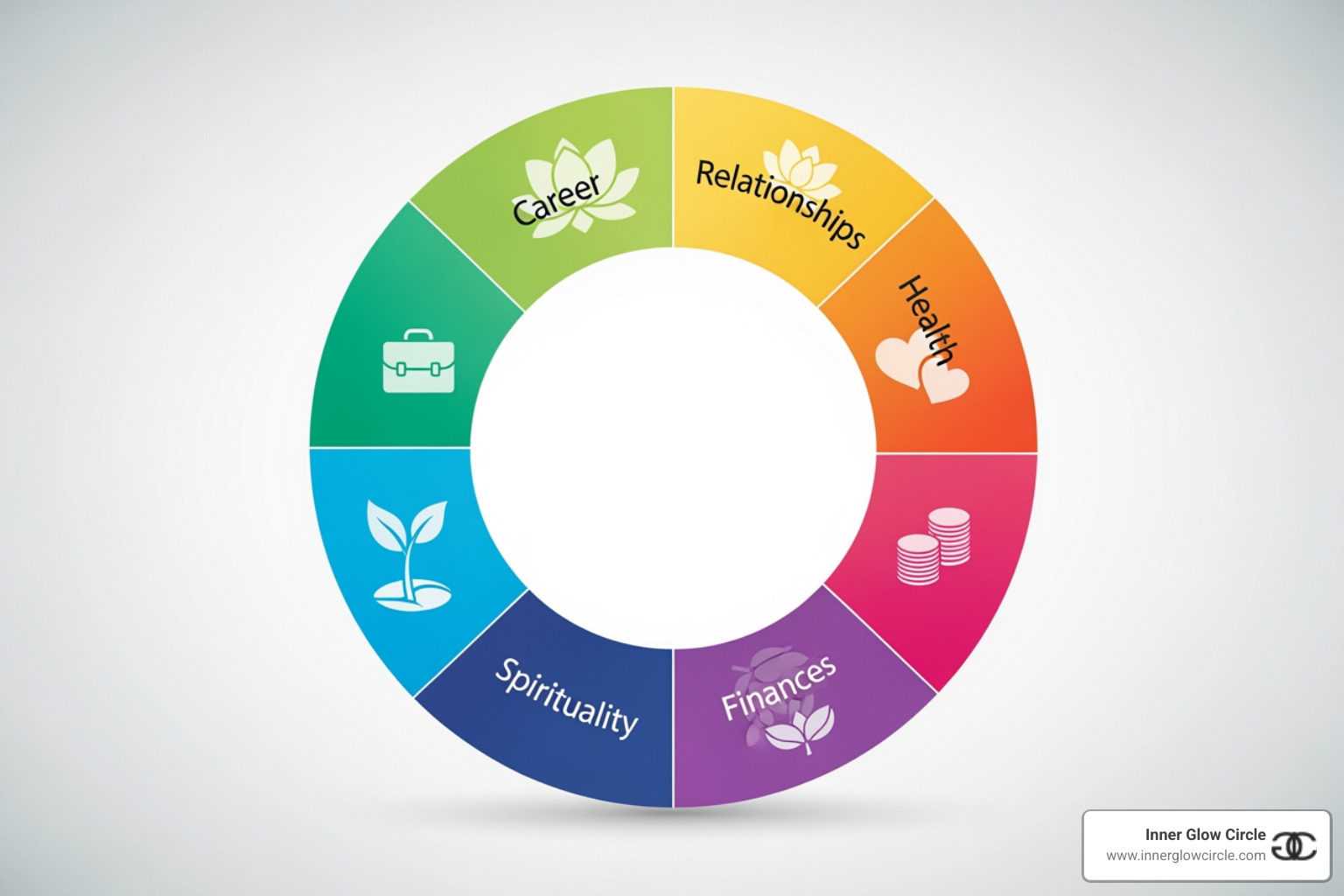
Imagine looking at a “Wheel of Life” diagram, where each spoke represents a different area of your existence—career, relationships, financial health, personal growth, spiritual well-being, and so on. A practical self assessment definition in this context means taking stock of your life in each of these areas. Are you satisfied with the way things are going? If not, a broad self-assessment can help you identify the source of your discontentment and pinpoint possible steps to resolve it. This might involve:
- Career assessment: Evaluating your strengths, goals, areas for improvement, interests, and workplace values to ensure your professional path aligns with your passions.
- Relationship assessment: Reflecting on the quality of your connections, your communication patterns, and your role in fostering healthy interactions.
- Financial health: Reviewing your income, spending habits, and investments to ensure you’re on track to meet your monetary goals.
- Personal values: Identifying the core principles that guide your decisions and ensuring your actions are consistent with who you truly are.
This kind of personal self-assessment empowers you to step back from external evaluations and center your self-views on your own opinions, creating your own standards for success and happiness.
The Transformative Benefits of Self-Assessment
Embracing self-assessment can be truly transformative. It’s like having a personal coach by your side, constantly prompting you to reflect, learn, and grow. The benefits extend far beyond simply identifying what’s wrong; they ignite a powerful cycle of improvement and empowerment.

For Personal Growth and Lifelong Learning
For us, at Inner Glow Circle, personal growth is at the core of everything we do. Self-assessment is an indispensable tool in this journey. It cultivates:
- Increased self-awareness: We become more attuned to our internal states, our strengths, and our areas for development. This improved self-knowledge is the first step toward emotional intelligence and effective self-management.
- Developing judgment: By constantly evaluating our own work against criteria, we hone our ability to make sound judgments about quality and effectiveness, not just for ourselves but for others too.
- Identifying strengths and weaknesses: It allows us to honestly acknowledge what we excel at and where we need to put in more effort. This accuracy, even if it reveals less flattering aspects, is crucial for growth.
- Fostering autonomy: When we learn to assess ourselves, we become less reliant on external validation. We take ownership of our learning and development, empowering us to become self-directed learners.
- Improving self-regulation: Self-assessment is key to self-regulation, which includes setting goals, deciding how to achieve them, tracking progress, and flexibly adjusting plans as necessary. This builds resilience and adaptability.
- Goal setting: With a clear understanding of our current standing, we can set more realistic, meaningful, and achievable goals.
- Building confidence: Success built on genuine self-awareness and self-correction leads to authentic confidence, not just a fragile ego boost. As Andrade and Valtcheva (2009) highlight, self-assessment is crucial for promoting learning and achievement. It helps us feel more capable and in control of our own destinies.
For Professional and Academic Success
The benefits of self-assessment ripple into our professional and academic lives, creating a foundation for excellence and continuous improvement.
- Improved performance: Whether it’s in a classroom or a boardroom, individuals who regularly self-assess consistently outperform those who don’t. For instance, a study of first-year medical students found that self-assessment improved exam scores (Sharma et al., 2016).
- Developing transferable skills: Self-assessment isn’t just about a specific task; it builds critical thinking, problem-solving, and reflective practice – highly valued skills in any field. We learn to objectively reflect on and critically evaluate our own progress and skill development, discern how to improve, and learn independently (Race, 2001).
- Fostering a growth mindset: It shifts our focus from simply getting a grade or completing a task to continuous learning and improvement, embracing challenges as opportunities for growth.
- Preparing for performance reviews: In the professional world, self-assessment is a vital part of performance reviews. It allows us to articulate our achievements, identify areas for development, and align our goals with organizational objectives.
- Teacher self-assessment: Even educators benefit. Teacher self-assessment is recognized as a powerful mechanism for facilitating professional growth (Ross & Bruce, 2007), allowing them to refine their teaching methods and better support student learning.
How to Conduct a Powerful Self-Assessment: A 5-Step Guide
So, how do we actually do this self-assessment thing? It’s not just about looking in a mirror and saying, “Yep, that’s me!” It’s a structured process that, when done right, yields profound insights.
Step 1: Develop Clear Criteria
The first step to any effective self assessment definition is knowing what you’re assessing against. Without clear criteria, self-assessment can feel like trying to hit a target in the dark.
- Identify goals: What are you trying to achieve? What does success look like for this specific task, skill, or area of your life?
- Articulate expectations: Break down your goals into measurable, actionable components. For academic work, this might involve learning outcomes; for personal goals, it could be specific behaviors or habits.
- Use rubrics: Rubrics are fantastic tools for this. They outline different levels of performance for specific criteria, giving you a clear benchmark. Deakin University’s Peer and Self-Assessment guidelines emphasize the importance of assessment rubrics in higher education.
- Involve learners in criteria development: If you’re facilitating self-assessment for others (or even for yourself!), getting involved in creating the criteria can significantly improve understanding and ownership. This promotes assessment literacy and a shared understanding of what’s expected.
- Set standards: Decide what “good enough” or “excellent” means for each criterion. This provides the framework for your evaluation.
Step 2: Prepare for Honest Reflection
Honest reflection can be tricky. We’re often our own harshest critics, or, conversely, we might be prone to overestimating our abilities. Creating a safe mental space for this process is crucial.
- Provide examples: If you’re guiding others, show them examples of what good self-assessment looks like. Share both strong and weaker reflections to illustrate the depth required.
- Model the process: Talk through your own thought process as you evaluate a task. This “inner dialogue” helps explain the reflective process. For example, when tackling a writing assignment, an instructor might model how they would draft, revise, and then assess their own work against a rubric.
- Create a safe space: Emphasize that self-assessment is for learning and growth, not judgment. Reassure yourself or your students that it’s okay to acknowledge shortcomings; it’s how we improve.
- Address student reluctance: Students might be reluctant to self-assess, perhaps perceiving it as the teacher’s job or lacking confidence. Explain the rationale and benefits clearly.
- Overcome lack of confidence: For those who struggle with confidence, focus on specific, observable behaviors rather than vague feelings. Break down the assessment into smaller, manageable parts.
Step 3: Incorporate and Adapt to Feedback
Self-assessment doesn’t happen in a vacuum. External feedback acts as a vital calibration tool, helping us refine our internal judgment.
- External feedback: This comes from sources outside ourselves—instructors, peers, mentors, or even the results of our actions. It’s a mirror that shows us how others perceive our performance.
- Instructor feedback: For learners, feedback from instructors on their self-reflections is incredibly valuable. It helps identify whether they’ve overestimated or underestimated their work, providing motivation and guidance for adjustment.
- Peer feedback: Engaging with peers to assess each other’s work can also sharpen our own self-assessment skills. We learn to apply criteria more objectively.
- Identifying over/underestimation: It’s common for individuals to either overestimate their abilities (especially lower performers) or underestimate them. External feedback helps us recalibrate our internal assessment mechanisms. Studies show that students can adapt their internal feedback mechanisms in response to external feedback, making self-assessment even more effective.
- Adjusting self-feedback: The goal is to integrate external feedback into our internal dialogue, so our future self-assessments become more accurate and insightful. This iterative process is how we develop true expertise.
Practical Self-Assessment Examples and Tools
The beauty of self-assessment lies in its versatility. It can be applied in countless ways, from a quick mental check-in to a comprehensive formal review. Let’s look at some practical examples and how technology can lend a hand.
Common Self-Assessment Activities
Here are some tried-and-true methods we use to encourage reflection and growth:
- Reflective journals: Keeping a journal where you regularly write about your learning experiences, challenges, and insights. These can be structured with prompts like “What did I do best in this task?” or “What was the hardest part, and why?”
- Checklists: Simple, yet effective. Before submitting a report or launching a new initiative, use a checklist based on your criteria to ensure all aspects are covered and meet the required standards.
- Group project contributions: In collaborative settings, individuals can self-assess their own contribution to teamwork, leadership, and overall group dynamics. This focuses on aspects only they can truly comment on.
- Class participation: Students can assess their own engagement, preparation, and contributions to class discussions, often against a rubric provided by the instructor.
- Exam and homework wrappers: These are short worksheets that ask students to reflect on their performance on an exam or assignment, how they studied or prepared, and what they might do differently in the future. Carnegie Mellon offers excellent examples of exam and homework wrappers.
Leveraging Technology and AI
Technology has opened up exciting new avenues for self-assessment, making it more accessible, efficient, and even more insightful.
- Online journals and blogs: Digital platforms make it easy to maintain reflective journals, track progress over time, and even share reflections (if desired) for peer feedback.
- AI-generated content analysis: Imagine using AI to generate a draft of an essay or a business plan. You can then critically analyze this AI-generated content against your criteria, identifying its strengths and weaknesses. This helps refine your critical judgment without the initial effort of creation.
- Automatically marked quizzes: For objective tasks, online quizzes with immediate feedback allow for instant self-assessment of knowledge. Some systems even allow students to create questions for a database, deepening their understanding.
- Implicit bias tests: Tools like Harvard’s Implicit Association Tests allow individuals to self-assess their unconscious biases, promoting greater self-awareness for justice and equity.
The Psychology of Self-Assessment: Motives and Common Problems
Why do we bother with self-assessment? What drives us to scrutinize ourselves, sometimes quite rigorously? Social psychology offers fascinating insights into the motives behind self-evaluation and the common pitfalls we might encounter.
Our drive for self-evaluation is complex, often influenced by three primary motives, as explored by Sedikides (1993):
- Self-assessment: The desire for accurate, objective information about ourselves, even if it’s unflattering.
- Self-improvement: The desire to maintain or achieve a positive self-view, often seeking out positive feedback and avoiding negative.
- Self-verification: The desire to confirm our existing self-views, seeking information that aligns with what we already believe about ourselves.
Here’s a quick comparison:
| Motive | Primary Goal | Impact on Self-Esteem |
|---|---|---|
| Self-Assessment | Accuracy and objective self-knowledge | Can temporarily lower |
| Self-Improvement | Boost or maintain positive self-concept | Generally raises |
| Self-Verification | Confirm existing self-beliefs | Stabilizes |
Why We Self-Assess: The Psychological Drivers
The self assessment definition in psychology emphasizes the desire for accuracy. While self-improvement often dominates, we do have a genuine drive to understand ourselves accurately. As Trope (1980, 1982) suggested, people are motivated to assess their abilities accurately, especially when faced with important decisions.
This desire for accuracy, the self-assessment motive, is crucial for personal growth. While it might lead to short-term harm to our self-concept (who enjoys finding out they’re not as good as they thought?), it can lead to future self-esteem improvement. By accurately identifying areas for improvement, we’re motivated to work harder, achieve more, and ultimately build a stronger, more authentic sense of self (Trope, 1986). It’s the psychological engine behind continuous improvement and the pursuit of self-mastery. The determinants of this self-evaluation process show a complex interplay between our desire for truth, positivity, and consistency in our self-perception.
Common Challenges and How to Overcome Them
Despite its many benefits, implementing self-assessment isn’t always smooth sailing. We’ve identified a few common challenges and ways to steer them:
- Overestimation by low-performers: It’s a well-documented phenomenon: those who perform poorly often overestimate their abilities, while high performers sometimes underestimate theirs. This can be addressed by providing clear rubrics, examples of different performance levels, and external feedback to calibrate judgments.
- Student resistance: Some individuals, particularly students, may resist self-assessment, viewing it as the instructor’s job or lacking confidence in their own judgment. We overcome this by clearly explaining the rationale, demonstrating the benefits, and providing ample training and support.
- Lack of confidence: Many people genuinely lack the confidence to critically evaluate their own work. This can be mitigated by starting with low-stakes self-assessments, providing structured prompts, and fostering a supportive, non-judgmental environment.
- Moderating grades: When self-assessment contributes to a final grade, concerns about fairness arise. Instructors often need to moderate student self-assessments with their own evaluations. However, Race (2001) cautions that if tutors moderate with “anything other than a light touch, students do not put their hearts into it.” A balanced approach involves transparent criteria, student training, and discussions around discrepancies.
- Ensuring fairness: To ensure fairness, especially when self-assessment impacts outcomes, have clear guidelines, consistent application of criteria, and opportunities for calibration through peer and instructor feedback.
Frequently Asked Questions about Self-Assessment
We often get questions about the nuances of self-assessment. Here are some of the most common ones:
What is the main purpose of self-assessment?
The main purpose of self assessment definition is to empower individuals to critically reflect on their own performance against set criteria, identify strengths and weaknesses, and make timely improvements. It fosters self-regulation, metacognition, and the skills needed for lifelong learning. It’s about taking ownership of your development and becoming an active participant in your growth journey, rather than a passive recipient of feedback.
How does self-assessment differ from self-grading?
While related, self-assessment and self-grading serve different primary purposes. Self-assessment is a formative process focused on reflection and improvement, where the goal is learning and understanding. It’s about asking, “How well did I do, and how can I do better?” Self-grading, on the other hand, is typically a summative process where an individual assigns a final score or grade to their work. While self-grading can involve reflection, its primary outcome is a numerical or categorical judgment, often for record-keeping. Effective self-assessment can certainly inform self-grading, but the former prioritizes the learning process.
Can self-assessment be inaccurate?
Yes, self-assessment can absolutely be inaccurate. It’s influenced by a variety of factors, including our self-esteem, motivation, and prior experience. For example, lower-performing individuals often tend to overestimate their abilities (Lindeman et al., 1995), while others might be overly critical or suffer from imposter syndrome. Gender and motivation levels can also play a role in how accurately we assess ourselves. This potential for inaccuracy is precisely why practice, clear criteria, and crucially, external feedback from instructors or peers are essential for improving the reliability and effectiveness of self-assessment over time. It’s a skill that develops with practice and guidance.
Conclusion: Your Journey to Self-Mastery
We’ve explored the comprehensive self assessment definition, delving into its academic, practical, and psychological dimensions. We’ve seen how it’s more than just an evaluation; it’s a powerful catalyst for personal growth, academic success, and professional excellence. From enhancing self-awareness and self-regulation to improving performance and fostering a lifelong love of learning, the benefits are undeniable.
Embracing self-assessment means taking an active role in your own development. It means stepping into your power, understanding your unique strengths, and confidently charting a course for continuous improvement. This empowerment through reflection is at the heart of what we believe in at Inner Glow Circle. We know that when women master the art of self-assessment, they open up their full potential and radiate confidence.
Ready to take the first step on your journey of self-findy and open up your inner glow?
Find your purpose and start your journey of self-discovery


