

Why Funding Your Coaching Education Matters More Than Ever
Scholarships for future coaches are opening doors for passionate individuals who want to transform lives but face financial barriers to professional development. Whether you’re drawn to sports coaching, life coaching, or executive mentoring, the path to certification and credibility often comes with significant costs that can feel overwhelming.
Quick Answer: Top Scholarship Opportunities for Future Coaches
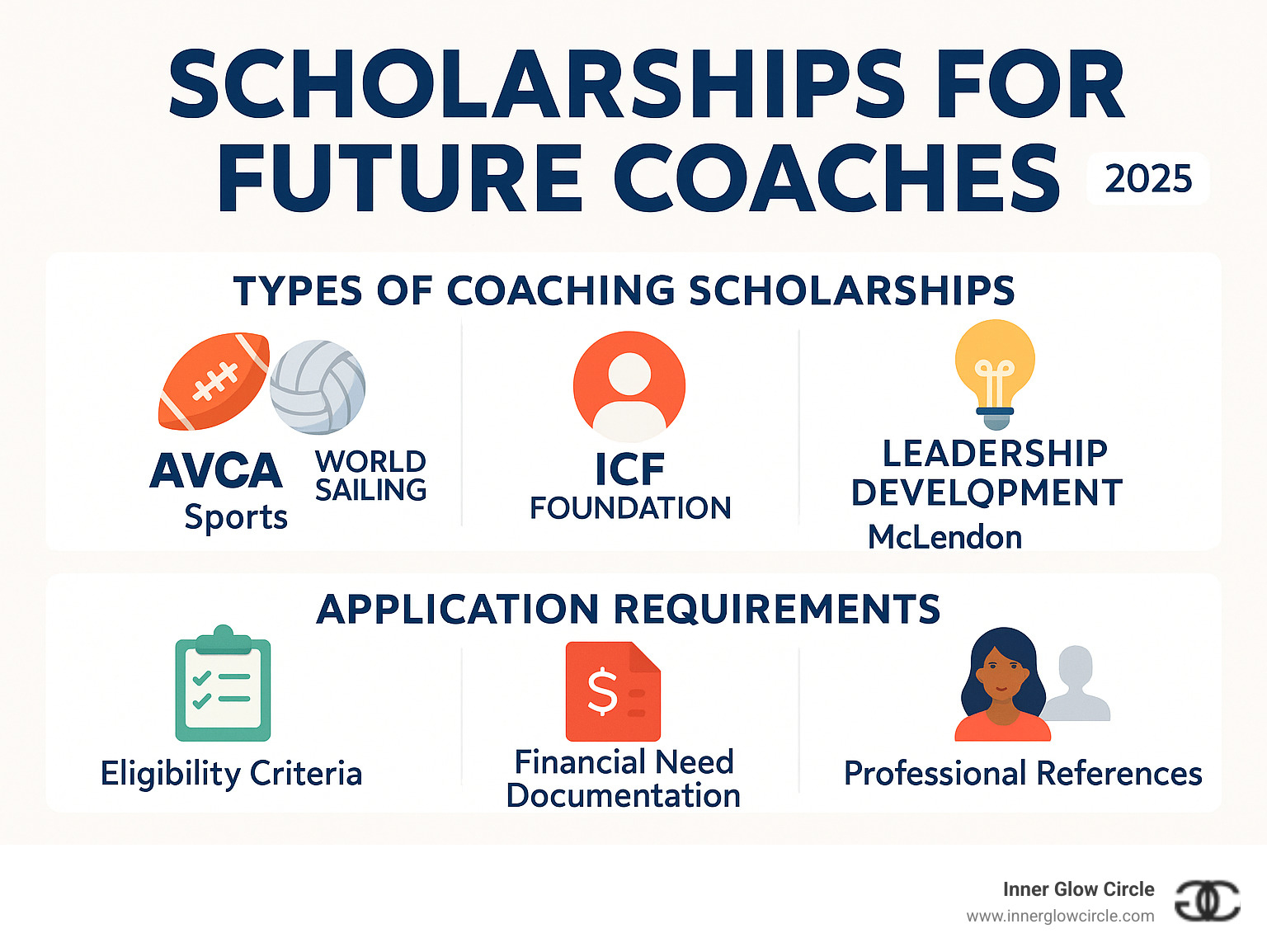
- ICF Foundation Scholarships – $10,000+ for underrepresented populations in life coaching
- Coaches 4 Coaches (AVCA) – Convention access + accommodation for volleyball coaches (175+ recipients since 2009)
- World Sailing Coach Scholarships – Olympic Solidarity funded programs for sailing coaches
- ACTO Coach Training Scholarship – $2,000 awards for coaches serving underserved communities
- John McLendon Foundation – $10,000 postgraduate scholarships for athletics administration
- WeCOACH Academy Scholarships – Multiple opportunities for women coaches in collegiate sports
The coaching industry is experiencing unprecedented growth, yet many aspiring coaches struggle with the same challenge: How do you invest in professional training when you’re just starting out?
Consider this reality check from industry data: over $5 million in scholarships and awards have been distributed to help future coaches launch their careers. Organizations like the ICF Foundation specifically target underrepresented populations, while sport-specific programs like the AVCA’s Coaches 4 Coaches have supported more than 175 aspiring volleyball coaches since 2009.
But here’s what most people don’t realize: coaching scholarships aren’t just about money. They provide access to mentorship networks, professional conventions, and career-launching connections that can accelerate your journey from passion to profession.
This guide will show you exactly how to find, apply for, and win the funding that transforms coaching dreams into sustainable careers.
Explore more about scholarships for future coaches:
Understanding the Landscape of Coaching Scholarships
The world of scholarships for future coaches is beautifully diverse, just like the coaching profession itself. Think of it as a rich mix woven by organizations who genuinely believe in nurturing the next generation of coaches across every imaginable specialty.
What makes these opportunities so special isn’t just the financial support – though that’s certainly life-changing. These scholarships for future coaches often come wrapped in comprehensive packages that include travel stipends, accommodation, exclusive event access, and networking opportunities that can literally transform your coaching trajectory overnight.
From professional associations and foundations to international federations, there’s an entire network of organizations invested in your success. Let’s explore how these opportunities break down across different coaching specializations.
Sport-Specific Coaching Scholarships
If your heart beats for athletics, sport-specific funding opportunities are where passion meets practicality. These programs exist because sports organizations understand a fundamental truth: investing in coaches means investing in the future of their sport.
The American Volleyball Coaches Association (AVCA) runs one of the most beloved programs in this space. Their Coaches 4 Coaches scholarship has been a game-changer since 2009, supporting over 175 aspiring volleyball coaches with member-funded scholarships.
What makes this program special? Recipients get the full experience: Pre-Convention Seminar access, complete Convention Registration, shared accommodation, and specialized networking opportunities. Past recipients consistently describe it as “life-changing” – and when you consider the connections and learning packed into this experience, it’s easy to see why. Applications typically open each August, so this is definitely one to bookmark.
Sailing enthusiasts have equally exciting opportunities through World Sailing Scholarships, which operate along two distinct pathways supported by Olympic Solidarity Funding. The Performance pathway focuses on high-level coaches working with internationally competing athletes, while the Development pathway supports those building grassroots sailing programs from the ground up.
These scholarships have produced coaches who’ve gone on to work at Olympic levels, expand sailing programs globally, and improve safety standards across the sport. The funding comes through coordination with National Olympic Committees or private sponsorship, making it accessible through multiple channels.
For women in collegiate sports, WeCOACH Academy offers something truly special. Their scholarship program embodies a beautiful “pay it forward” philosophy, often funded by program alumni who want to open doors for the next generation. These comprehensive awards typically cover tuition, hotel, meals, and travel stipends for their transformative NCAA Women Coaches Academy.
The program offers various named scholarships honoring influential women in sports, each with specific eligibility criteria that might focus on particular sports, coaching levels, ethnicity, or life circumstances like being a coaching mother.
General & Life Coaching Scholarships
Beyond the athletic field, a robust ecosystem of scholarships for future coaches exists for those called to life coaching, executive coaching, and general coaching practices. These programs often focus on broader societal impact and creating a more diverse, equitable coaching profession.
The ICF Foundation leads this charge with a powerful mission: ensuring coaching education reaches underrepresented populations who can change the world. Their scholarships directly align with the United Nations Global Goals, recognizing coaching as a tool for global change.
ICF Foundation scholarship recipients receive an impressive package: tuition scholarships to Level 1 ICF accredited programs, complimentary one-year ICF membership, waived ACC credential application fees, and access to mentor coaches. While recipients handle incidentals and need reliable internet access, this comprehensive support dramatically reduces barriers to entry.
The foundation ensures coaching education remains culturally relevant while fostering a more inclusive profession. Their 2025 applications are currently closed, but they encourage interested candidates to sign up for notifications about future opportunities.
Another noteworthy program was the ACTO Coach Training Scholarship, which historically awarded $2,000 scholarships to aspiring coaches committed to serving underserved communities. While this program is currently on hold as ACTO focuses resources on other initiatives, it exemplified the field’s commitment to ensuring coaching reaches those who need it most.
These scholarships typically required demonstration of financial need, commitment to professional credentialing, and clear intent to impact underserved populations – criteria that reflect the coaching profession’s values of service and change.
Key Programs & Initiatives for Aspiring Coaches
The most transformative scholarships for future coaches often come wrapped in something much bigger than a simple check. These comprehensive programs understand that building great coaches requires more than just covering tuition costs—it takes mentorship, networking opportunities, and hands-on leadership development that can reshape an entire career path.

Think of these programs as career accelerators rather than just funding sources. They’re designed to identify rising talent and provide the tools, connections, and confidence needed to thrive in coaching leadership roles.
The AFCA 35 Under 35 Coaches Leadership Institute perfectly embodies this approach for football coaches who are ready to step into leadership. This intensive one-day program doesn’t just recognize young talent—it actively develops it. If you’re 35 or younger and working as a full-time assistant or head coach at the collegiate level (or a high school head coach), this program offers something special.
What makes this initiative stand out is its focus on the real challenges coaches face. Participants dive deep into ethics, leadership principles, NCAA rules, financial management, and athlete safety—topics that can make or break a coaching career. But here’s the best part: you’re not just learning alongside anyone. You’re building relationships with other rising stars in football coaching, creating a network that can support your entire career.
The application process is thorough but fair. You’ll need an updated resume, five solid references, and here’s where it gets interesting—you must create original content. Either write a 1,600-word article or produce a 10-minute video on a coaching topic that matters to you. This isn’t busy work; it’s your chance to showcase your expertise and potentially get published, which adds credibility to your coaching profile. Plus, the program provides a stipend to help with convention expenses.
For those interested in athletics administration, particularly minority candidates, the John McLendon Minority Scholarship Foundation has been changing lives since 1999. This isn’t just about money—though the eight annual $10,000 postgraduate scholarships certainly help. It’s about creating principled leaders who will shape the future of athletics.
What’s remarkable about the McLendon Foundation is its backing. Major players like the AFCA, NCAA, NBA, and MLB fund these scholarships, showing their commitment to diversity in sports leadership. Since its inception, the foundation has awarded over 145 scholarships totaling more than $1.5 million. These numbers tell a story of real impact and sustained commitment to change.
The foundation’s partnership opportunities can be game-changing. For example, their collaboration with UMass Amherst’s top-ranked sport management master’s program can lead to tuition-free enrollment for McLendon scholars. That’s the kind of support that transforms not just individual careers, but entire athletic departments.
Building on this foundation’s work, the McLendon Leadership Initiative (MLI) launched in July 2020 with a coach-driven mission. While not a traditional scholarship, this program creates something equally valuable: meaningful employment experience for minority candidates in sports administration.
If you have a Bachelor’s degree and are looking to break into sports administration, the MLI opens doors that might otherwise remain closed. The program ensures participants gain experience that extends beyond their specific departmental roles, providing a comprehensive understanding of how athletic organizations really work.
These programs share a common thread—they’re all about investing in people, not just credentials. They recognize that great coaches and administrators need more than knowledge; they need networks, mentors, and real-world experience to make lasting change in their communities and sports.
How to Secure Scholarships for Future Coaches
Now that we’ve explored some of the incredible opportunities out there, let’s get down to business: how do you actually secure these scholarships for future coaches? A strategic approach is crucial for navigating the competitive world of scholarships. It’s not about being the “best,” but about being the “best fit” and demonstrating your unique potential.

The truth is, many aspiring coaches make the mistake of casting too wide a net. Instead of applying to every scholarship they find, successful candidates focus their energy on a select few opportunities that truly align with their goals and background. This focused approach not only saves time but dramatically increases your chances of success.
Think of it this way: scholarship committees aren’t just looking for impressive credentials. They’re looking for someone whose story resonates with their mission and whose future plans align with their investment goals. When you understand what each organization values most, you can craft applications that speak directly to those priorities.
Crafting a Winning Application
The foundation of any winning application starts with understanding the eligibility criteria inside and out. Each scholarship for future coaches has specific requirements, and overlooking even small details can disqualify an otherwise strong candidate. Financial need documentation is often required, so gather those tax returns and financial statements early.
Your application will typically include several key components: a polished resume that highlights relevant experience, strong references who can speak to your coaching potential, a compelling personal essay, and sometimes a portfolio or video demonstration of your skills (especially for programs like the AFCA 35 Under 35).
The personal statement is where you really get to shine. This isn’t the place for a generic essay about why coaching matters. Instead, tailor each statement to the specific scholarship. When applying to the ICF Foundation, emphasize how your coaching goals align with the United Nations Global Goals and your commitment to serving underrepresented populations. For the ACTO scholarship (when available), focus on your clear intent to use coaching skills for meaningful community impact.
Many programs, particularly those like the WeCOACH Academy scholarships, value what they call a “pay it forward” philosophy. They want to see that you’re not just taking from the coaching community, but that you’re committed to giving back and supporting future coaches down the line. This mindset can set your application apart from others who focus solely on what they hope to gain.
Authenticity is absolutely crucial throughout this process. Scholarship committees read hundreds of applications, and they can spot generic, cookie-cutter responses from miles away. Let your genuine passion shine through. Share specific stories that demonstrate your impact and potential. If you’re preparing for interviews, practice articulating your vision clearly and confidently, but always stay true to who you are.
Beyond the Obvious: Finding Niche Scholarships for Future Coaches
The most well-known scholarships for future coaches are also the most competitive. Smart applicants know that some of the best opportunities are hiding in plain sight, requiring a bit more research to uncover.
University-specific aid is often overlooked but can be incredibly valuable. If you’re considering a degree in sports management, exercise science, or any program that supports your coaching aspirations, dive deep into what each school offers. The landscape has been changing rapidly – for example, Canadian U Sports recently removed minimum grade requirements for athletic scholarships, opening doors for more students.
Understanding the different types of offers can help you steer this space better. Full-ride scholarships cover everything but are rare, typically available in only six sports. Most scholarships are partial, covering specific costs like tuition or housing. Even if you’re considering being a walk-on, preferred walk-ons often earn scholarships later. Don’t overlook NCAA Division III schools either – while they can’t offer athletic scholarships, 80% of their athletes receive some form of financial aid.
Employer-funded development is another hidden gem. If you’re currently working, even in a non-coaching role, check whether your company offers professional development funds or tuition reimbursement. Many organizations are recognizing the value of coaching skills for their employees, making this a practical way to fund your certification.
Professional association grants extend far beyond the major players we’ve discussed. Smaller, specialized associations often offer grants or scholarships that receive fewer applications. The Positive Coaching Alliance, for instance, offers scholarships for student-athletes who demonstrate positive sportsmanship and leadership – qualities that translate directly into coaching success.
Local community foundations might be your best-kept secret. These organizations often provide scholarships for residents pursuing education or professional development, frequently based on community involvement and leadership potential rather than just academic achievement. They tend to be less competitive than national programs and can be an excellent starting point for building your scholarship portfolio.
The key to finding these niche opportunities is consistent, methodical research. Set aside time each week to explore new possibilities, and don’t be afraid to reach out directly to organizations in your area or field of interest. Sometimes the best scholarships are the ones that haven’t been widely advertised yet.
Frequently Asked Questions about Coaching Scholarships
You’ve probably got some burning questions about scholarships for future coaches, and honestly, that’s completely normal! The world of coaching scholarships can feel overwhelming at first, but once you understand the basics, it becomes much clearer. Let’s explore the questions we hear most often.
What types of benefits do coaching scholarships typically offer?
Here’s something that might surprise you: scholarships for future coaches often provide way more than just money for tuition. While covering your certification or education costs is usually the main focus, many programs create entire support systems designed to launch your coaching career.
Tuition coverage is obviously the big draw – programs like the ICF Foundation and WeCOACH Academy often cover all or most of your program fees. But that’s just the beginning.
Many scholarships include convention registration so you can attend major industry events. Think about it: these gatherings are where you’ll learn from the best coaches in the field and make connections that could change your career trajectory. The AVCA Coaches 4 Coaches program includes this, and the AFCA 35 Under 35 even provides a stipend to help with convention expenses.
Travel and accommodation support is another huge benefit. Programs like AVCA Coaches 4 Coaches and WeCOACH Academy understand that getting to these events can be expensive, so they often provide shared hotel rooms and travel stipends.
Then there are the professional memberships – the ICF Foundation, for example, includes a complimentary one-year ICF membership. This opens doors to resources, communities, and discounts you wouldn’t have access to otherwise.
Perhaps most valuable of all is the mentorship access. The ICF Foundation connects you with experienced mentor coaches, while programs like AVCA provide specialized networking and educational opportunities that can guide your entire career path.
Are there scholarships for coaches who aren’t former athletes?
This is such an important question, and the answer is a resounding yes! While sport-specific scholarships for future coaches naturally tend to favor former athletes, there’s a whole world of coaching scholarships that don’t care one bit about your athletic background.
Life coaching and executive coaching scholarships are particularly welcoming to career switchers. The ICF Foundation Scholarships focus entirely on making coaching accessible to underrepresented populations and supporting work that aligns with UN Global Goals. Your athletic resume? Completely irrelevant.
The ACTO Coach Training Scholarship (when it’s available) looks for commitment to the coaching profession and a desire to impact underserved communities. What matters is your leadership potential, your passion for helping others, and your vision for making a difference.
Many people entering coaching today are bringing incredible skills from other professions – business expertise, teaching experience, healthcare backgrounds, or nonprofit work. These diverse experiences often make for more well-rounded, empathetic coaches. Scholarship committees recognize this and are actively seeking candidates who can bring fresh perspectives to the coaching world.
How important is a specific career plan in my scholarship application?
Let me be completely honest with you: having a specific career plan is absolutely crucial for winning scholarships for future coaches. This isn’t just important – it’s often what separates winning applications from the rest.
A clear career plan shows the selection committee that you’re serious about coaching as a profession, not just exploring it as a hobby. Organizations like ACTO explicitly look for commitment to a coaching career and credentialing. They want to invest in people who will use their education meaningfully.
Your plan also needs to align with the scholarship provider’s mission. If you’re applying to the ICF Foundation, show how your coaching goals support their focus on UN Global Goals and serving underrepresented populations. For the McLendon Foundation, demonstrate your commitment to athletics administration and minority leadership.
Think of it from the committee’s perspective: they’re making an investment in you. A detailed career plan helps them see exactly how that investment will pay off – not just for you, but for the communities you’ll serve and the coaching profession as a whole.
Your plan doesn’t need to map out the next twenty years, but it should be specific, realistic, and inspiring. Instead of saying “I want to help people,” try something like “I want to become a certified life coach specializing in helping women steer career transitions, and this scholarship will give me the credentials and network I need to launch a practice that serves working mothers in my community.”
That level of specificity makes your application memorable and shows you’ve done your homework about what coaching actually involves.
Conclusion: Investing in Your Coaching Future
We’ve journeyed through an incredible landscape of scholarships for future coaches together – from specialized programs supporting volleyball and sailing coaches to transformative initiatives opening doors for women and underrepresented communities in life coaching. What strikes me most is this simple truth: funding your coaching dreams isn’t just possible, it’s waiting for you.
The path we’ve mapped out shows that these scholarships offer so much more than money. They’re gateways to mentorship relationships that last years, networking opportunities that launch careers, and professional development experiences that shape who you become as a coach.
Here’s what I want you to remember: becoming a certified coach is one of the most powerful investments you’ll ever make. You’re not just investing in yourself – you’re investing in every life you’ll touch, every breakthrough you’ll witness, and every ripple of positive change you’ll create in the world.
Your coaching calling deserves strategic planning. The women who win these scholarships aren’t necessarily the most qualified on paper – they’re the ones who take time to find their perfect-fit opportunities, craft authentic applications, and show exactly how their vision aligns with each foundation’s mission.
The coaching world needs what you have to offer. Your unique perspective, your life experiences, your passion for helping others grow – these aren’t just nice-to-haves. They’re exactly what the industry is actively seeking and funding.
Every successful coach started exactly where you are right now. The difference? They took that first strategic step toward making their dream a funded reality.
Ready to transform your coaching passion into a thriving career?
Take the next step in your coaching journey with The Bo & DePaola Scholarship.


