

Why Sales Performance Coaching Matters More Than Ever
Sales performance coaching is a structured, ongoing process where managers provide personalized guidance to help reps improve their skills and close more deals. Unlike one-time training, effective coaching focuses on real-world application through continuous, data-driven conversations that change behavior and build long-term capabilities.
Effective coaching is built on:
- Personalized guidance for each rep’s unique needs.
- Regular one-on-one sessions to ensure consistency.
- Data-driven insights from call recordings and metrics.
- A focus on behavior change, not just knowledge transfer.
- Accountability and follow-up to track progress.
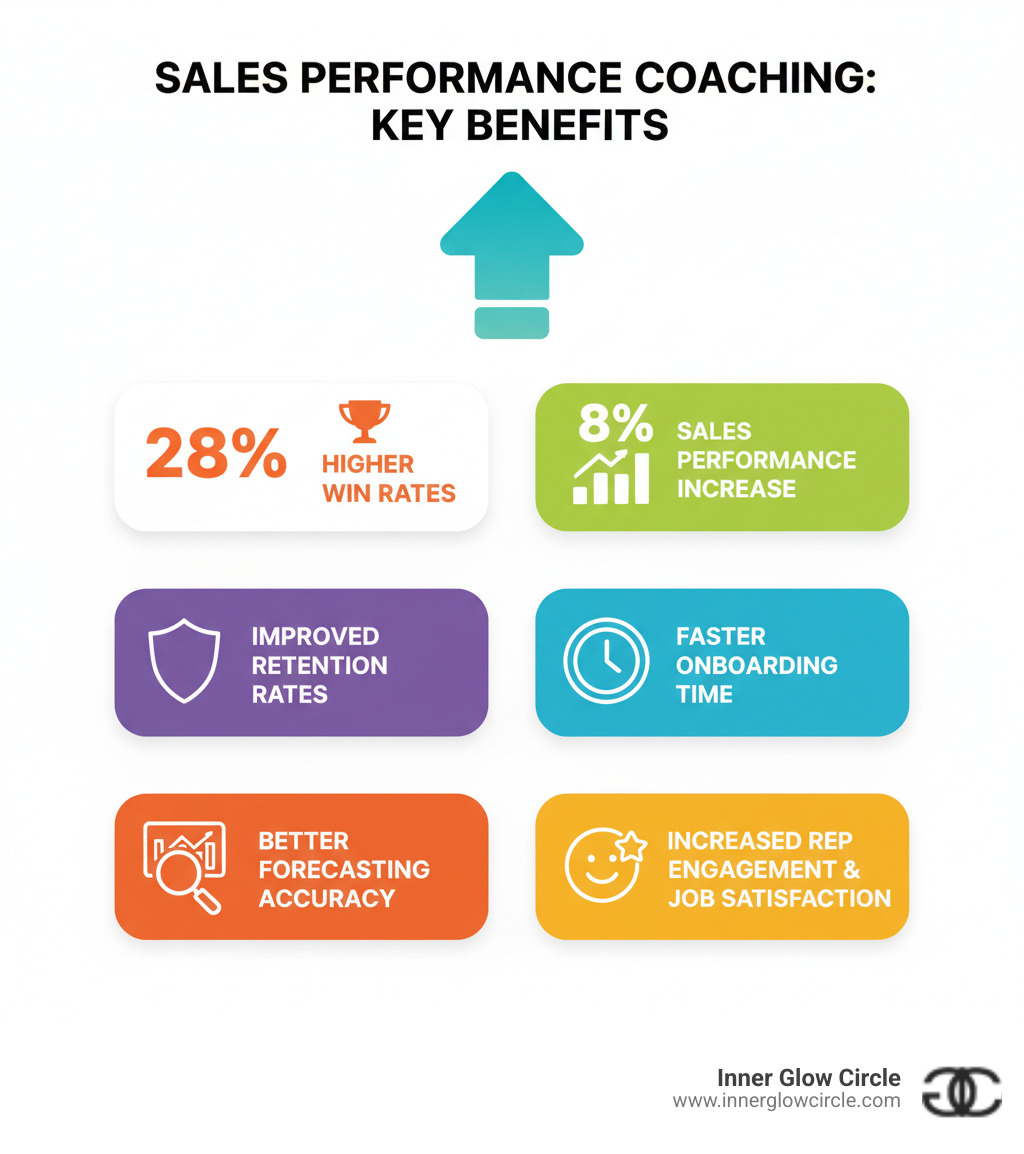
The numbers are compelling. Organizations with regular sales performance coaching see 28% higher win rates and can boost sales performance by 8%. Yet, most teams aren’t getting enough of it. Only 26% of reps receive weekly one-on-one coaching, and 75% of sales organizations have inconsistent, informal coaching efforts.
This is urgent, as many reps feel unsupported, and 70% of sellers struggle with mental health. Coaching isn’t just about hitting numbers—it’s about developing confident, capable professionals who can thrive. While training teaches fundamentals, coaching helps reps apply them in real situations, changing how they work and fostering a culture of continuous improvement.
The Foundation: Why Sales Coaching is Non-Negotiable
Sales performance coaching is the key differentiator between a team that merely survives and one that thrives. For reps, it provides the individualized attention needed to sharpen skills and build confidence. For organizations, the results are clear: improved win rates, shorter sales cycles, and better retention. Cargill, for instance, reported a 30% revenue increase among top performers after implementing coaching.
Despite the benefits, managers are stretched thin, and only 26% of reps receive weekly one-on-one coaching. Overcoming these challenges pays dividends that ripple through your entire team.

The Transformative Benefits of Coaching
Structured coaching delivers remarkable gains. Some teams have seen an 88% increase in productivity, and organizations using technology to analyze sales calls are 46% more likely to see reps hit quota. Organizations with coaching programs see 28% higher win rates because reps become more effective at navigating the sales process.
Coaching also dramatically improves forecasting accuracy—one organization saw a 30-40% jump—by giving reps a sharper understanding of their pipeline. Beyond sales skills, coaching develops future leaders by strengthening critical thinking, problem-solving, and self-management abilities.
Supporting Rep Well-being and Engagement
Sales is a high-pressure field, and the 2024 State of Mental Health in Sales report found that many sellers (70%) say that they struggle with mental health. Burnout and isolation can crush performance.
Coaching acts as a lifeline. A supportive coach helps reps manage their workload, build resilience, and prevent burnout. It creates psychological safety, where reps can admit mistakes and ask for help without judgment. This trust allows problems to be solved openly.
This support boosts job satisfaction and retention. Seven in 10 people say learning improves their sense of connection to their organization. Since replacing an employee costs about 33% of their salary, retention is good for morale and the bottom line.
Common Challenges and How to Overcome Them
Even with the best intentions, several obstacles can derail coaching efforts.
- Inconsistency: A whopping 75% of sales organizations end up wasting resources with inconsistent and informal coaching. A proactive, structured approach is far more powerful than reactive, sporadic sessions.
- Manager Bandwidth: Sales managers are often too busy with reporting and their own sales duties to carve out dedicated coaching time.
- Rep Resistance: Past negative experiences can make reps view coaching as criticism rather than an opportunity for growth.
- Measuring ROI: Difficulty in proving a direct return on investment can hinder organizational support for coaching programs.
- Telling vs. Guiding: Many managers default to telling reps what to do, which stifles the development of independent critical thinking.
Overcoming these challenges requires prioritizing coaching time, creating structured plans, and adopting a developmental mindset to build a powerful coaching culture.
Building Your Coaching Framework
A solid framework transforms sales performance coaching from a random act into a repeatable process that drives results. It provides a clear roadmap for both managers and reps, ensuring consistency while allowing for the personalized touch that makes coaching transformative.

Choosing the Right Coaching Model
There is no one-size-fits-all coaching model. The key is to be flexible and adapt your approach to each rep’s needs. A blended approach is often most effective.
- Manager-led coaching: The traditional one-on-one or small group model where a manager provides direct oversight and personalized feedback.
- Peer-to-peer coaching: Reps share call recordings and strategies, building camaraderie and learning from each other’s real-world experiences. Reps who spend 3-4 hours a month reviewing calls can improve their win rate by 5.5%.
- Self-coaching: Reps analyze their own performance and create solutions, developing the self-awareness and ownership essential for long-term success.
- Group coaching: An efficient way to address common challenges, roll out new strategies, and build team cohesion.
Essential Components of a Sales Coaching Plan
Without a plan, coaching rarely happens. A structured plan brings clarity and consistency, turning good intentions into measurable results.
- Onboarding Plan: Weave coaching into your onboarding process to accelerate ramp-up time. One VP of Sales cut ramp time from 12 to 4 months this way.
- Performance Milestones: Set SMART (Specific, Measurable, Achievable, Relevant, Time-bound) goals for reps to work toward.
- Regular Checkpoints: Schedule consistent one-on-ones. While only 26% of reps get weekly coaching, this consistency is key for accountability.
- Skill Development Goals: Identify and personalize goals for each rep, such as prospecting or objection handling.
- Action Plan: End every session with a clear plan outlining steps, timelines, and success metrics.
- Clear Expectations: Ensure both manager and rep understand the purpose, goals, and measurement of the coaching process.
Preparing for and Conducting Effective Sessions
The coaching conversation is where change happens, but preparation is crucial for success.
- Review Performance Data: Before each session, listen to recorded calls and review CRM activity to keep coaching objective and focused on real behaviors.
- Set a Clear Agenda: Have a structure for the session to ensure you cover key points, such as recent wins, challenges, and goals for the upcoming week.
- Ask Powerful Questions: Guide reps to their own solutions with open-ended questions like, “What might you do differently next time?” This encourages self-reflection and ownership.
- Practice Active Listening: Give the rep your full attention to understand their true needs, which builds trust and ensures you’re addressing the right issues.
- Provide Constructive Feedback: Deliver feedback in a supportive, non-judgmental way, focusing on specific behaviors rather than personal attributes.
- Establish Clear Next Steps: End each session by defining the specific actions the rep will take, including deadlines and success metrics, to ensure accountability.
16 Actionable Sales Performance Coaching Tips
Here are 16 practical tips to transform your approach to sales performance coaching and help your team achieve new levels of success.
Fostering a Culture of Trust and Growth (Tips 1-4)
Great coaching starts with a safe environment where reps can be vulnerable, make mistakes, and grow.
1. Build Trust with Authenticity
Share your own stories of fumbled deals and missed quotas. Your authenticity gives your team permission to be honest about their own struggles.
2. Focus on Rep Well-being
With many sellers (70%) struggling with mental health, a real check-in on stress and workload is crucial. A burnt-out rep cannot perform at their best.
3. Create a Feedback-Rich Environment
Make feedback a normal, continuous flow in all directions—manager-to-rep, rep-to-manager, and peer-to-peer. Keep it specific, timely, and actionable.
4. Offer Professional Development Opportunities
Invest in your reps’ careers through conferences, book clubs, or guest speakers. Seven in 10 people say learning improves their sense of connection to their organization.

Mastering the Art of the Coaching Conversation (Tips 5-8)
The coaching conversation is your most powerful tool. It’s less about telling and more about helping reps find their own answers.
5. Encourage Self-Evaluation
Before giving your feedback, ask the rep for their assessment. Questions like, “If you could do it again, what would you change?” build self-awareness.
6. Ask Powerful, Open-Ended Questions
Ditch yes/no questions. Ask “what” and “how” questions to uncover the thinking behind their actions. This is a key part of effective sales performance coaching.
7. Focus on One Improvement at a Time
Don’t overwhelm reps with a long list of critiques. Pick the one thing that will make the biggest impact, master it, and then move to the next.
8. Involve Reps in Creating Action Plans
People are more committed to plans they help create. Guide reps to develop their own next steps, timelines, and definitions of success.
Driving Accountability and Performance (Tips 9-12)
Supportive coaching includes holding people accountable to the goals and commitments they’ve made.
9. Hold Reps Accountable
As Louis Gerstner, Jr. said, “People respect what you inspect.” Following up on commitments shows you take their development seriously.
10. Use Data to Guide Conversations
Use call recordings and CRM data to keep feedback objective and grounded in facts, not opinions. This is a critical aspect of sales performance coaching.
11. Celebrate Wins and Progress
Don’t just focus on what needs fixing. Acknowledging wins and consistent effort reinforces the behaviors you want to see more of.
12. Be Consistent with Your Cadence
Random coaching doesn’t work. A regular, predictable schedule for one-on-ones builds trust, creates momentum, and normalizes the process.
Adapting to the Modern Sales Environment (Tips 13-16)
As the sales world evolves, so must our coaching.
13. Adapt Coaching for Remote Teams
Be more intentional with remote coaching. Use video calls to build connection, leverage call recording tools heavily, and create informal touchpoints.
14. Leverage Your Top Performers
Use your best reps as mentors and examples. This develops their leadership skills while providing relatable, peer-driven learning for the team.
15. Accept Technology and AI
Accept tools like conversation intelligence and AI. They don’t replace human coaching; they make it more effective by providing data-driven insights.
16. Help Reps Showcase Their Expertise
Encourage reps to build their personal brands on LinkedIn or by speaking at events. This builds their confidence and positions your team as thought leaders.

Measuring Success and Leveraging Technology
If you can’t measure it, you can’t improve it. For sales performance coaching, tracking the right metrics and using modern technology are essential for demonstrating ROI and refining your approach.
| Metric Type | Example Metrics | Why It Matters |
|---|---|---|
| Performance | Quota Attainment, Win Rate, Sales Cycle Length, Average Deal Size, Conversion Rate | Directly reflects revenue impact and sales efficiency. |
| Observational | Manager Coaching Behaviors (e.g., frequency of 1:1s, quality of feedback), Rep Activity Metrics (e.g., calls made, emails sent, meetings booked) | Tracks the coaching process itself and rep effort. |
| Cultural | Rep Retention, Employee Engagement Scores, Promotion Rates, Rep Satisfaction | Indicates team health, motivation, and long-term talent development. |
Key Metrics to Measure Coaching Effectiveness
To understand the full impact of coaching, look beyond just revenue. A holistic view includes three key areas:
- Performance Metrics: These are the bottom-line numbers like quota attainment, win rate (which can increase by 28% with coaching), average deal size, and sales cycle length. They show the direct financial impact of your efforts.
- Observational Metrics: These track the coaching process itself. Are you holding consistent one-on-ones? Are reps hitting their activity targets? These are the leading indicators of future performance.
- Cultural Metrics: These reveal the deeper impact on your team. Track attrition rates, rep satisfaction scores, and promotion rates. Effective coaching builds a healthier, more engaged team that wants to stay and grow.
The Role of Technology in Modern Sales Coaching
Technology has transformed sales performance coaching from a gut-feel exercise into a data-driven discipline. As Forrester analyst Seth Marrs suggests, “It’s Time To Track Sellers Like Athletes.”
- Conversation Intelligence & Call Recording: These tools are game-changers. They record, transcribe, and analyze sales calls, allowing you to provide specific, objective feedback on real conversations.
- AI-Powered Insights: AI can identify patterns in successful calls and suggest personalized training for each rep. Organizations using this tech are 46% more likely to see reps hit quota.
- CRM & Sales Enablement Platforms: Integrating coaching tools with your CRM connects coaching activities directly to sales outcomes. Enablement platforms provide a central hub for coaching content and playbooks.
Technology doesn’t replace the human element of coaching—it improves it, freeing you up to focus on the meaningful conversations that drive growth.
Frequently Asked Questions about Sales Coaching
Here are concise answers to some of the most common questions about implementing sales performance coaching.
How is sales coaching different from sales management?
It’s a crucial distinction. Sales management focuses on directing and inspecting performance—the “what” and “when.” It involves reviewing forecasts and ensuring processes are followed. Sales performance coaching focuses on developing the individual—the “how” and “why.” It’s about asking powerful questions and guiding reps to find their own solutions in a safe, developmental space. A manager must do both but should separate the roles to build trust.
How often should sales coaching sessions occur?
Consistency is the most important factor. The gold standard is weekly one-on-one sessions, but the reality is that only 26% of reps receive this frequency. The schedule can be adapted based on a rep’s experience—a new hire may need more frequent check-ins than a seasoned performer. The key is to establish a regular, predictable rhythm (whether weekly or bi-weekly) rather than holding sporadic, reactive sessions.
Can sales coaching be effective for remote or hybrid teams?
Yes, and it’s arguably even more critical for distributed teams. Effective remote coaching relies on being intentional.
- Use video conferencing to maintain face-to-face interaction and build rapport.
- Leverage call recording and conversation intelligence tools to objectively review customer interactions when you can’t be there in person.
- Maintain clear planning and communication with documented agendas, action plans, and consistent follow-up to ensure accountability.
Remote coaching naturally shifts the focus from activity monitoring to outcome-based development, which is the hallmark of great coaching.
Become the Coach Your Team Deserves
You now have a roadmap for transformative sales performance coaching. You’ve seen the data on higher win rates and improved retention, and you have 16 actionable tips to build trust, ask better questions, and leverage technology.
Becoming an exceptional coach is a journey. It requires patience, practice, and a genuine commitment to your team’s growth. The most important part is showing up consistently and focusing on empowering your people to find their own potential.
When you shift from telling to guiding, reps take ownership of their development. They become more confident and resilient, and your role evolves from firefighter to strategic leader. You’ll build a team that feels valued, supported, and engaged—a critical defense against the burnout and mental health struggles common in sales.
The principles of authenticity, active listening, and celebrating progress are the foundation of transformative coaching. They are about seeing the whole person, not just the quota they carry.
These same principles are at the heart of what we teach at Inner Glow Circle’s coaching certification. We believe that helping individuals open up their inner potential empowers them to inspire everyone around them.
Your sales team deserves a coach who sees their potential and provides the support they need to thrive. Are you ready to be that coach?
Start your journey to becoming a world-class coach today.


