

Why Recovery Coach Scholarships Open Doors to Meaningful Careers
Recovery coach scholarship opportunities are changing lives by making professional training accessible. These scholarships bridge the financial gap, allowing individuals with lived experience to turn their recovery journey into a career helping others.
Quick Guide to Scholarship Types:
- Memorial Funds: Some offer over $1,000 for specific state certifications.
- Non-Profit Organizations: Provide unique support like sober housing and coaching.
- Training Providers: Many offer partial scholarships (25-75%) based on need.
- Volunteer-for-Training Programs: Offer full certification in exchange for a volunteer commitment.
- Recovery-Specific Scholarships: Provide funds for college students with at least one year of sobriety.
The recovery coaching field is growing rapidly. With over 41 million Americans facing mental health or substance use disorders, traditional treatment often needs the ongoing community support that recovery coaches provide.
Recovery coaches use their lived experience to guide others, providing emotional support, resource connections, and strengths-based collaboration. They help build the recovery capital needed for long-term success.
The main challenge is cost. Training can range from $500 to over $2,000, plus fees for exams and materials. For many in early recovery, this is a significant barrier. Scholarship programs exist to ensure that financial circumstances don’t prevent qualified individuals from pursuing this meaningful career.
As one scholarship recipient shared: “Recovery has given me my life back. A life that I can be proud of. It’s given me my soul back. It’s given me my family back. It’s given me my dreams back.”
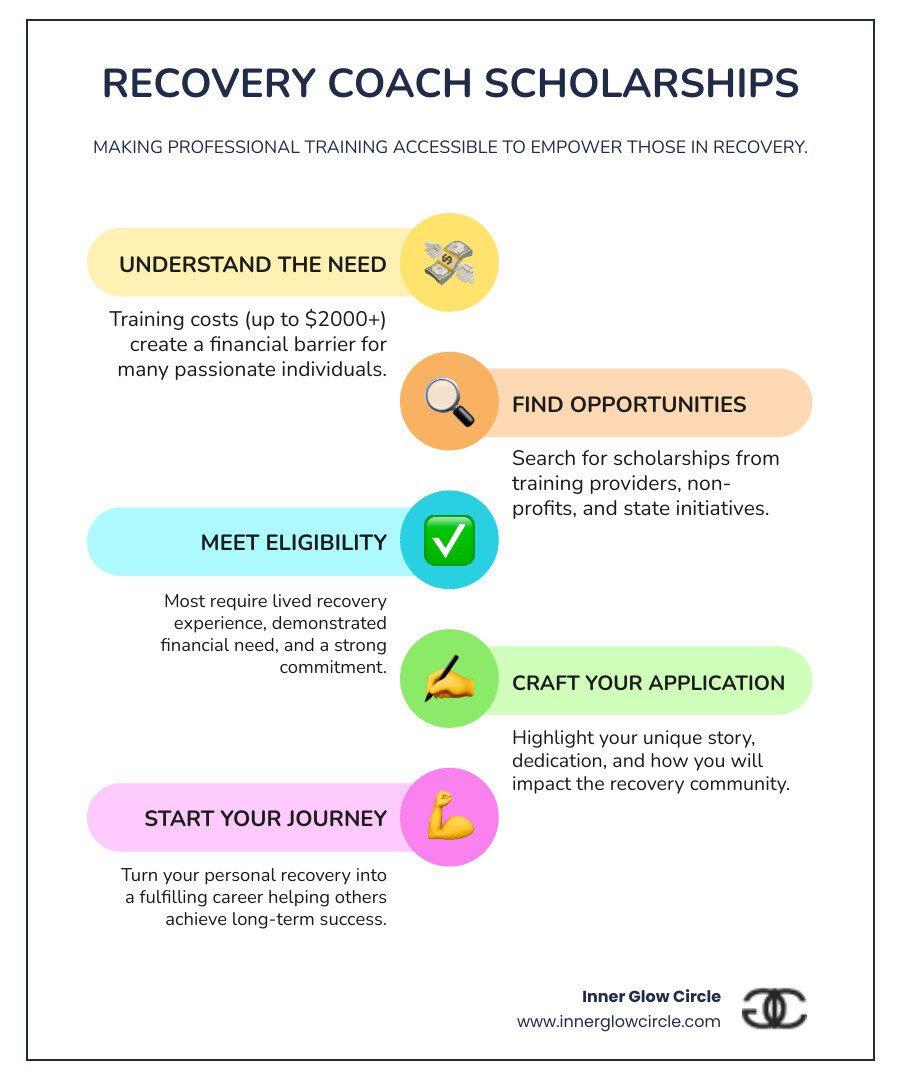
Simple guide to recovery coach scholarship terms:
What is a Recovery Coach and Why is the Role Vital?
A recovery coach walks alongside people as they build meaningful lives beyond addiction or mental health struggles. We act as professional guides with lived experience, helping people find their own strength and create their own path forward.
The role is built on the peer support model. Most of us have been where our clients are, which creates an instant connection and a foundation of trust. We use a strengths-based approach, focusing on what’s working in a person’s life and building on it to create a Personal Recovery Action Plan (PRAP)—a custom roadmap for their goals.
Recovery coaches fill a crucial gap between clinical treatment and real-world living. While therapists heal past wounds and doctors manage medical needs, we focus on the present and future. The demand for coaches is growing rapidly, creating incredible career opportunities for those called to this work, especially with recovery coach scholarship programs making training more accessible.

Certification provides the professional foundation needed to be effective, with training in motivational interviewing, ethics, and cultural competency. Certified coaches have better job prospects and can make a deeper community impact.
If you’re curious about the broader world of coaching, you can always find more info about what life coaches do.
The Power of Lived Experience
The magic of recovery coaching is authenticity. When a coach says “I’ve been there,” it creates an immediate sense of trust and offers hope that feels real and attainable. Clients see living proof that recovery is possible.
This background helps with navigating challenges. Coaches understand the practical realities, from handling cravings to rebuilding relationships. Our guidance comes from experience, not theory. The empathy that comes from shared struggle is irreplaceable, creating a safe space for healing. As non-clinical support, we complement therapy and medical treatment by offering hope, encouragement, and practical guidance.
Distinguishing a Recovery Coach from Other Professionals
Understanding the unique role of a recovery coach helps clarify their value:
- vs. Therapists: Coaches are future-focused, asking “What’s next?” rather than exploring past trauma. They focus on action, not diagnosis.
- vs. Sponsors: While sponsors guide individuals through a specific program (like the 12 steps), coaches offer broader, non-prescriptive support that meets clients wherever they are.
- vs. Case Managers: Case managers connect clients to services like housing or healthcare. Coaches focus primarily on providing motivational and emotional support to foster internal change.
The role is collaborative, not directive. Coaches empower clients by asking powerful questions and helping them find their own answers, fostering ownership over their recovery journey.
Navigating Recovery Coach Training and Certification
Starting your journey as a recovery coach means diving into training that gives you the skills to make a difference. Most recovery coach scholarship programs cover training that ranges from 50 to 60 hours, depending on state requirements.
These programs blend theory with practical skills. You’ll learn Motivational Interviewing to help clients find their own reasons for change, and the ethics portion teaches professional boundaries and confidentiality. Cultural competency training opens your eyes to how different backgrounds affect recovery, making you a more effective coach. You’ll also explore the stages of change model to meet clients where they are.
Most importantly, you’ll learn to use your lived experience professionally—sharing your story in a way that inspires hope without making it about you.

Understanding Different Certifications
The certification landscape includes both nationally recognized credentials and state-specific certifications. Each serves a different purpose in your career.
| Certification Type | Required Hours (approx.) | Scope | Renewal Needs | Key Features |
|---|---|---|---|---|
| CRPA (Certified Recovery Peer Advocate) | 50 hours (NYS) | State-specific (e.g., NYS) | Varies by state | Often required for employment in Medicaid-reimbursable NYS OASAS-licensed treatment centers. Focus on peer advocacy. |
| CARC (Certified Addiction Recovery Coach) | 60 hours (NYS) | National/State-specific | Varies by state | Recognized nationally and preferred by many self-employed coaches. Broader focus on coaching. |
| CCRC (Canadian Certified Recovery Coach) | 20+ education, 125 coaching, 25 supervision | Canadian | 20 CE hours annually | Requires paid coaching experience and supervision. |
| PSP (Peer Supervision Professional) | 20 hours (NYS) | State-specific (NYS) | Varies by state | For those supervising other peer recovery professionals. |
In New York State, the CRPA is key for working in many state-licensed treatment centers. The CARC offers more national flexibility, making it ideal for private practice or moving between states. Canada’s CCRC is rigorous, requiring significant coaching and supervision hours. For those in New York, ensure your training includes the ASAP-NYCB Digital Badge of Approval to qualify for certification.
The Cost of Training and How Scholarships Help
Understanding the investment helps you plan. Training costs typically range from several hundred to over $2,000. For example, a scholarship like the Jonathan Drescher Recovery Memorial Fund covers the $1,165 CRPA training in New York, but you would still need to budget for materials ($80-$100) and certification fees (around $180).
These costs can be a barrier, which is exactly why recovery coach scholarships exist. They recognize that the people who would make the best coaches often face the biggest financial problems. Scholarships often help with tuition, course materials, and exam fees, leveling the playing field so that your passion and lived experience matter more than your bank balance. This investment creates a ripple effect, as you’ll go on to help countless others.
If you’re interested in exploring coaching more broadly, you can find more info about certified life coach training to see how different coaching paths compare.
Your Complete Guide to a Recovery Coach Scholarship
When you’re passionate about helping others but worried about training costs, recovery coach scholarships are your pathway to purpose. These programs empower those with lived experience to turn their journey into a profession. Every person trained through a scholarship goes on to help dozens of others, creating a ripple effect of healing that strengthens entire communities.

The need is clear. Nearly 21 million Americans struggle with addiction, yet only 10% seek treatment. Recovery coaches fill this gap with vital peer support. You can find research on the scale of addiction in the US that highlights this need. When scholarships make training accessible, they directly expand this life-changing support network.
Finding a Recovery Coach Scholarship
Knowing where to look makes your scholarship search much easier. Start your search early, as securing funding can take time.
- Training Providers: Many coaching schools offer their own scholarships, often as partial tuition awards (e.g., 25-75% off) based on merit and financial need. Some may offer full training in exchange for a volunteer commitment, which is a great way to gain experience.
- Non-Profit Organizations: Recovery-focused non-profits provide meaningful opportunities. For example, the Herren Project offers a unique program that combines sober housing support with recovery coaching.
- Memorial Funds: These funds honor loved ones by helping others. The Jonathan Drescher Recovery Memorial Fund provides funding for CRPA training in New York State, while the Lost Dreams Awaken Scholarship offers $1,000 to college students in recovery.
- State and Local Initiatives: Look into state-level programs. New York’s RochesterWorks! and ACCES-VR provide training grants for eligible individuals, including those with substance use disorders.
Nailing Your Recovery Coach Scholarship Application
Your application is your chance to show you’re ready to turn your experience into expertise. Understanding eligibility is the first step. Most scholarships require lived experience, a specific period of sustained recovery, and demonstrated financial need.
Strong references are crucial. Choose people who know your journey well and can speak to your character and commitment. Give them plenty of notice and context about the scholarship.
Your personal statement is where your story shines. Focus on quality over quantity. Write about what recovery means to you, how you handle challenges, and why you want to become a coach. Highlight any relevant volunteer or support experience.
Completeness and accuracy are non-negotiable. Pay close attention to details, deadlines, and any required application fees or participation agreements. Your application is a reflection of your commitment to serving others—be authentic, be thorough, and let your passion shine through.
Common Challenges and How to Overcome Them
Pursuing a scholarship comes with challenges, but every obstacle you overcome prepares you for the resilience needed as a coach.
- Finding Opportunities: Scholarships are scattered across various sources. Start your search early and use a spreadsheet to track deadlines and requirements.
- Meeting Strict Criteria: If you don’t meet the criteria for one scholarship (e.g., recovery timeframe, location), don’t give up. Note the requirements and look for others that are a better fit.
- Writing Compelling Essays: Sharing your personal journey can be tough. Outline your points, be authentic yet professional, and ask a trusted mentor to review your work.
- Securing Strong References: Plan ahead. Give your references plenty of notice and provide them with all the information they need to write a strong letter on your behalf.
- Competition: Many deserving people apply. Make your application stand out by highlighting what makes your journey and vision unique. Even partial scholarships can significantly reduce your financial burden and make training possible.
Career Pathways and Professional Growth for Recovery Coaches
Earning your recovery coach scholarship and certification opens up a world of meaningful career opportunities. The demand for professionals who understand the recovery journey is growing, creating diverse career paths.
Your skills are needed in a variety of settings. Addiction treatment centers, sober living homes, and rehabilitation facilities hire coaches to bridge the gap between intensive treatment and independent living. Hospitals, healthcare systems, and community mental health centers are also integrating coaches to provide more holistic support.
Some of the most impactful work happens in correctional facilities and re-entry programs, supporting individuals transitioning back into society. For those with an entrepreneurial spirit, private practice offers the freedom to build your own coaching business, often focusing on specific populations.

Supervision is crucial for professional development, especially early in your career, as it helps you apply your training in real-world situations.
Building a Fulfilling Career
A career in recovery coaching offers a profound sense of purpose that goes beyond a paycheck. Using your lived experience to help others creates deep personal fulfillment and career satisfaction. While earning potential varies by location and setting, the field provides financial stability and the invaluable knowledge that your work truly matters. As you gain experience, you can advance into supervisory roles, develop specializations, or train other coaches, ensuring a path for continued professional growth.
If you’re curious about the broader financial aspects of coaching careers, you can explore more info on if you can make money as a life coach.
The Importance of Continuing Education
Your journey as a coach begins with certification, but it doesn’t end there. Staying current with new research and best practices is essential for providing the best support to your clients.
Continuing education allows you to pursue advanced skills and specializations, such as trauma-informed care or family recovery coaching. These skills open new career doors and increase your impact. Certification renewal often requires continuing education hours, ensuring all coaches maintain high standards. This commitment to lifelong learning mirrors the ongoing journey of recovery itself, keeping you effective, ethical, and energized in your vital work.
Frequently Asked Questions about Recovery Coach Scholarships
Here are answers to the most common questions about recovery coach scholarship opportunities.
How much does recovery coach training typically cost without a scholarship?
Training costs generally range from several hundred to over two thousand dollars. This depends on the program’s length, provider, and certification type. The core tuition covers instruction, but you should also budget for additional expenses like exam fees and required materials, which can add another couple of hundred dollars to your total.
For example, a scholarship might cover a $1,165 training course, but you may still need to pay for materials (around $100) and certification fees (around $180). This is why scholarships are so valuable—they remove the largest financial barrier.
What are my chances of receiving a full scholarship?
Full scholarships exist, but they are highly competitive. A more common and accessible option is a partial scholarship. Many organizations offer awards that cover 25%, 50%, or 75% of tuition, allowing them to support a greater number of aspiring coaches. Even a partial award can make training significantly more affordable. Your chances for any scholarship increase with a strong application that clearly shows your commitment, readiness, and financial need.
Do I need to be in recovery myself to become a recovery coach and get a scholarship?
Yes, for the most part. Most recovery coach roles and scholarships are specifically designed for individuals with lived experience of substance use or mental health recovery. This is a core component of the peer support model.
Lived experience creates an authenticity and empathy that can’t be taught. It builds trust and allows you to inspire hope from a place of genuine understanding. However, the recovery community also values allies. Some programs and scholarships welcome family members who have lived experience supporting a loved one, as they bring their own valuable perspective to the field.
Conclusion: Start Your Journey with Confidence
Your journey to becoming a recovery coach doesn’t have to wait. We’ve explored how recovery coach scholarships are removing financial barriers and making this meaningful career accessible.
The need for compassionate coaches is immense. Your lived experience is essential for bridging the gap between clinical treatment and real-world recovery support.
We’ve seen how scholarships from memorial funds like the Jonathan Drescher Recovery Memorial Fund and non-profits like the Herren Project provide direct financial aid, training, and even housing support. Some programs offer full certification in exchange for volunteering. These aren’t just financial aids—they’re investments in a movement that recognizes your journey as a qualification, not a disqualification.
The path forward is clear. Whether you work in a treatment center or build a private practice, your certification will open doors. Partial scholarships can be just as transformative as full ones, and the application process itself is a step on your journey.
At Inner Glow Circle, we understand the power of coaching to transform lives. Your story matters, and your desire to help is exactly what the recovery community needs. The most important step is the first one. Start researching scholarships today—your future clients are waiting for someone who truly understands.
Ready to explore how we support aspiring coaches in their journey? Learn more about our scholarship opportunities.


