

Why Mentor Coaching Matters for Your Growth as a Coach
Mentoring for coaches is a structured, collaborative process where an experienced coach helps you refine your skills through observation, feedback, and reflective practice. Unlike general mentoring, it specifically focuses on enhancing your coaching abilities based on established competencies, particularly those defined by the International Coaching Federation (ICF).
Quick Answer: What You Need to Know
- What it is: A partnership where a credentialed coach observes your coaching sessions and provides skill-focused feedback.
- How long it takes: A minimum of 3 months, totaling 10 hours (with at least 3 hours one-on-one).
- Who needs it: Coaches pursuing ICF credentials (ACC, PCC, or MCC) or those wanting to improve their practice.
- What you gain: Sharper coaching skills, increased confidence, better client outcomes, and professional credibility.
- Where to find it: Through the ICF Mentor Coach Registry or accredited coaching programs.
For passionate coaches struggling with self-doubt, mentor coaching offers a safe space to grow with practical feedback on your actual coaching. It provides a clear path to professional excellence.
As one coaching expert puts it: “In learning you will teach, and in teaching you will learn.” That’s the heart of mentor coaching. It’s not about fixing what’s wrong; it’s about making what’s already good even better.
The journey from aspiring coach to confident professional doesn’t have to be lonely. Mentor coaching provides the structure, support, and accountability to transform your passion into expertise, bridging the gap between where you are and where you want to be.

Relevant articles related to mentoring for coaches:
Mentor Coaching vs. Other Support: What’s the Difference?
As you grow in your coaching career, you’ll encounter different types of support: mentors, advisors, peers, and coaches. While they all want to help you succeed, they play very different roles. Understanding these distinctions is essential when considering mentoring for coaches.
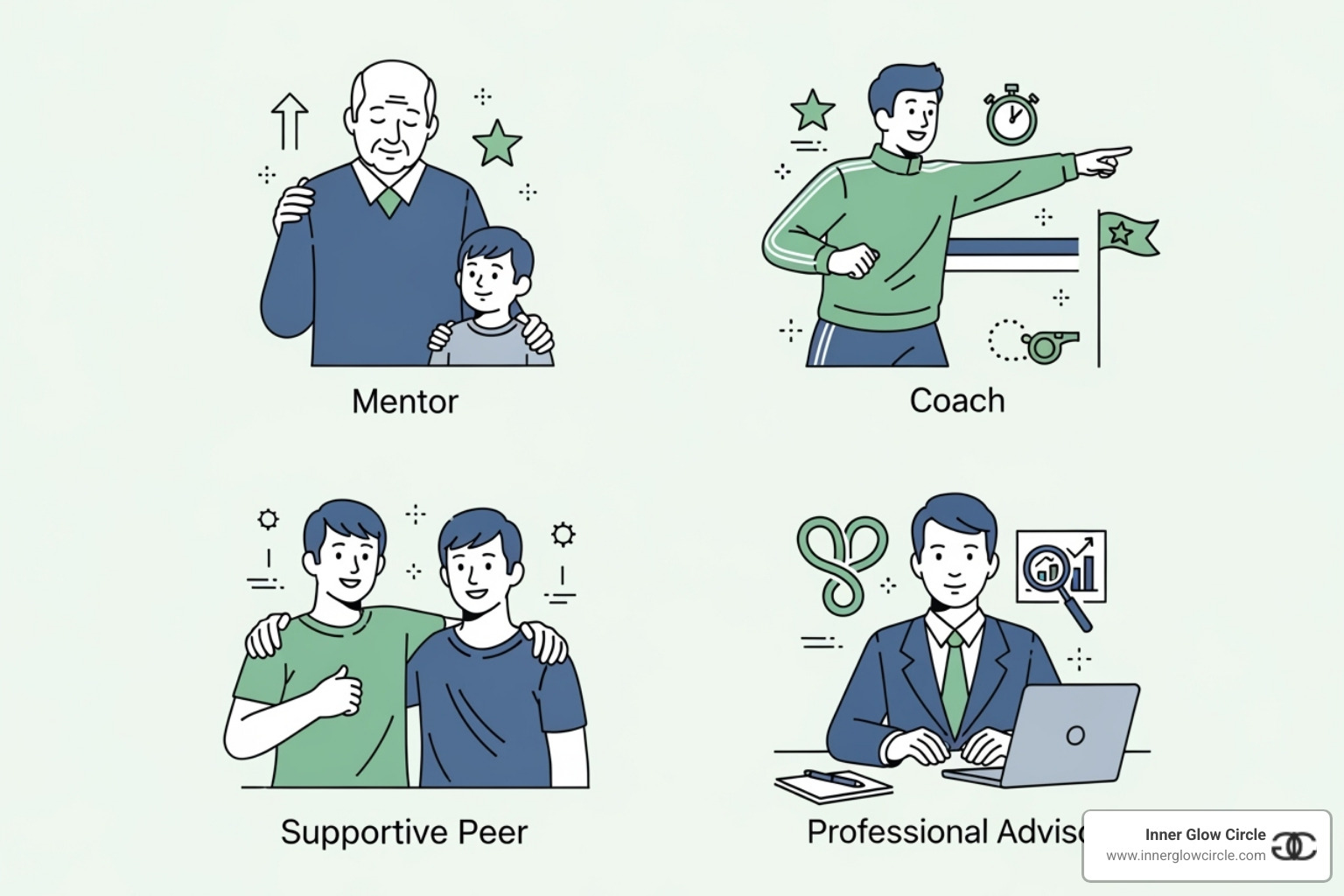
Some roles focus on performance-driven growth, while others emphasize development-driven learning. Let’s break down what makes each type of support special—and why ICF mentor coaching stands in a category all its own.
| Feature | ICF Mentor Coaching | General Mentoring | Professional Advising |
|---|---|---|---|
| Focus | Skill refinement, ICF Core Competencies, credentialing | Career path, sharing wisdom, personal development | Specific expertise, problem-solving, strategic advice |
| Timeframe | Short-to-medium term (min. 3 months, 10 hours) | Long-term, ongoing relationship | Project-based, as-needed, short-term |
| Agenda | Co-created, focused on coaching skill development | Mentee-driven, broader career and life topics | Advisor-driven, specific problem or objective |
| Role | Observer, feedback provider, skill improver | Guide, role model, wisdom-sharer, advocate | Expert, consultant, solution provider |
The Role of a General Mentor
A general mentor is typically a more experienced person who takes you under their wing for the long haul. They share wisdom from their own journey, offer career path guidance, and act as a role model. The relationship is often long-term and focuses on your overall professional and personal development, not just one specific skill. While invaluable, their advice is based on their experience, which may not perfectly fit your unique situation.
The Role of a Professional Advisor
Think of a professional advisor as an expert consultant you hire to solve a specific problem. Whether it’s marketing, finance, or legal advice, they provide direct answers and strategic direction based on their expertise. This relationship is usually short-term and project-based. An advisor tells you what to do, whereas a coach helps you find your own answers.
The Unique Focus of ICF Mentor Coaching
ICF mentor coaching is laser-focused on one thing: improving your coaching skills based on the ICF Core Competencies. Your mentor coach observes your real coaching sessions (live or recorded) and provides non-directive feedback to help you see what’s happening and refine your approach.
This process of skill refinement happens over at least three months, allowing for a cycle of practice, reflection, and integration. The agenda is co-created around your specific development needs. For coaches pursuing credential preparation, this is invaluable, as your mentor coach knows what ICF assessors look for. This targeted, structured approach is what makes mentoring for coaches so powerful—it’s entirely focused on making you a better coach.
The ICF Framework: A Deep Dive into Mentoring for Coaches
The International Coaching Federation (ICF) provides the gold standard for professional coaching. Its structured framework for mentoring for coaches is designed to transform good coaches into exceptional ones by ensuring every credentialed coach meets rigorous professional standards.
Core Purpose and Structure
ICF mentor coaching helps you grow through constructive feedback and reflective practice. A mentor coach observes your coaching sessions and provides feedback tied directly to the ICF Core Competencies. This collaborative process unfolds over a minimum of three months, allowing time to integrate new skills.
For coaches pursuing credentials, the requirement is 10 hours of mentor coaching during this period. The structure is designed for maximum impact:
- At least three hours must be one-on-one with your mentor coach for personalized feedback.
- The remaining seven hours can be one-on-one or in a group setting (up to 10 coaches), which provides a powerful community learning experience.
Specific Requirements for ICF Credentials
The ICF has clear, progressive requirements for each credential level:
- ACC (Associate Certified Coach): Requires 10 hours of mentor coaching. Your mentor coach must hold a valid ACC (renewed at least once), PCC, or MCC credential.
- PCC (Professional Certified Coach): Requires 10 hours of mentor coaching. Your mentor coach must hold a valid PCC or MCC credential.
- MCC (Master Certified Coach): Requires 10 hours of mentor coaching. Your mentor coach must hold a valid MCC credential.
These requirements ensure you learn from someone who has achieved the level you are working toward.
The Value of Structured Mentoring for Coaches
Why does the ICF insist on this structure? Because it provides a proven framework for growth, much like an elite athlete works with a coach to refine their technique. This process helps you:
- Sharpen your abilities by spotting blind spots in your coaching that you can’t see on your own.
- Transform your coaching mindset by examining your presence, beliefs, and assumptions.
- Expand your skill set by systematically working through the ICF Core Competencies.
This structured approach builds genuine competence and confidence, ensuring you can support your clients effectively. This commitment to growth is what lifts coaching to a true profession.
The Coach’s Journey: Benefits and Finding Your Mentor
As coaches, we help clients open up their potential, but who helps us open up ours? That’s the purpose of mentor coaching. It’s an investment in becoming the coach you’re meant to be, leading to greater confidence, better client results, and a stronger sense of fulfillment.

Key Benefits of Engaging in Mentor Coaching
Working with a mentor coach delivers tangible results:
- Increased Confidence: Constructive feedback helps you see your strengths clearly, leading to a more grounded and assured coaching presence.
- Better Client Outcomes: As your skills align with the ICF Core Competencies, your clients achieve more meaningful breakthroughs.
- Stronger Ethical Foundation: Mentor coaching reinforces the ICF Code of Ethics, helping you steer dilemmas with clarity.
- Accelerated Career Path: Improved skills and credentials lead to more opportunities, higher rates, and the professional recognition you deserve.
- Deeper Self-Awareness: Reflective practice helps you uncover biases, question assumptions, and refine your unique coaching style.
How to Find and Select the Right ICF Mentor Coach
Finding the right mentor coach is crucial. Chemistry matters, and you want someone who truly gets you. Here’s a clear path to finding the right fit:
- Start with the ICF: The ICF Mentor Coach Registry is your best starting point. It’s a vetted list of qualified mentor coaches.
- Check Qualifications: Ensure your potential mentor holds an ICF credential at the same level or higher than what you’re pursuing. For ACC candidates, an ACC mentor must have renewed their credential at least once.
- Assess Chemistry: Schedule introductory calls with a few candidates. Do you feel comfortable and respected? Does their philosophy resonate with yours?
- Ask Good Questions: Inquire about their process, experience with the ICF Core Competencies, and how they’ve helped other coaches. Clarify availability and fees.
- Verify Credentials: Before committing, double-check their credential status on the ICF website. This ensures they are qualified to provide the hours you need.
At Inner Glow Circle, we understand how important this decision is. The right mentor coach becomes a trusted partner in your growth. Take your time with this choice—your future coaching self will thank you.
Paying It Forward: Becoming a Mentor Coach
After experiencing the impact of mentor coaching, you might feel called to give back. Becoming a mentor coach is a powerful way to contribute to the profession, deepen your own expertise, and support the next generation of coaches. It’s a journey of leadership that benefits both you and your mentees.
Qualifications and Benefits of Becoming a Mentor
Becoming an ICF mentor coach requires experience and a commitment to guiding others.
Qualifications:
- You must hold a valid ICF credential (ACC, PCC, or MCC) at the same level or higher than the mentee you are supporting.
- If you are an ACC mentoring an ACC candidate, you must have renewed your credential at least once.
- You should be an experienced practitioner who can effectively model the ICF Core Competencies and Code of Ethics.
Benefits:
- Deepen Your Expertise: Observing and providing feedback on others’ coaching sharpens your own understanding of the Core Competencies.
- Add Credibility: Being a mentor coach signals a high level of expertise to clients and peers.
- Expand Your Network: Connect with passionate coaches and foster a vibrant community.
- Create a Revenue Stream: Many mentor coaches offer their services for a fee.
- Gain Visibility: Eligible mentors can be listed on the ICF Mentor Coach Registry for an annual fee, making it easier for coaches to find you.
The ICF Mentor Coaching Competency Model
To ensure high-quality, consistent mentorship, the ICF developed a dedicated Mentor Coaching Competency Model. This evidence-based framework guides mentor coaches in their role and consists of six core competencies:
- Ethical Practice: Modeling and encouraging the highest ethical standards.
- Foundational Trust: Creating clear agreements about the relationship, process, and goals.
- Managing Process and Co-creating Environment: Working with the mentee to create the learning plan.
- Evaluating Coaching: Assessing the mentee’s coaching against the ICF Core Competencies.
- Supporting Development: Helping the mentee develop their skills and unique coaching style.
- Providing Skill-Focused Feedback: Giving specific, actionable feedback on observed coaching sessions.
Adhering to this model separates casual advice-giving from structured, impactful mentoring for coaches.
Frequently Asked Questions about Mentor Coaching
We know you probably have questions about mentoring for coaches, especially if you’re considering pursuing your ICF credential. Let’s walk through some of the most common questions we hear from coaches just like you.
What is the required duration for an ICF mentor coaching engagement?
Think of mentor coaching as a journey, not a quick pit stop. The ICF requires that mentor coaching occurs over a minimum of three months. Why? Because real growth takes time. This extended timeframe allows for a proper learning and integration cycle—you receive feedback, reflect on it, practice new skills, and then receive more feedback. It’s this cyclical process that creates lasting change.
For ACC, PCC, and MCC credentialing paths that require mentor coaching, you’ll complete 10 hours of mentor coaching within this minimum three-month period. This gives you enough time to work through multiple coaching sessions, implement feedback, and see genuine improvement in your practice.
We’ve seen coaches try to rush through this requirement, and honestly, they’re missing out on the real value. Those three months give your learning time to breathe and settle into your coaching style.
Can group mentor coaching fulfill the entire requirement?
This is one of the most frequently asked questions, and the answer is: not entirely. The ICF has designed the requirement to give you both individualized attention and the benefit of learning alongside peers.
Here’s how it breaks down: out of your 10 hours of mentor coaching, at least three hours must be one-on-one sessions with your mentor coach. These private sessions are invaluable for diving deep into your specific challenges, getting personalized feedback, and addressing areas that might feel too vulnerable to explore in a group setting.
The remaining seven hours can be completed in a group setting, with no more than 10 participants. Many coaches find these group sessions incredibly enriching. You get to observe other coaches, learn from their challenges, and realize you’re not alone in your growth journey. There’s something powerful about witnessing another coach receive feedback and thinking, “Oh, I do that too!”
This blend of one-on-one and group work ensures you get both the deep, personalized guidance and the broader perspective that comes from community learning.
What qualifications must my mentor coach have?
This is crucial, and we’re glad you’re asking. Not just any coach can serve as your mentor coach for ICF credentialing purposes.
Your mentor coach must hold a valid ICF credential at the same level or higher than the one you’re pursuing. So if you’re working toward your PCC, your mentor coach needs to be either a PCC or MCC. This ensures they have the experience and understanding of the competencies at the level you’re striving for.
There’s one important exception to note: for ACC candidates, if your mentor is also an ACC, they must have renewed their credential at least once. This renewal requirement ensures your mentor has sustained experience within the ICF framework and isn’t just freshly credentialed themselves.
When you’re selecting a mentor coach, always verify their credential status. You can check this through the ICF website or ask to see their credential certificate. A qualified mentor coach will be transparent about their credentials and happy to provide verification.
This person will be guiding your professional development and signing off on your credentialing paperwork, so it’s worth taking the time to ensure they meet all the requirements.
Conclusion: Take the Next Step in Your Coaching Career
We’ve seen how mentoring for coaches transforms passionate practitioners into confident professionals. It’s more than a credentialing requirement—it’s a partnership that sharpens your skills, deepens your self-awareness, and connects you to a community committed to excellence.
As you develop your skills and earn your credentials, you contribute to the integrity of our entire field, ensuring clients everywhere receive the highest quality support. Continuous learning is how we stay effective, and mentor coaching embodies this commitment through structured feedback and reflective practice.
Whether you’re pursuing your first credential or deepening your mastery, the combination of one-on-one attention and group learning creates a rich environment for growth. At Inner Glow Circle, we understand the unique journey of women coaches building both confidence and competence. Our supportive approach to mentor coaching honors where you’ve been while celebrating where you’re going.
Your coaching career deserves the same investment you give your clients. The skills, confidence, and credentials you’ll gain contribute to a practice that lights you up from the inside out.
Ready to experience the transformative power of structured mentorship? Take your coaching to the next level with our Mentor Coaching program and find what’s possible when you have the right support behind you. The path to coaching excellence isn’t one you have to walk alone.


