

Your Calling to Coach Awaits
Life coach training and certification opens the door to a rewarding career helping others create positive change. If you’re passionate about empowering people, this is your starting point. The coaching industry is booming—it’s the second fastest-growing industry, commanding $2 billion annually.
Quick Guide to Life Coach Training and Certification:
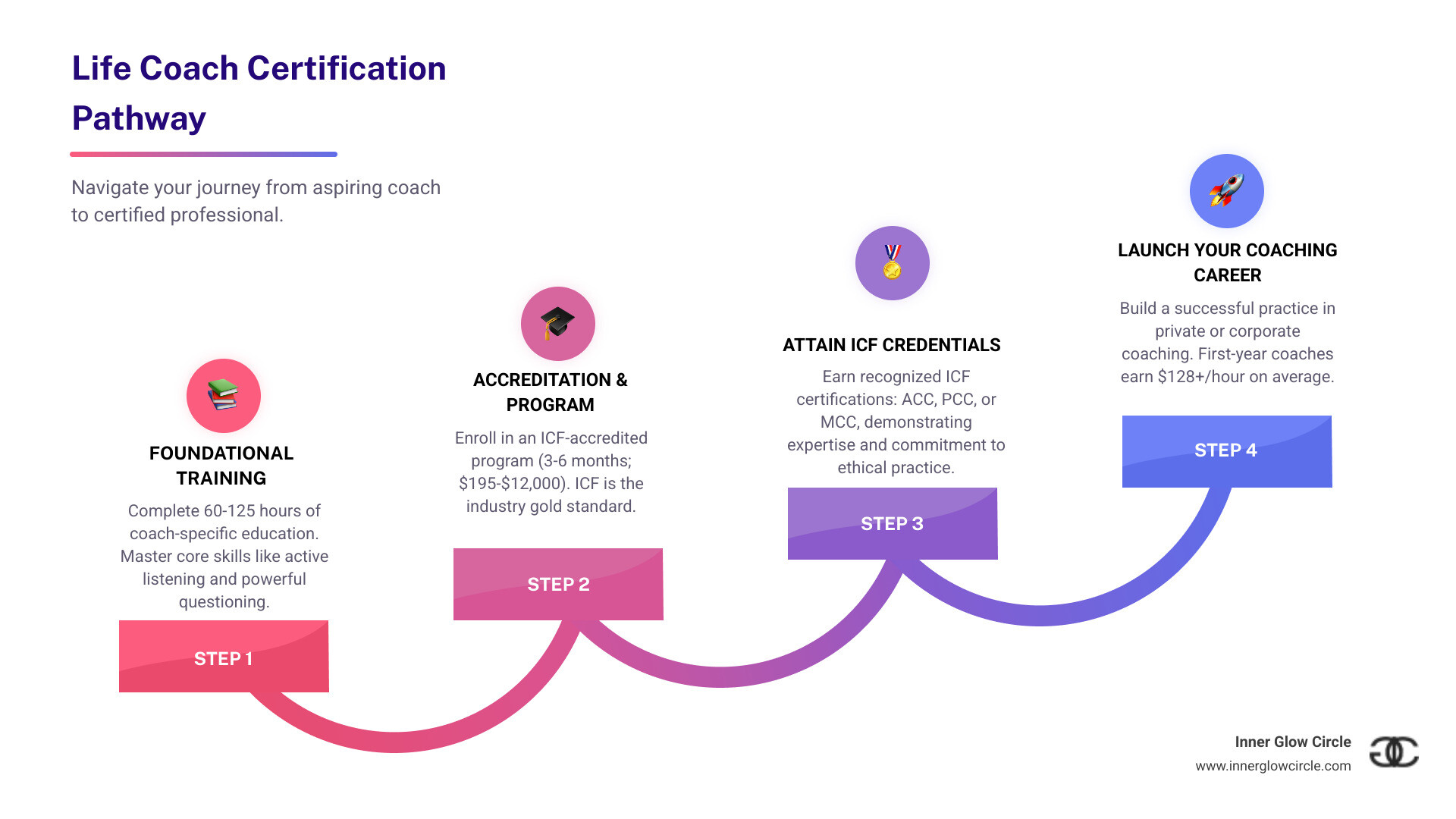
- Training Requirements: 60-125 hours of coach-specific education
- Key Credentials: ICF (International Coach Federation) accreditation is the gold standard
- Time Investment: 3-6 months for most programs (some intensive 5-day options available)
- Cost Range: $195-$12,000 depending on program depth and inclusions
- Core Skills: Active listening, powerful questioning, goal setting, accountability
- Career Paths: Private practice, corporate coaching, specialized niches
- Earning Potential: $128+ per hour for first-year coaches, $62,000+ average salary
Many aspiring coaches face self-doubt, but as one training institute notes, “When you become a coach, the first life you change is your own.” This change begins with choosing the right certification program.
The coaching profession helps people find their purpose, overcome obstacles, and achieve meaningful goals. Unlike therapy, which often heals past wounds, coaching is future-focused and action-oriented. It’s about partnering with clients to open up their potential.
Whether you’re drawn to wellness coaching, career transitions, or executive leadership, the right training program will equip you with proven techniques and business skills to launch a successful practice.
Similar topics to life coach training and certification:
What is a Life Coach and Why is Certification Essential?
Think of a life coach as your professional partner in growth, here to help you clarify your vision and create a clear path forward. Unlike therapy, which often explores the past, life coaching is all about your future—where you want to go and how to get there.
The relationship is a partnership. You bring your dreams, and we bring the tools, questions, and accountability to help you move forward. We don’t give you the answers; we ask the right questions to help you find your own solutions.
Why become a certified life coach? The benefits go far beyond just helping others.
First, the personal change is incredible. Every skill you learn—active listening, asking powerful questions, setting goals—becomes part of how you steer your own life. Many coaches say this personal growth is one of the most rewarding parts of the experience. You’ll understand yourself and others on a completely new level. Why Become a Life Coach
Then there’s professional credibility. While anyone can call themselves a life coach, the industry has real standards. Life coach training and certification shows potential clients you’ve done the work. You’ve mastered the core skills, learned ethical boundaries, and committed to excellence.
This credibility builds trust with clients and positions you as a serious professional in a rapidly growing field. Personal Development Coaching Services
Key Skills of a Successful Coach
Successful coaching requires specific skills that you can learn and master.
Active listening is the most important skill you’ll develop. It’s not just hearing words, but truly understanding what your client is experiencing, feeling, and not saying. This deep listening creates space for profound connections.
Powerful questioning is where the magic happens. Instead of giving advice, you learn to ask questions that help clients find their own wisdom and challenge limiting beliefs.
Building rapport and empathy creates a safe container for change. When clients feel understood and supported, they’re willing to explore bigger possibilities and take bolder action.
Intuition is a surprising but huge coaching skill. While coaching has structured methods, you’ll also learn to trust your inner knowing to shift a client’s perspective.
Accountability ties it all together. You help clients set meaningful goals and then lovingly hold them accountable to their commitments. It’s supportive but firm. Confidence for Female Entrepreneurs
The Clear Difference: Coaching vs. Therapy
This is a critical distinction for your practice and your clients’ well-being.
Therapy typically looks backward to heal past wounds, trauma, or mental health conditions. Coaching looks forward—we focus on where you are now, where you want to be, and the action steps to get there.
Therapists are trained to diagnose and treat mental health disorders. As coaches, we work with people who are fundamentally healthy but may be stuck or need support to reach their goals.
One isn’t better than the other; they serve different purposes. Life coach training and certification programs teach you to recognize these boundaries clearly. You’ll learn when a client might benefit from therapy and how to make appropriate referrals. The International Coach Federation provides clear ethical guidelines to help coaches stay within their scope of practice.
Coaching assumes your clients are creative, resourceful, and whole. Your job is to help them access their own wisdom and take action toward their dreams.
How to Choose the Right Life Coach Training and Certification Program
Finding the perfect life coach training and certification program can feel overwhelming, but choosing thoughtfully is one of the best investments you can make in your future.

Think of this as choosing a partner for your change. The key is finding a program that feels right for you. Consider what matters most in your learning journey. Do you thrive in supportive communities, need flexible scheduling, or want hands-on practice? The right program should align with your values, learning style, and career goals. Choosing Coach Training
This isn’t just about earning a certificate. You’re investing in the skills, confidence, and credibility that will help you change lives—starting with your own.
What to Look for in a Life Coach Training and Certification Curriculum
A solid curriculum is your roadmap from beginner to confident coach. Here’s what it should include.
Training hours matter—look for programs offering at least 60 hours of coach-specific education. These hours are often required for credentials from organizations like the International Coach Federation (ICF). How to Become a Life Coach
Great programs include real practice opportunities. Reading about coaching is one thing, but practicing it changes everything. The best programs include live coaching demos, role-playing, and supervised practice sessions.
Core competency training should be the backbone of any quality program. These are the fundamental skills every successful coach needs, like active listening, powerful questioning, and maintaining ethical boundaries.
Don’t overlook business development training. Being an amazing coach means nothing if you can’t build a thriving practice. Look for programs that teach you to find your niche, create coaching packages, set prices, and market your services authentically. Strategy and Goals are key.
The best programs also offer ongoing support, like live Q&A sessions, mentor access, and community connections, because the learning doesn’t stop at certification.
Finding Your Niche: Specialized Certifications
While general life coach training provides a strong foundation, a specialty can be a game-changer. It makes you the go-to expert for specific challenges.
Empowerment Coach certification focuses on helping people reclaim their personal power and build self-worth. Career Coaching for Women specializes in workplace challenges and leadership development.
Wellness coaching is for those passionate about health goals and stress management. Relationship coaching is perfect for helping people improve their connections.
For corporate environments, executive coaching involves working with leaders on strategy and effectiveness. Spiritual coaching guides clients toward deeper purpose.
Some programs bundle specializations, letting you explore different areas. A niche clarifies your marketing and attracts the right clients.
Understanding the Cost of Life Coach Training and Certification
The investment in life coach training and certification varies dramatically, from a few hundred dollars to over $12,000.
Budget programs might cost $195-$295, but comprehensive, accredited programs typically range from $5,000 to $10,000. Consider what you’re getting for that investment.
Quality programs include more than just videos. Look for mentor coaching, business development tools, templates, community access, and marketing support. One program might seem expensive until you realize it includes everything you need to launch your practice.
Watch out for hidden costs. Some programs charge extra for mentoring or certification fees. Make sure you understand the total investment before committing.
Payment plans are often available, making quality training accessible. Many coaches report earning back their investment after working with just a handful of clients. Get Paid Class
You’re not just buying training; you’re investing in a career that could transform your life and the lives of others.
The Gold Standard: Accreditation and Core Competencies
When choosing your life coach training and certification, you’ll find that not all programs are equal. In an unregulated industry, accreditation is your North Star, separating professional training from weekend workshops.
Think of accreditation as a quality guarantee. It means an independent, respected organization has reviewed a program to ensure it meets rigorous standards, from curriculum to instructor qualifications. It’s a voucher for a program’s credibility before you invest your time and money.
This professional recognition ensures you receive training that prepares you to create meaningful change. When you choose an accredited program, you’re investing in your professional future and your clients’ success.
Why ICF Accreditation Matters
The International Coach Federation (ICF) is the undisputed gold standard in our industry. With over 57,519 members worldwide, the ICF has been shaping coaching for three decades. When people think “professional coach,” they think ICF. Learn more about the ICF at the official ICF website.
Here’s why ICF accreditation matters for your life coach training and certification:
- Global recognition: Your credentials travel with you, opening doors everywhere.
- Vetted programs: The ICF puts programs through a thorough review process, examining everything from teaching methods to ethical standards.
- Path to credentials: An ICF-accredited program is your most direct route to earning respected designations like ACC (Associate Certified Coach), PCC (Professional Certified Coach), and MCC (Master Certified Coach).
- Commitment to excellence: Choosing ICF-accredited training demonstrates your dedication to ethical behavior and professional standards, guided by the ICF Code of Ethics.
- Community and resources: The ICF provides ongoing professional development, industry research, and a global network of peers.
As the ICF says, they’re “the gold standard of professional coaching, shaping the coaching landscape for over 30 years with members who are experts with rigorous education and experience, speaking the universal language of change and learning.”
The Core Competencies You’ll Master
The ICF has developed eight essential core competencies that form the backbone of effective coaching. These are practical skills you’ll develop through hands-on practice.
- Demonstrates Ethical Practice: Upholding the highest professional standards, including confidentiality and acting in the client’s best interest.
- Embodies a Coaching Mindset: Developing curiosity, flexibility, and a client-centered focus that puts their agenda first.
- Establishes and Maintains Agreements: Creating clear, mutual understanding about the coaching process, goals, and boundaries.
- Cultivates Trust and Safety: Creating the secure foundation needed for clients to share their challenges and dreams.
- Maintains Presence: Being fully conscious and engaged with your client with pure, empathetic attention.
- Listens Actively: Understanding not just what your client is saying, but what they’re not saying and what it all means.
- Evokes Awareness: Helping clients find new insights through powerful questions, observations, and reflections.
- Facilitates Client Growth: Partnering with clients to design actions, create accountability, and foster lasting change.
These competencies are the skills that will make you the kind of coach who truly changes lives. Your life coach training and certification program will help you master each one. Learn more about The ICF’s Core Competencies.
From Certified to CEO: Building Your Coaching Practice
Once you’ve completed your life coach training and certification, you’re a certified professional with the skills to transform lives. But how do you actually build a business?

The good news? You’re entering the field at the perfect time. The life coaching industry is the second fastest-growing industry worldwide, commanding $2 billion annually. People are actively seeking coaches to guide them.
Your journey from certified coach to CEO is about creating a sustainable practice that allows you to make a real difference while building the life you want. How to Work Smarter Not Harder as a Female Entrepreneur
Career Paths and Earning Potential
Your life coach training and certification opens many doors. The beauty of coaching is its flexibility—you can shape your career around your lifestyle and passions.
- Private practice is where many coaches thrive, working directly with individuals or groups. You choose your hours and specialize in areas that light you up.
- Corporate coaching is another exciting path. Companies hire coaches to work with employees on communication, leadership, and change management.
- Some coaches become internal coaches within organizations or blend coaching with consulting.
Now, let’s talk earnings. The numbers are encouraging. First-year certified coaches often start with hourly rates of $128 or more. The average salary for a life coach in the US is over $62,000 annually. Many experienced coaches, especially those with clear niches, achieve six-figure incomes.
Your earning potential depends on your specialty, pricing, and marketing. Coaches who treat their practice like a real business see the strongest financial results. Make Money with Your Coaching Certification
Marketing and Growing Your Business
Being a great coach is only half the equation. To thrive, you also need to accept business and marketing.
- Identify your ideal client. Get crystal clear on who you want to serve—their challenges and dreams. This clarity makes all other marketing efforts easier.
- Create coaching packages. Instead of single sessions, offer 3- or 6-month programs. This delivers better results for clients and creates predictable income for you.
- Build your online presence. A professional website and active social media profiles help potential clients find and trust you. Be authentic and consistent.
- Network by building genuine relationships. Connect with other professionals and attend industry events.
- Use client testimonials. When a client’s life changes, ask them to share their experience. These stories are powerful magnets for new clients.
- Create content like blog posts, videos, or podcasts to share your expertise and attract clients who resonate with your approach.
The goal is to create a practice that feels authentic while effectively reaching the people you’re meant to serve. Glow CEO
Frequently Asked Questions about Life Coach Training
Starting your journey toward life coach training and certification brings up many questions. This is a big decision, so let’s address the most common concerns.
How long does it take to get certified as a life coach?
The timeline for life coach training and certification is flexible.
- 5-day intensive programs offer a concentrated, bootcamp-style experience for those who want to get certified quickly.
- 3-6 month programs provide a great balance for those juggling work and family, allowing time to absorb and practice the material.
- Self-paced options offer maximum flexibility, letting you study whenever it fits your schedule.
For ICF hour requirements, you’ll generally need 60 to 125 hours of coach-specific education. You’re building expertise that will serve you for years.
Do I need a degree or previous experience to become a life coach?
No, no specific degree is required to become a certified life coach. This field is accessible to people from all backgrounds.
What matters most is your passion for helping others and your desire to see people flourish. Your own life experience is valuable—the challenges you’ve overcome and the wisdom you’ve gained are assets in your coaching practice.
Quality training provides the necessary skills, teaching you everything from coaching techniques to business basics, regardless of your previous career.
How much can I earn as a certified life coach?
Your certification opens up exciting earning potential.
Income varies by niche and experience, but the potential is strong. Coaches specializing in areas like executive coaching often command premium rates.
First-year hourly rates typically start at $128 or higher. The average US salary for life coaches exceeds $62,000 annually, and with the industry generating $2 billion annually, there’s plenty of room for growth.
Many coaches build thriving practices that provide both financial freedom and deep fulfillment, with six-figure potential being an achievable goal. Your earning potential depends on your dedication, the value you provide, and how well you market your unique gifts.
Conclusion: Begin Your Transformative Journey
Taking the leap into life coach training and certification is more than a career change—it’s stepping into a life where your passion becomes your profession. We’ve covered what makes a great coach, how to choose a program, the importance of ICF accreditation, and the steps to build a thriving practice.
The path from aspiring to certified coach is one of the most rewarding journeys you can take. You’ll find that the first life you truly transform is your own. As you master skills like powerful questioning and deep listening, they will ripple into every area of your life.
The coaching industry is booming, with a $2 billion market showing no signs of slowing down. This means incredible opportunities for women ready to make their mark. Whether you’re drawn to wellness, career transitions, or empowerment coaching, there’s space for your unique gifts.
The impact you can make has no limits. Every client you coach goes on to touch other lives, creating ripples of positive change that extend far beyond what you can imagine.
If you’re feeling that mix of excitement and nervousness, that’s your inner wisdom telling you that you’re ready for this next chapter.
Inner Glow Circle is a premier, ICF-accredited program designed specifically to help women like you become confident and successful coaches. We don’t just teach you the skills—we support you in finding your unique coaching style and building the business of your dreams.
Your calling to coach is real. Your desire to make a difference matters. The world needs what you have to offer.
Find your purpose and start your life coach training journey today!


