

Understanding the Power of Development Coaching
Development coaching is a collaborative process focused on helping individuals grow holistically through improved self-awareness, skill-building, and sustainable personal and professional change. Unlike other coaching approaches, it addresses the whole person and their evolving potential across multiple life dimensions.
What is Development Coaching?
- Definition: A partnership that explores how individuals make meaning of their experiences to foster profound growth
- Focus: Long-term personal and professional development rather than quick fixes
- Approach: Holistic view of the individual’s life journey and evolving growth
- Goal: Sustainable change through mindset and identity shifts
Nearly three in five employees (59%) report experiencing negative impacts from work-related stress, including lack of interest, motivation, and focus. At the same time, research by Tasha Eurich found that only 10-15% of individuals truly possess self-awareness. These statistics highlight why development coaching has become increasingly valuable.
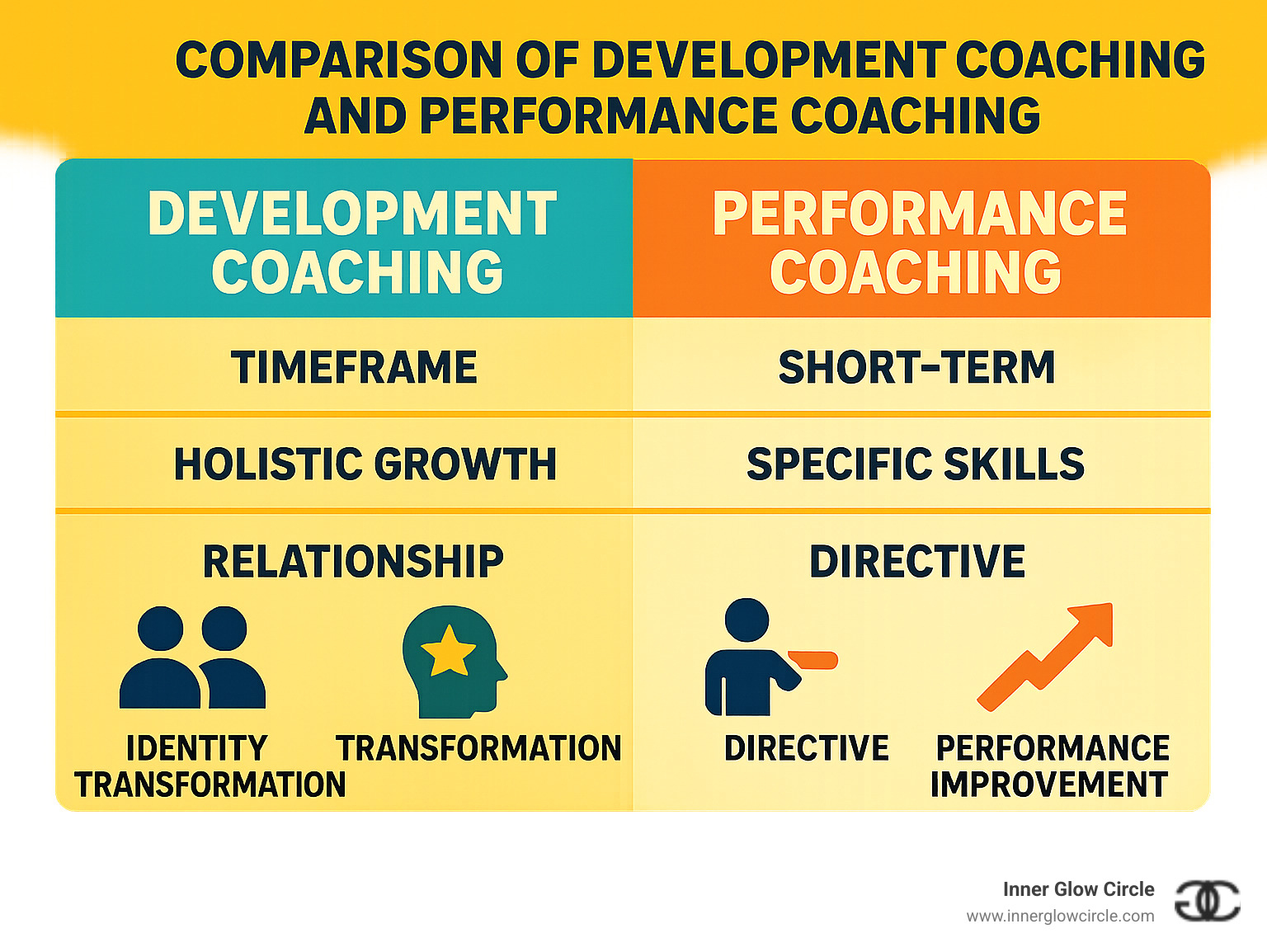
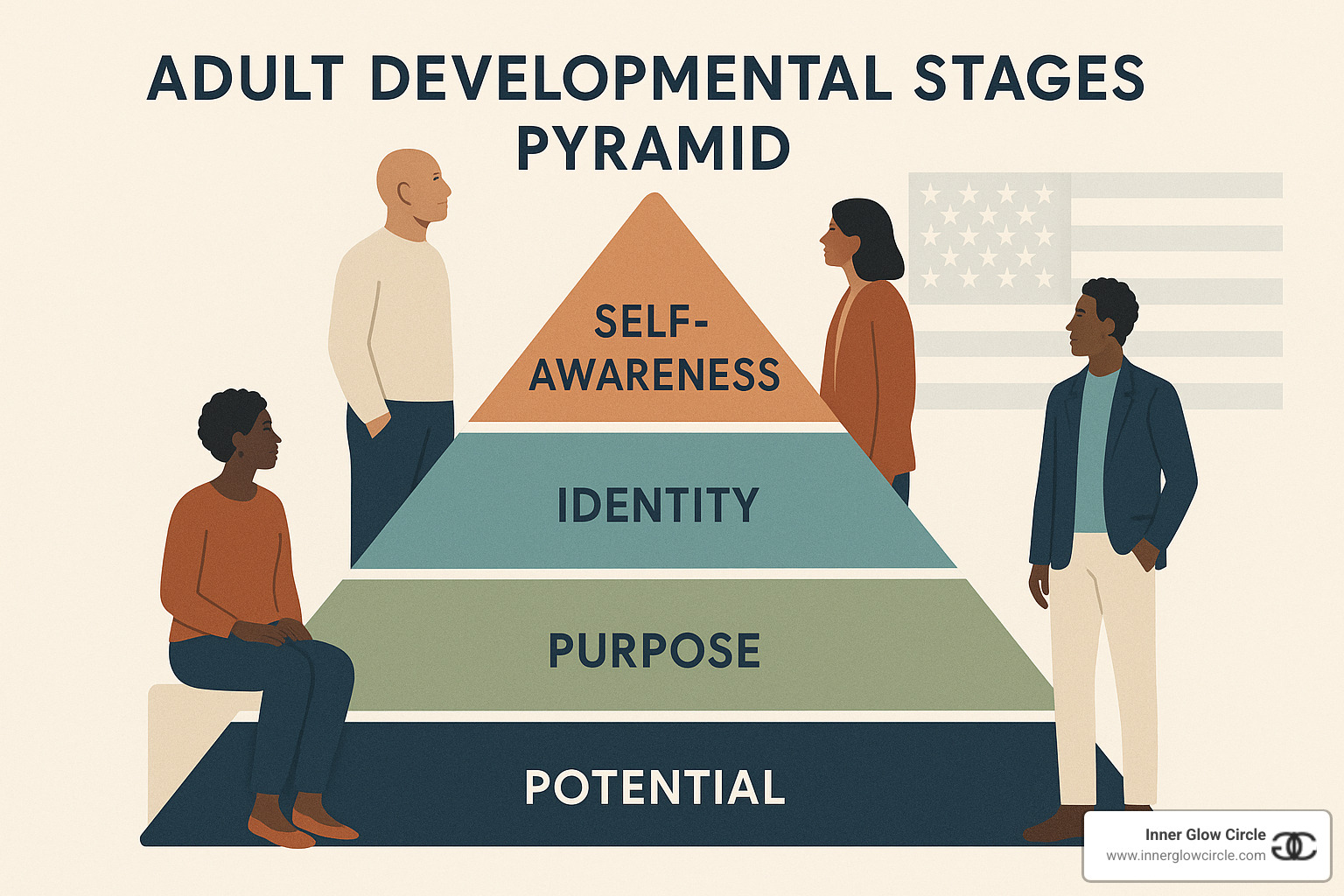
Development coaching differs from traditional performance coaching in significant ways. While performance coaching targets specific skills or short-term goals, development coaching addresses deeper questions of identity, purpose, and potential. It’s about who you’re becoming, not just what you’re achieving.
“Developmental coaching is a transformative approach that recognizes the evolving nature of individuals,” notes one expert practitioner. This evolution isn’t linear—it ebbs and flows through various life stages, requiring different types of support along the way.
For Sarah, who dreams of launching her coaching business but struggles with self-doubt, development coaching could provide the structured pathway to build both the inner confidence and outer skills needed for success.
Quick development coaching terms:
– careers and personal development
Developmental Coaching: Definition & Core Theories
Have you ever wondered why some coaching experiences feel transformative while others just scratch the surface? The answer might lie in the depth of the approach. Development coaching dives beneath surface-level behaviors to explore how we make meaning of our experiences and grow throughout our lives. Unlike coaching that focuses only on what you do, developmental coaching explores who you are becoming.
Think of it as the difference between learning to sail versus understanding how to steer by the stars – both valuable, but one offers a deeper, more enduring form of guidance.
What is Development Coaching?
At its heart, development coaching is a partnership that honors your whole journey. It’s the kind of coaching that walks alongside you through life’s transitions, helping you grow not just in what you can do, but in how you see yourself and your place in the world.
When Maria came to us feeling stuck in her career, she wasn’t just looking for job search strategies. She needed to reconnect with her deeper purpose and reimagine her professional identity. That’s the territory of developmental coaching.
What makes this approach special is its focus on your whole self – not just isolated skills or behaviors. It explores how you make meaning of your experiences, supports sustainable long-term change, and nurtures shifts in identity that ripple through every area of your life.
“Before my developmental coaching journey, I kept hitting the same walls,” says Jamie, a recent client. “Now I don’t just have new tools – I have a new lens through which I see myself and my possibilities.”
Development coaching shines brightest when you’re facing those complex life challenges that simple advice can’t solve – career transitions, leadership evolution, relationship patterns, or those persistent feelings of being stuck despite outward success.
Core Psychological Models in Development Coaching
The magic of developmental coaching comes from its rich theoretical foundations. Let’s explore the models that give this approach its depth and power.
Robert Kegan’s work on adult development shows us that growth continues throughout our lives. His research, detailed at Developing Leadership, reveals how we move through different “orders of consciousness” – from seeking external validation to authoring our own lives and eventually holding multiple perspectives simultaneously.
A great development coach can sense which stage you’re operating from and gently support your evolution. Imagine moving from “I need others to tell me I’m on the right track” to “I define success on my own terms” – that’s the kind of profound shift developmental coaching nurtures.
Tatiana Bachkirova offers another helpful framework with her elephant and rider metaphor. Your emotional self (the powerful elephant) and rational mind (the directing rider) don’t always work in harmony. When Jill realized her career decisions were being driven by her “elephant” – fear of disapproval – despite her “rider” wanting creative fulfillment, she finally understood her career dissatisfaction.
Carol Dweck’s research on mindsets adds another valuable dimension. Development coaches help you shift from a fixed mindset (“I’m just not good at public speaking”) to a growth mindset (“With practice and feedback, I can become a confident presenter”). This shift transforms challenges from threats to opportunities for growth.
Beyond these models, developmental coaching draws on emotional intelligence principles and the concept of vertical development. While horizontal development adds knowledge, vertical development transforms how you think.
As one of our coaches puts it: “Horizontal development is like adding more books to your existing bookshelf. Vertical development builds you a whole new library.”
By weaving together these powerful frameworks, development coaching creates a space where profound personal and professional change becomes not just possible, but natural – a journey of becoming more fully yourself while expanding what that self can be and do in the world.
Developmental Coaching vs. Performance Coaching: Key Differences
When you’re exploring coaching options, it helps to understand the fundamental differences between development coaching and performance coaching. Think of them as two different journeys – one takes you on a scenic route through the mountains of self-findy, while the other is more like an express train to a specific destination.
| Aspect | Development Coaching | Performance Coaching |
|---|---|---|
| Scope | Holistic; addresses multiple life dimensions | Narrow; focuses on specific skills or objectives |
| Time Frame | Long-term; often 6+ months | Short-term; often weeks to a few months |
| Approach | Exploratory; questions assumptions | Directive; provides clear guidance |
| Outcome | Change of mindset and identity | Improvement in specific performance areas |
| Client Engagement | Deep reflection and meaning-making | Action-oriented and results-focused |
| Relationship | Partnership; co-creation | More hierarchical; expert-novice |
Why Development Coaching Goes Deeper
Have you ever fixed something in your life only to find the same issue popping up elsewhere? That’s where development coaching shines – it digs beneath the surface to uncover what’s really going on.
“Traditional coaching often conditions behavior for short-term gains, whereas developmental coaching seeks deep mindset shifts that lead to sustainable self-driven growth,” explains one of our coaching experts.
This deeper approach is like renovating your house’s foundation rather than just painting the walls. When you work with a development coach, you’re signing up for:
Identity shifts that transform how you see yourself, not just changing what you do. Imagine viewing yourself as a naturally confident person rather than someone who needs techniques to appear confident.
Mindset changes that address those pesky limiting beliefs we all carry around. The voice that says “I’m not good enough” gets questioned and often replaced.
Long-term resilience that builds your internal resources, so you’re better equipped for whatever life throws your way next.
Transferable growth that ripples across all areas of your life – that breakthrough in your career confidence often transforms your personal relationships too.
Take Maria, a mid-career professional who came for coaching feeling lost despite her impressive resume. Through development coaching, she finded how childhood patterns of seeking approval were affecting her career choices. Rather than just setting new goals, she transformed how she defined success itself – and found a path that truly resonated with her authentic self.
When Performance Coaching Is Enough
While I’m passionate about the profound benefits of development coaching, I’ll be the first to admit there are plenty of situations where performance coaching is exactly what you need:
When you’re facing specific skill gaps – maybe you need to master a new software program or improve your delegation skills.
If you have short-term goals with a clear timeline – like preparing for a job interview or launching a new product.
When success can be measured by job-specific metrics like sales numbers, client retention, or project completion rates.
If your challenge has a limited scope rather than feeling like a systemic issue that affects multiple areas of your life.
For example, if you need to improve your public speaking for an upcoming presentation, performance coaching might be the more efficient choice. You’ll get techniques, practice, and feedback focused on that specific skill. But if your fear of public speaking stems from deeper issues with confidence or self-worth, development coaching would address those root causes, changing not just your speaking abilities but how you show up in many situations.
“Performance coaching targets specific professional competencies and objectives, whereas developmental coaching takes a holistic view of the individual’s life journey and evolving personal growth,” as one of our coaching experts at Inner Glow Circle puts it.
The key is matching the coaching approach to your unique needs and goals. At Inner Glow Circle, we help women identify which type of coaching will best support their journey toward authentic success and fulfillment.
The Developmental Coaching Journey: Process, Techniques & Tools
The development coaching journey feels a bit like setting out on an trip with a trusted guide by your side. It’s structured enough to keep you on track, yet flexible enough to adapt to your unique path. Unlike coaching approaches that tell you exactly what to do, developmental coaching invites you to find your own wisdom through thoughtful reflection and meaningful action.
Typical Programme Structure
When you start on a development coaching journey, you’re typically looking at an 8-12 week initial commitment that unfolds as a collaborative partnership. Most programs include about six one-hour sessions, spaced a week or two apart to give you time to integrate what you’re learning.
Whether you meet face-to-face or virtually (both work beautifully!), you’ll likely have some “homework” between sessions – not the stressful kind, but reflective exercises that deepen your insights and help you practice new ways of thinking.
The All Stars Project offers a great example of this structure in action. Their 8-week developmental coaching program pairs young adults with industry leaders, creating powerful connections that spark both personal and professional growth.
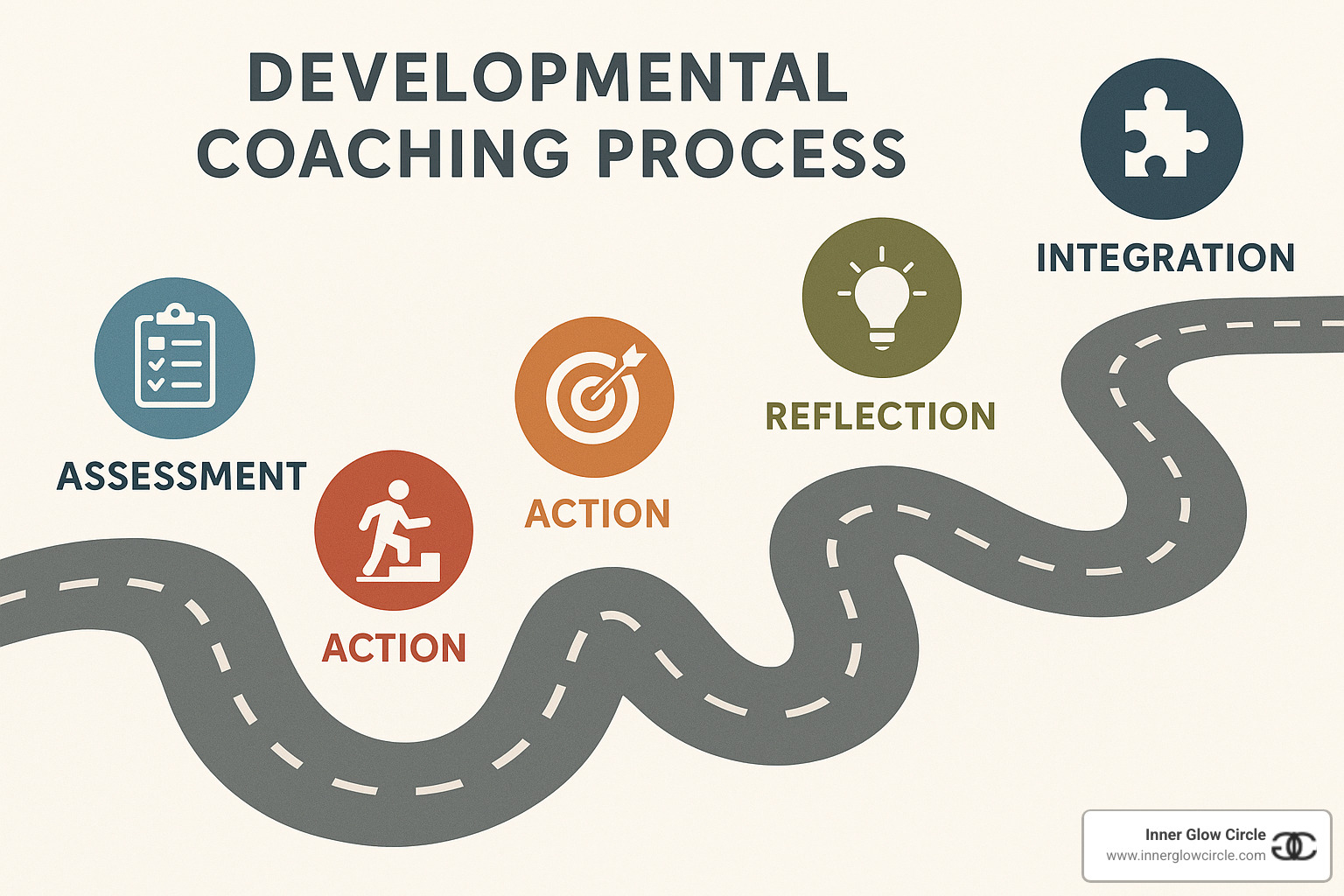
Your coaching journey typically unfolds in natural phases. You’ll start with assessment and findy, getting clear on where you are now and what makes you tick. Then you’ll work with your coach to create meaningful goals that align with your deepest values. As you build greater self-awareness, you’ll experiment with new perspectives and behaviors in your everyday life.
Throughout the process, you’ll reflect on what’s working and what isn’t, making adjustments as you go. By the final sessions, you’ll focus on integrating your insights and creating supports to sustain your growth long after the formal coaching ends.
Essential Techniques & Tools
Great development coaches have a rich toolkit of approaches to help you grow. At the heart of every session are those thought-provoking questions that make you pause and see things differently: “What values are driving this decision?” or “What patterns do you notice in how you respond to challenges?”
The elephant and rider mapping technique (based on Bachkirova’s model) helps you understand when your emotional “elephant” is running the show despite your rational “rider’s” best intentions. This awareness alone can be transformative, helping you align your feelings and thoughts rather than having them work against each other.
Many coaches use reflective journaling to help you process experiences between sessions. Simple prompts like “What triggered strong emotions for you today?” can reveal patterns you might not otherwise notice. And while personality assessments can offer helpful insights, evidence-based tools like the Big Five often provide more reliable information than the popular but less scientifically validated MBTI.
For gathering broader perspectives, 360° feedback brings in viewpoints from people in your life who see you in different contexts. This can illuminate blind spots and strengths you might not be fully aware of – often the most valuable insights come from these external perspectives.
When setting development goals, the SMART framework (Specific, Measurable, Achievable, Relevant, Time-bound) helps ensure your objectives are clear and actionable. Combined with integrated mental training – which uses visual stimuli and spaced repetition to build new thought patterns – these approaches create a powerful foundation for lasting change.
Qualities of an Effective Development Coach
Not everyone with “coach” in their title is equipped to facilitate true developmental work. The best development coaches bring a special blend of skills and qualities to the relationship.
Strong communication skills top the list – but we’re talking about a particular kind of communication. These coaches listen deeply to what’s said and what remains unspoken. They ask questions that open new doors of understanding rather than leading you to predetermined answers.
“A truly effective coach listens to understand, not to respond,” as one expert beautifully puts it. This quality of presence creates the safe space needed for real change.
Empathy and compassion flow naturally from this presence. Your coach meets you exactly where you are, without judgment, while believing wholeheartedly in your capacity for growth. This combination of acceptance and possibility creates the psychological safety needed for vulnerable exploration.
The best coaches also demonstrate systems thinking – they understand that your life is an interconnected web rather than isolated compartments. A change in your career affects your relationships; shifts in your self-perception influence your leadership style. This holistic perspective helps you make sustainable changes that positively impact all areas of your life.
Complexity fitness might sound technical, but it simply means your coach is comfortable dancing with uncertainty and holding multiple perspectives at once. They don’t rush to simplistic solutions or one-size-fits-all advice. Instead, they help you steer the beautiful complexity of being human.
Finally, effective development coaches bring solid theoretical knowledge to their work. They understand adult development theories and psychological models of change, and they’re committed to their own ongoing learning. This foundation ensures they can support your growth with both heart and expertise.
At Inner Glow Circle, we believe this combination of warmth, wisdom and skill creates the perfect conditions for women to find their authentic power and purpose. The journey of development coaching isn’t always easy, but with the right guide by your side, it can be one of the most rewarding trips of your life.
Why Developmental Coaching Matters: Benefits & Case Studies
When we talk about development coaching, we’re not just discussing a slight improvement in skills or performance. We’re talking about a transformative approach that touches every corner of your life, creating positive ripples that extend to your workplace, relationships, and community.

Individual Change Stories
Maria: Finding Purpose in Mid-Career
Maria had checked all the boxes of success – impressive title, enviable salary, industry recognition. Yet something felt hollow. “I had everything I thought I wanted,” she admits with a wry smile, “but I’d wake up wondering if this was really it.”
Through her development coaching journey, Maria finded something surprising: her definition of success wasn’t actually hers. It belonged to her parents, her mentors, her social circle. Her coach created a safe space for Maria to:
Uncover her authentic values (which included creativity and meaningful connection – elements missing from her current role)
Recognize her pattern of seeking external validation rather than internal fulfillment
Build confidence in making decisions based on her own compass rather than others’ expectations
Six months later, Maria hadn’t left her job – but she’d transformed her relationship with it. “I renegotiated my role to include more creative projects and mentoring junior staff,” she explains. “The company gets a more engaged leader, and I get to bring my whole self to work.”
Jake: Navigating Early Career Pressure
At 19, Jake felt paralyzed by what seemed like a life-sentence decision: choosing his career path. “Everyone kept asking what I was going to do with my life,” he remembers. “The pressure was overwhelming.”
His development coach helped Jake see things differently. Together they:
Explored his curiosities without the weight of permanent decisions
Reframed career development as an ongoing experiment rather than a one-time choice
Built comfort with the natural uncertainty of growth
“The biggest change wasn’t finding the ‘perfect’ career,” Jake says. “It was realizing I don’t need to have everything figured out at 19. I’m learning to trust my ability to adapt and grow as I go.”
The Confidence Shift
Harvard Business Review’s research highlights something fascinating: people who experience development coaching report significant improvements in self-awareness. This newfound clarity helps them articulate more authentic personal and professional goals.
As one participant beautifully put it: “Before coaching, I thought confidence was something you either had or didn’t – like height. Now I understand it’s something you build through aligned action and self-knowledge.”
Organizational ROI
When organizations invest in development coaching for their people, they’re not just being nice – they’re being smart. The returns show up in multiple ways:
Engagement That Sticks
Companies with strong coaching cultures consistently report higher employee engagement. When people feel supported in their whole development – not just their technical skills – they bring more energy, creativity and commitment to their work.
Agility During Change
We all know that change is constant in today’s world. Development coaching builds the internal resources people need to steer uncertainty with resilience rather than resistance. One organizational expert notes, “Most change initiatives fail because they focus on processes, not people. Coaching addresses the human side of change.”
Leadership That Evolves
Traditional leadership development focuses on what leaders know (horizontal development). Development coaching adds the crucial dimension of how leaders think (vertical development). The result? More adaptable, innovative leaders who can handle increasing complexity.
Inclusive Decision-Making
As leaders develop greater self-awareness through coaching, they become more conscious of their biases and blind spots. This naturally leads to more inclusive team dynamics and decision-making processes.
Culture of Innovation
When employees develop the confidence to share diverse perspectives and challenge assumptions, organizations benefit from more creative problem-solving and innovation.
The All Stars Project has seen these benefits firsthand. Their coaching programs consistently produce participants with markedly improved communication skills, professional confidence, and career readiness – all of which translate to tangible organizational value.
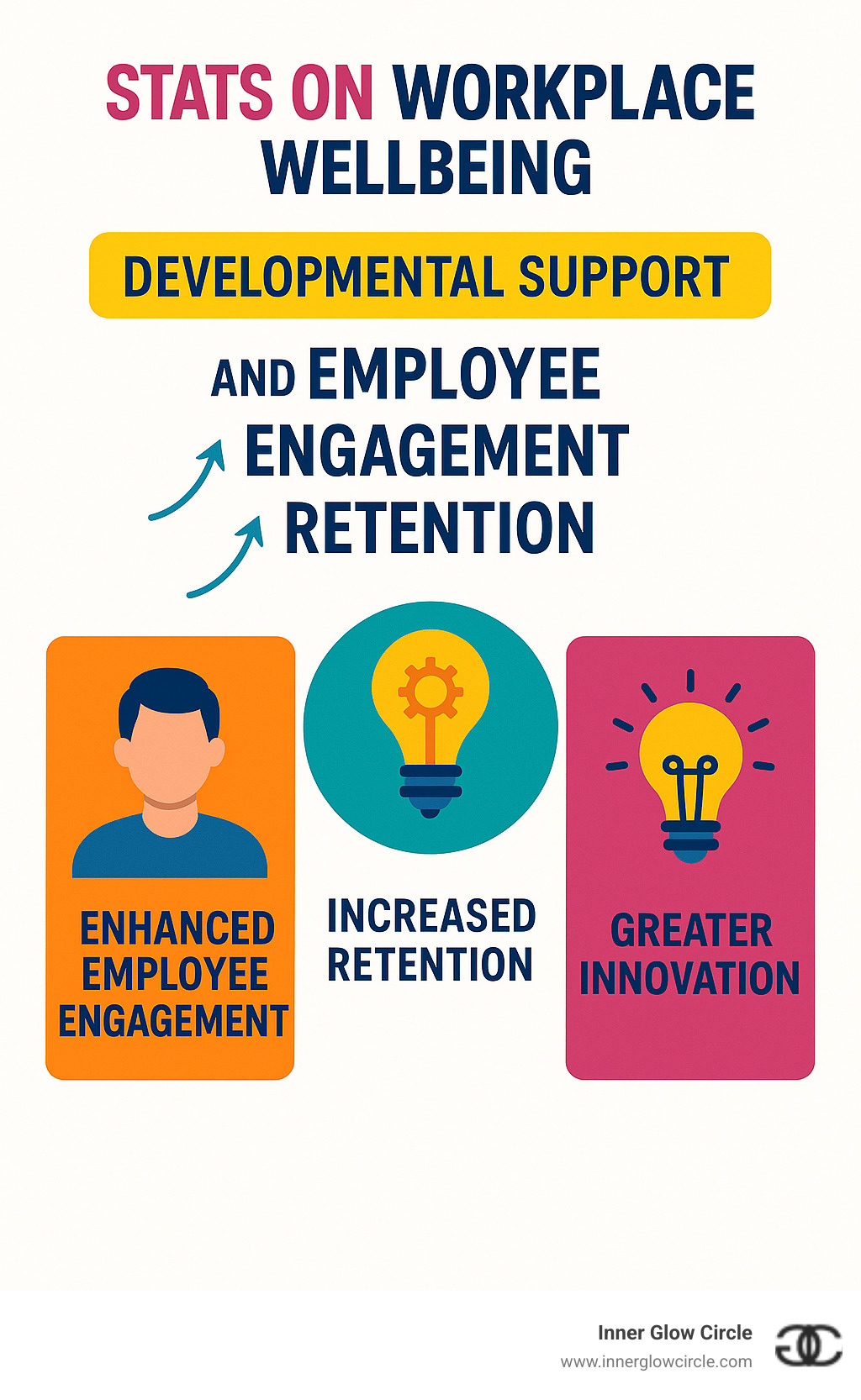
The research from APA’s workplace well-being study backs this up. Organizations that invest in developmental support see measurable improvements in engagement, retention, and innovation – especially during challenging times.
At Inner Glow Circle, we’ve witnessed these changes again and again. Our approach to development coaching honors both the individual’s growth journey and the organization’s goals, creating sustainable change that benefits everyone involved.
Getting Started with Development Coaching & Next Steps
Ready to start on your development coaching journey? Whether you’re seeking coaching for yourself or want to help others grow, taking that first step can truly transform your life. Let’s explore how to begin this rewarding path.
How to Become a Development Coach
If you feel drawn to supporting others in their growth journey, becoming a certified developmental coach might be your calling. This path combines the joy of helping others with your own continuous personal development.
Before diving in, take a moment for honest self-reflection. Ask yourself if you’re genuinely passionate about supporting others’ growth journeys. Do you have the emotional maturity to hold space for challenging conversations? Are you committed to your own ongoing development? This internal readiness forms the foundation of becoming an effective coach.
Quality training is absolutely essential for development coaching. Look for programs accredited by respected organizations like the International Coaching Federation (ICF). These programs should blend theoretical foundations with practical skills, offer supervised practice sessions, and thoroughly cover developmental models.
At Inner Glow Circle, our coach training program is specifically designed with women in mind, providing the skills, confidence, and supportive community needed to thrive as coaches.
Working with an experienced mentor coach is invaluable as you develop your skills. A good mentor will observe your coaching sessions, provide constructive feedback, and support your growth. This mentorship helps bridge the gap between learning coaching techniques and embodying them naturally.
Earning a recognized credential adds credibility to your practice. The ICF offers three credential levels – Associate Certified Coach (ACC), Professional Certified Coach (PCC), and Master Certified Coach (MCC). Each requires specific training hours, coaching experience, and skills assessment.
Want to learn more? Our comprehensive guide on how to become a certified life coach walks you through every step of the journey.
Implementing Development Coaching in Organizations
Organizations that accept development coaching create cultures where growth and innovation flourish. The most successful implementations start at the top – when leaders experience coaching firsthand, they become powerful advocates for coaching throughout the organization.
Creating a clear coaching framework helps everyone understand the process. This framework should outline who receives coaching and when, how coaching aligns with broader organizational goals, measurement methods for coaching outcomes, and whether to use internal coaches, external specialists, or a blend of both.
“When organizations build coaching capability internally, they create a multiplier effect,” notes one organizational development expert. Training managers in “The Coach Approach” embeds coaching conversations into everyday interactions, changing the workplace culture one conversation at a time.
For maximum impact, integrate coaching with existing systems. Connect development coaching to onboarding processes with tools like the Onboarding Toolkit, performance management systems, succession planning efforts, and leadership development programs. This integration ensures coaching becomes woven into the organizational fabric rather than standing alone.
Measuring impact matters too. Track both numbers (employee engagement scores, retention rates) and stories (leadership effectiveness, career progression, personal testimonials). These measurements help demonstrate the value of coaching and guide program refinements.
Trends Shaping the Future of Development Coaching
The development coaching field continues to evolve in exciting ways. AI-improved coaching platforms are making coaching more accessible and scalable, with technology supporting (but never replacing) the human connection at coaching’s heart.
Micro-learning and just-in-time coaching deliver brief, targeted interventions at moments of need, complementing longer-term developmental relationships. This approach recognizes that growth opportunities often appear unexpectedly in our daily lives.
Hybrid delivery models combining virtual and in-person coaching create flexible, accessible development experiences. This blend offers the convenience of digital connection with the depth of face-to-face interaction.
There’s also an increasing focus on diversity, equity, and inclusion, with development coaching addressing systemic barriers and supporting truly inclusive leadership development. This trend recognizes that personal growth happens within social contexts that can either support or hinder development.
Finally, organizations are recognizing the need for vertical leadership development – developing leaders who can steer complexity and uncertainty with wisdom and adaptability. This approach focuses not just on what leaders know but on how they think about the challenges they face.

Ready to experience development coaching firsthand? To enroll as a coachee and get matched with a Development Coach, click here. Your journey toward greater self-awareness, resilience, and purpose is just one step away.
Conclusion: Your Development Coaching Journey
The journey through development coaching isn’t just about improving skills or hitting targets—it’s about changing how you see yourself and your place in the world. This powerful approach creates lasting change by focusing on the way we make meaning of our experiences and supporting our evolution as thinking, feeling humans.
Think of development coaching as tending to a garden rather than fixing a machine. It nurtures growth over time, allowing you to bloom in ways you might not have imagined possible. The changes touch every corner of your life—from how you show up in relationships to how you steer challenges at work.
I’ve seen clients light up when they realize they don’t need to have all the answers right away. There’s something deeply freeing about understanding that development is a lifelong journey, not a race to some finish line.
Whether you’re feeling stuck in your career, dreaming of becoming a coach yourself, or looking to create a more empowered culture in your organization, the developmental approach offers a pathway forward that honors your unique journey.
At Inner Glow Circle, we believe in the transformative power of women supporting women. Our community provides the perfect blend of challenge and support—pushing you to grow while reminding you that you’re never alone on the journey.
Ready to take your next step with development coaching? Here’s where to begin:
For your personal growth: Explore career development coaching and find how it can help you align your work with your deepest values.
To become a coach: Check out our coach training program designed specifically for women who want to make a meaningful difference through coaching.
To find your perfect coach: Enroll as a coachee and get matched with a Development Coach who can support your unique journey.
Development coaching isn’t about fixing what’s broken in you—there’s nothing to fix! It’s about opening up to your full potential and creating a future that truly resonates with who you are and who you’re becoming.
As you grow yourself, you quite literally grow your future. And in a world facing increasingly complex challenges, your development matters more than you might realize. By expanding your capacity to think, feel, and act with greater awareness, you contribute to the evolution of your family, workplace, and community.
We’d be honored to be part of your journey.


