

Why Coaching Scholarships Open Doors to Professional Success
Coaching scholarships provide funded pathways to professional certification, mentorship, and career change for aspiring coaches who face financial barriers. These programs cover tuition costs, credential fees, and often include one-year memberships plus access to mentor coaches.
Available coaching scholarship types include:
– Life coaching programs – ICF-accredited training with full tuition coverage
– Diversity-focused awards – Targeting women, BIPOC, and underrepresented groups
– Specialty coaching – Sports, health, and niche certification paths
– Academic partnerships – College-affiliated coaching education programs
– International opportunities – Global exchanges and cross-cultural training
Major providers offering scholarships:
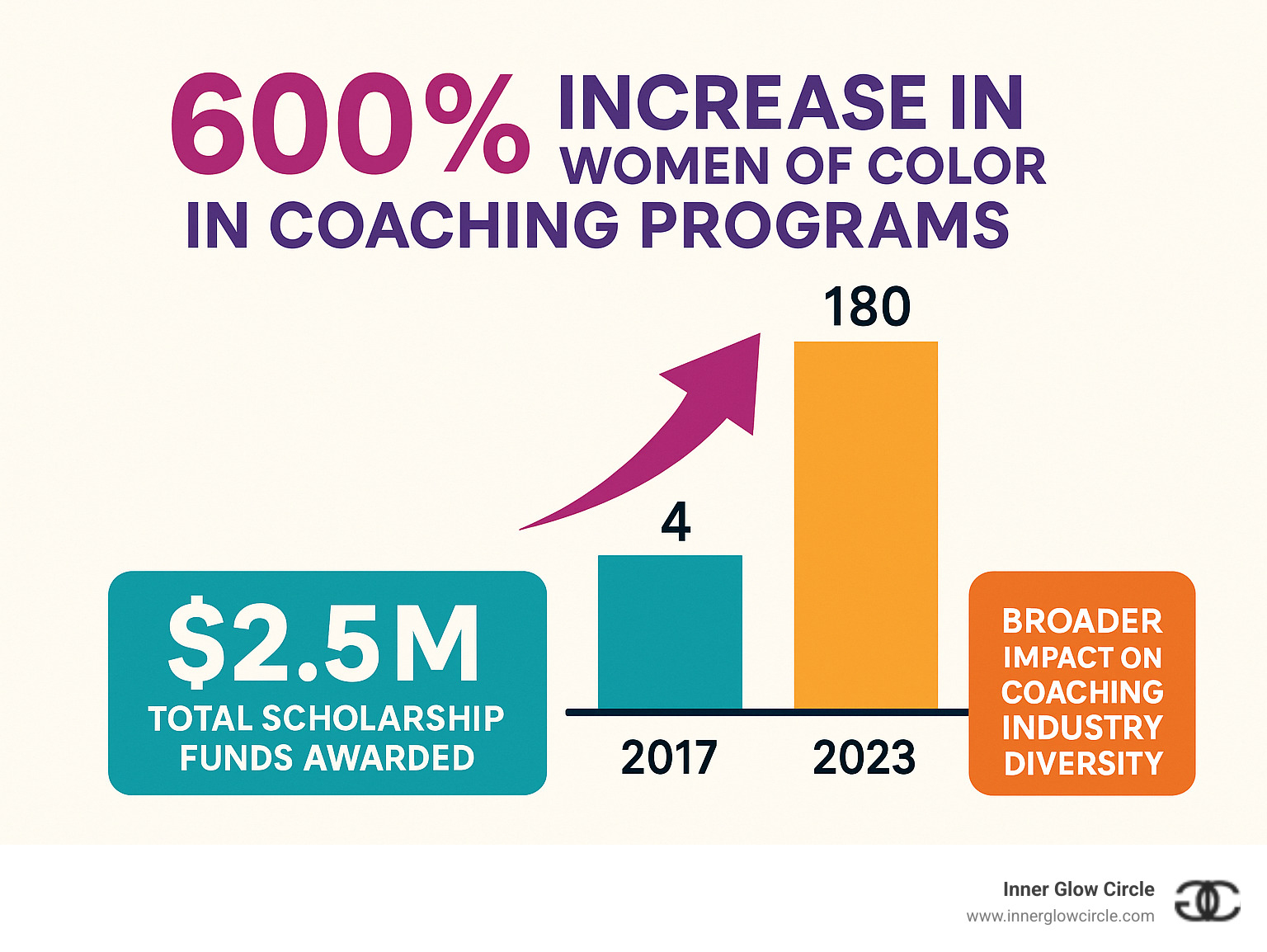
– Inner Glow Circle – $354,417+ awarded with 600% growth in women of color participation
– Various foundations – Level 1 accredited programs plus membership benefits
– Educational institutions – Need-based awards and community programs
– Professional organizations – Women in Coaching and BIPOC Community programs
The coaching industry has historically lacked diversity, with white privilege and socio-economic barriers limiting access to quality training. As one scholarship recipient shared: “Coaching is not just guidance but a tool for self-awareness and personal growth” – highlighting how these programs create ripple effects beyond individual careers.
These scholarships exist because organizations recognize that diverse coaching perspectives enrich learning environments and help reduce suffering in communities worldwide. From $10,000 individual awards to comprehensive certification packages, funding options support everything from weekend workshops to full professional change journeys.
Understanding Coaching Scholarships
Coaching scholarships are like gifts that keep on giving – they’re financial awards that don’t need to be paid back, designed to open doors for people who have the passion and potential to become coaches but face financial barriers. Think of them as investments in future leaders who will go on to create positive change in their communities.
These scholarships aren’t just about covering costs. They’re about recognizing that some of the most powerful coaches come from backgrounds that haven’t traditionally had access to professional training. When we remove money as an obstacle, we find incredible talent that might otherwise stay hidden.
Most coaching scholarships cover the full tuition for ICF-accredited Level 1 programs, which require at least 60 hours of training. But the support often goes beyond just paying for classes. Many programs throw in extras like a year-long ICF membership, waived fees for credential applications, and access to mentor coaches who guide you through your training journey.
What makes these programs truly special is their ripple effect. When coaches from diverse backgrounds enter the profession, they bring fresh perspectives that make the entire field stronger. We’ve seen this – diverse learning environments create more conscious leaders who are better equipped to help reduce suffering in communities worldwide.
Why Coaching Scholarships Exist
Let’s be honest – coaching education can be expensive. For many talented people, especially those from marginalized communities, the cost of quality training feels impossible to overcome. This creates a barrier that keeps the coaching profession from reflecting the beautiful diversity of the communities it serves.
The coaching industry has historically been dominated by people with existing privilege and resources. But here’s the thing: some of the most effective coaches are those who’ve faced real challenges themselves. They understand struggle, resilience, and change in ways that can’t be taught from a textbook.
Organizations offering coaching scholarships recognize that coaching is a powerful tool for change. But that change has to start with the coach before it can ripple out to their clients, families, and communities. When we invest in removing financial barriers, we’re actually investing in a chain reaction of positive impact.
Many scholarship programs align with the United Nations Sustainable Development Goals, particularly around quality education and reducing inequalities. This isn’t just feel-good language – it reflects a growing understanding that coaching can address real-world problems and contribute to meaningful social progress.
The leadership gap in coaching, especially among women and people of color, has prompted forward-thinking organizations to put their money where their values are. These initiatives aren’t charity – they’re strategic investments in reshaping an industry to better serve everyone.
Who Can Apply for Coaching Scholarships
The beautiful thing about coaching scholarships is that they welcome people from all walks of life. Students making the transition from academic programs to professional coaching careers often find hybrid scholarships that bridge the gap between education and real-world practice.
Career changers make up a huge portion of scholarship recipients. Whether you’re a teacher wanting to add coaching skills to your toolkit or someone ready to completely pivot into a coaching career, many programs specifically support these brave transitions. There’s something powerful about people who are willing to reinvent themselves professionally.
Women and BIPOC individuals receive special attention in many scholarship programs, and for good reason. At Inner Glow Circle, we’ve witnessed incredible growth – from four self-identifying women of color in 2017 to 180 women in 2023. That’s a 600% increase that shows both the hunger for these opportunities and their transformative impact.
Athletes and sports professionals have their own pathway through specialized programs. Various sports organizations offer separate tracks for women in coaching, BIPOC communities, and youth development, recognizing that athletic experience provides a solid foundation for coaching careers.
International applicants increasingly have access to opportunities through virtual delivery programs. The shift to online learning has been a game-changer, opening doors for people in Africa, Asia, Latin America, and other regions who might never have been able to attend in-person programs.
Primary Benefits Covered
Training tuition is the big-ticket item that most scholarships tackle head-on. For ICF-accredited Level 1 programs, we’re talking about costs that can range from several thousand to over $10,000. Scholarships typically cover this entire amount, ensuring recipients get exactly the same high-quality training as paying students.
Credential fee waivers might sound small, but they matter. The cost of ICF ACC credential applications can be a significant burden for new coaches just starting out. When scholarships cover these fees, they remove yet another hurdle between you and your coaching certification.
Access to mentor coaches during your program adds a layer of support that goes way beyond just paying for classes. Many scholarship recipients tell us that mentorship is what helped them gain real confidence and steer the sometimes overwhelming transition from student to practicing coach.
Some programs also cover travel and incidental expenses for any in-person components, though most modern programs deliver training virtually to maximize accessibility. This shift to virtual delivery has actually expanded opportunities for people who might not otherwise be able to travel to specific locations for training.

Finding the Right Coaching Scholarship for You
Choosing the right coaching scholarship feels a bit like finding the perfect pair of jeans – you know it when you see it, and it fits your unique situation perfectly. The good news? There are scholarships designed for almost every path you want to take in coaching.
Life coaching scholarships make up the biggest slice of the pie. These programs focus on ICF-accredited training that gives you solid foundational skills. Think of them as your coaching education home base – they cover everything from basic listening techniques to advanced questioning methods that help clients find their own answers.
If you’re someone who loves the idea of blending coaching with academic credentials, academic hybrid programs might be your sweet spot. These partnerships between coaching schools and universities let you earn coaching certification alongside traditional degrees. It’s like getting two professional tools in one educational package.
Specialty health coaching opens doors to working with specific populations. Maybe you’re passionate about helping people steer chronic illness, or you want to support recovery journeys. These focused programs train you to work with particular challenges and often come with scholarships from organizations serving those same communities.
Programs targeting underrepresented groups recognize something important: coaching works best when coaches reflect the beautiful diversity of the people they serve. Scientific research on UN Goals shows how diversity in leadership roles helps achieve sustainable development worldwide – and that includes coaching leadership.
Major Providers and Programs
At Inner Glow Circle, we’ve put our money where our mission is. We’ve awarded more than $354,417 in scholarship funds because we believe every woman deserves the chance to activate her glow. Our Activate Your Glow Diversity and Inclusion Scholarship Program gives away tens of thousands of dollars each year to women from traditionally under-represented backgrounds.
We think about diversity in the broadest possible way – different backgrounds, cultures, ethnicities, faiths, and social situations all count. Our scholarship recipients have included government employees ready for a career shift and private-sector professionals from both the US and Europe. What they all share is the desire to make a difference through coaching.
Beyond our programs, various foundations and organizations offer some of the most prestigious opportunities in coaching education. Many scholarship recipients get full tuition coverage for Level 1 programs, plus a year of ICF membership and waived credential fees. Recipients come from all over the world, including Africa and beyond.
Community partner programs extend the reach even further. Some scholarships, like Fund My Mission awards, can provide up to $10,000 per person. These programs run four times a year with no limits on applications, which means more flexibility for when you’re ready to take the leap.
Specialized & Diversity-Focused Opportunities
Women in coaching have caught the attention of major organizations who recognize we need more female leadership. Various sports organizations offer regional scholarships of up to $15,000 each. It’s exciting to see organizations investing in women’s coaching development.
BIPOC coaches have access to dedicated programs that address the historical underrepresentation in coaching leadership. These scholarships don’t just provide funding – they build community connections and create networks of support that last long after certification ends.
Financial need-based programs focus on removing economic barriers, plain and simple. These scholarships look at your actual financial situation and prioritize people who have the motivation but lack the resources. Documentation is usually required, but the process is typically straightforward.
International applicants can access coaching education through programs designed for global reach. Many organizations grant scholarships to support global coaching development, showing how coaching development is valued worldwide.
Internal Resources to Explore
Ready to learn more about our scholarship opportunities? More info about IGC scholarships gives you all the details about our current programs and how to apply.
We review applications throughout the year rather than sticking to rigid deadlines. This rolling approach means you can apply when you’re truly ready to commit to your coaching journey, not just when a calendar says you should.
Our scholarship committee meets monthly to review applications, which keeps things moving at a reasonable pace. We depend on our amazing alumni volunteers for this process, so timing can vary slightly based on their availability.
Application timelines differ across the scholarship world. Some programs open in early summer with late June deadlines. Others accept applications year-round.
Here’s a pro tip: don’t put all your eggs in one scholarship basket. Apply to multiple programs because each one looks for different qualities. Some focus mainly on financial need, others want to see leadership potential, and many prioritize diversity factors. Your perfect fit might be the one you didn’t expect.
How to Apply and Stand Out for Coaching Scholarships
Landing coaching scholarships doesn’t have to feel overwhelming, even though the application process involves several moving parts. Think of it as telling your story in a way that helps scholarship committees understand who you are and why coaching matters to you.
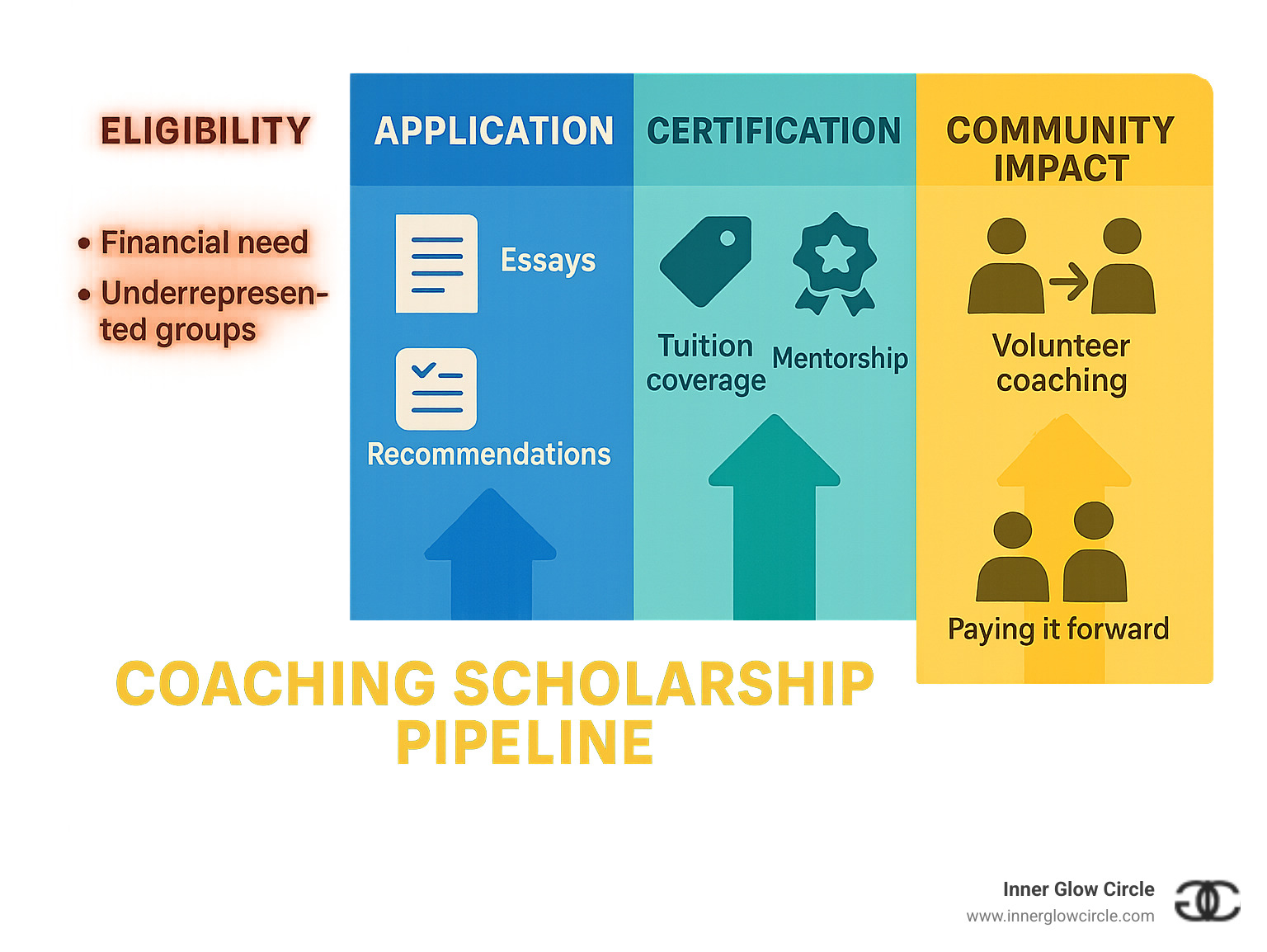
Most applications ask for similar things: essays that share your journey, recommendations from people who know you well, financial documents that show your need, and examples of how you’ve helped others. The specific requirements change from program to program, but these core elements stay pretty consistent.
Timing matters more than you might think. Some programs have strict annual deadlines – like certain foundation programs with June 30th cutoffs – while others review applications throughout the year. We review applications monthly at Inner Glow Circle, which gives you flexibility to apply when you’re truly ready rather than rushing to meet a deadline.
The essay portion usually carries the most weight in selection decisions. This is where you get to share what coaching means to you and how you plan to use your training. Scholarship committees read hundreds of applications, so yours needs to feel genuine and specific to your experience.
Strong recommendations come from people who can share real examples of your character and potential impact. Your former boss who watched you mentor new employees, the volunteer coordinator who saw you support struggling families, or the teacher who noticed how you naturally helped classmates – these voices matter more than famous names who barely know you.
Financial documentation requirements vary, but most programs want to understand your economic situation clearly. Be honest and thorough when providing tax returns, pay stubs, or other financial records. The goal isn’t to prove you’re struggling – it’s to show how the scholarship would make coaching education possible for you.
Some programs include interviews as part of their selection process. If this happens, treat it like a conversation about your goals rather than a test you need to pass. Practice talking about why you want to become a coach and how you plan to serve others, but let your genuine enthusiasm shine through.
| Program Type | Typical Requirements | Timeline | Key Focus |
|---|---|---|---|
| Diversity-focused | Essay, recommendations, demographic info | Rolling or annual | Representation and inclusion |
| Need-based | Financial docs, essay, recommendations | Quarterly or annual | Economic barriers |
| Specialty coaching | Relevant experience, career goals | Varies | Specific populations or skills |
| International | Virtual program compatibility | Annual | Global accessibility |
Crafting a Winning Application for coaching scholarships
Your story is your superpower when applying for coaching scholarships. Don’t just list your qualifications – help the selection committee understand the experiences that shaped you and the changes you want to create in the world.
Think about moments when you’ve helped others through difficult times. Maybe you supported a friend through a career change, helped a colleague gain confidence, or guided family members through challenges. These experiences show your natural coaching instincts and help committees see your potential impact.
Connect your personal journey to your coaching goals in specific, measurable ways. Instead of saying “I want to help people,” try something like “I plan to offer sliding-scale coaching to working mothers in my community because I understand the unique challenges they face.” This specificity shows you’ve thought seriously about your coaching practice.
Mission alignment isn’t about saying what you think they want to hear. Research each organization’s values and goals, then honestly reflect on how your background and vision connect with their work. At Inner Glow Circle, we’re passionate about empowering women from diverse backgrounds, so applications that share authentic stories about overcoming barriers and supporting other women tend to resonate strongly.
Authenticity beats perfection every time. Share challenges you’ve faced and how they’ve shaped your desire to become a coach. Maybe you struggled with confidence in your career, overcame financial hardship, or steerd cultural barriers. These experiences often become your greatest strengths as a coach.
Set concrete goals for your coaching education and practice. Scholarship committees want to invest in people who will use their training meaningfully. Describe the specific populations you want to serve, the skills you hope to develop, and how you plan to measure your impact as a coach.
Proofread everything carefully and ask someone you trust to review your application before submission. Small errors can distract from your powerful story, and fresh eyes often catch things you might miss after working on your application for weeks.
Key Timelines & Follow-Up
Create a simple tracking system to manage multiple scholarship applications without getting overwhelmed. A basic spreadsheet with program names, deadlines, required materials, and submission status helps you stay organized and avoid missing opportunities.
Many successful scholarship recipients apply to several programs simultaneously. This strategy increases your chances while also helping you refine your application materials. Each application you complete gets stronger as you practice telling your story and clarifying your goals.
Rolling review programs offer more flexibility but require different planning approaches. Since we review applications monthly at Inner Glow Circle, you can take time to craft a thoughtful application rather than rushing to meet a distant deadline. However, applying earlier in the year often means more funding is available.
Set up reminder alerts for important dates like recommendation request deadlines, document submission requirements, and follow-up timing. Most scholarship providers send confirmation emails when they receive your application, but keeping your own records prevents confusion later.
Appropriate follow-up shows continued interest without becoming pushy. If a program doesn’t provide regular updates, one polite inquiry about timeline or status is usually acceptable. Scholarship committees are often volunteers who review applications in addition to their regular responsibilities.
Stay positive throughout the process, even if you face rejections. Many scholarship recipients were turned down by other programs before finding the right fit. Each application helps you better understand what you want from your coaching education and how to communicate your goals effectively.
Life After Winning: Expectations, Impact & Paying It Forward
Winning coaching scholarships is just the beginning of an exciting journey that extends far beyond your certification. Most scholarship programs create lasting relationships between you and the organizations that believed in your potential. They’re not just giving you money for education – they’re investing in the positive change you’ll create in the world.
Volunteer coaching often becomes part of your scholarship agreement, and honestly, this is one of the most rewarding aspects. You’ll typically commit to serving underserved populations or participating in community outreach programs. Many foundations ask recipients to volunteer as coaches in community projects within one year of certification. It’s a beautiful way to practice your new skills while giving back to communities that need support.
Many programs include pro bono hours as part of their expectations. This means offering free coaching to individuals and organizations that couldn’t otherwise afford professional coaching services. Don’t worry – these volunteer commitments actually provide incredible practice opportunities. You’ll build confidence, refine your skills, and create meaningful impact all at the same time.
Maintaining high standards throughout your education and beyond matters deeply to scholarship providers. They’ve invested in you because they believe you’ll complete your training successfully, pursue certification, and represent the coaching profession with integrity in your community. It’s a responsibility that most recipients accept wholeheartedly.
The community ripple effect from scholarship programs extends far beyond individual recipients. When you return to your family, workplace, and social circles with new coaching skills and perspectives, you influence everyone around you. One scholarship recipient can impact dozens or even hundreds of people throughout their career, multiplying the program’s investment exponentially.
Alumni networks provide ongoing support and connection opportunities that continue long after you complete your education. Many programs facilitate relationships between current and former recipients, creating mentorship opportunities and professional development that lasts for years.
Making the Most of Your Award
Planning your credential path strategically helps you maximize every benefit included in your scholarship package. Take advantage of waived application fees and complimentary ICF memberships before they expire. Most programs provide one-year memberships, so understanding the timeline for pursuing ICF credentials ensures you don’t miss out on valuable benefits.
Networking opportunities during your scholarship-funded education often prove as valuable as the training itself. Build genuine relationships with fellow students, instructors, and program administrators. These connections frequently lead to ongoing support, client referrals, and collaboration opportunities throughout your coaching career.
Continued education planning recognizes that your initial certification is just the foundation. Many scholarship recipients use their training as a stepping stone toward specialized certifications, advanced credentials, or niche expertise development. This ongoing growth improves both your coaching effectiveness and career prospects.
Setting up goal tracking systems helps you measure progress toward the objectives you outlined in your scholarship application. Regular reflection on your development and impact demonstrates accountability to your scholarship provider while keeping you focused on your original vision for change.

How Scholarships Drive DEI in Coaching
The representation statistics from diversity-focused scholarship programs tell an incredible story of change. In our own programs, we’ve witnessed a 600% increase in women of color joining our coach training, growing from four self-identifying women of color in 2017 to 180 women in 2023. This dramatic change shows how targeted financial support can rapidly transform industry demographics.
Inclusive leadership develops naturally when coaching education becomes accessible to people from all backgrounds. These leaders bring different perspectives, cultural understanding, and community connections that improve the coaching profession’s ability to serve everyone effectively. When coaches reflect the diversity of their communities, trust builds more easily and outcomes improve.
Scientific research on diversity impact confirms what many of us already know intuitively – diverse leadership creates better outcomes across organizations and communities. When coaching reflects the beautiful variety of people it serves, effectiveness increases dramatically.
Systemic change requires sustained commitment rather than one-time efforts. Coaching scholarships represent long-term investments in reshaping professional demographics and ensuring that coaching benefits all communities, not just those with existing privilege and access. Every scholarship recipient becomes part of this larger movement toward equity and inclusion.
Frequently Asked Questions about coaching scholarships
Let’s address the questions we hear most often from women considering coaching scholarships. These answers come from our years of experience helping aspiring coaches steer their funding journey.
What criteria do committees use to select recipients?
Merit matters, but not in the way you might think. Most scholarship committees care more about your heart and potential than your GPA or resume. We look for women who demonstrate genuine passion for helping others and show they’ll use their coaching skills to make a real difference.
Financial need plays a significant role in most decisions. You’ll likely need to share information about your income, expenses, or other circumstances that make coaching education financially challenging. Don’t worry about having the “perfect” sob story – committees want honest, straightforward explanations of your situation.
Your potential impact gets serious consideration. When you write about how you plan to use your coaching certification, be specific. Instead of saying “I want to help people,” explain exactly who you want to serve and how. Maybe you want to support other working mothers in your community or help women in your industry advance their careers.
Diversity and inclusion factors help committees build cohorts that reflect the communities coaches will serve. This includes backgrounds, cultures, ethnicities, life experiences, and perspectives. The goal isn’t quotas – it’s creating learning environments where everyone benefits from different viewpoints.
Are there coaching scholarships for international applicants?
Yes, absolutely! The shift to virtual coaching education has opened doors for women worldwide. Many programs now welcome international participants because online delivery eliminates travel costs and visa complications.
Virtual programs offer the same quality education as in-person options. You’ll participate in live sessions, complete the same coursework, and receive identical certifications. The only difference is you can attend from your home country.
Some programs specifically reserve spots for international applicants to ensure global representation. This means your location might actually work in your favor, especially if you’re from a region that’s underrepresented in coaching.
Regional partnerships exist through organizations that want to develop coaching capacity worldwide. These programs recognize that coaching skills are needed everywhere, not just in wealthy countries.
What obligations exist after receiving a scholarship?
Volunteer coaching hours represent the most common expectation. Most programs ask recipients to provide 10-20 hours of pro bono coaching annually to underserved populations. Think of this as valuable practice time that also helps your community.
Progress updates keep scholarship providers informed about your journey. You might submit brief reports on your certification progress, career development, or how you’re using your coaching skills. These aren’t burdensome – usually just a few paragraphs every six months.
Paying it forward becomes important once your coaching practice grows. Many recipients eventually become mentors for future scholarship candidates, help with recruitment, or contribute financially to support the next generation of coaches.
Maintaining professional standards goes without saying, but it’s worth mentioning. Scholarship providers expect you to complete your training successfully, pursue certification, and represent the coaching profession positively in your community.
These obligations aren’t punishments – they’re opportunities to practice your skills, build your network, and create the ripple effects that make coaching scholarships so powerful for entire communities.
Conclusion
Your journey toward becoming a certified coach doesn’t have to wait for perfect financial circumstances. Coaching scholarships open doors that might otherwise remain closed, creating pathways for women from all backgrounds to access transformative education and build meaningful careers.
At Inner Glow Circle, we’ve seen how powerful these opportunities can be. When we remove financial barriers, amazing things happen. Women who never imagined they could afford professional training suddenly find themselves in supportive learning environments, developing skills that change not just their own lives, but the lives of everyone they’ll eventually coach.
Our more than $354,417 in scholarship funds represents much more than numbers on a page. Each dollar invested has created ripple effects that continue expanding outward. When scholarship recipient Sarah completed her certification, she went on to coach dozens of women in her community. When Maria received funding for her training, she brought coaching skills back to her nonprofit organization, improving how they support families in crisis.
This is why we remain deeply committed to our diversity and inclusion mission. Coaching education should never be limited to those who can easily afford it. The coaching profession desperately needs voices from different cultures, backgrounds, and life experiences. Your unique perspective matters, and the communities you’ll serve need exactly what you have to offer.
The application process might feel intimidating at first, but scholarship committees want to invest in people like you. They’re looking for genuine passion, commitment to serving others, and the potential to create positive change. You don’t need perfect credentials or a flawless story – you need authenticity and determination.
We encourage you to take that first step today. Whether you’re drawn to our programs or exploring other opportunities that align with your goals, the most important thing is to begin. Research available scholarships, start drafting your application essays, and reach out to potential recommenders.
More info about The Bo DePaola Scholarship provides details about one of our most meaningful opportunities. This scholarship honors an extraordinary woman while supporting others in pursuing their coaching dreams.
The coaching profession is evolving, becoming more inclusive and representative of the communities it serves. By pursuing scholarship opportunities and eventually paying it forward to future generations, you become part of this positive change. Your coaching practice will touch lives in ways you can’t even imagine yet.
Don’t let financial concerns keep you from exploring your potential as a coach. Coaching scholarships exist because organizations believe in investing in people who will make a difference. Start your application journey today – the world needs what you have to offer.


