

Why Online Coaching Certification Opens Doors to a Meaningful Career
Coaching certification online programs have transformed how aspiring coaches like you can build credible, fulfilling careers from anywhere in the world. Whether you’re drawn to life coaching, executive coaching, or specialized niches, online certification offers the flexibility and structure needed to turn your passion for helping others into a professional practice.
Quick Guide to Online Coaching Certification:
- What it is: Structured training programs (60-125+ hours) that teach core coaching competencies and ethics
- Main types: Life, Executive, Health, Business, Mindfulness, and Sports coaching certifications
- Top accreditor: International Coach Federation (ICF) – the gold standard for coaching credentials
- Duration: 3-day intensives to 12-month comprehensive programs
- Cost range: $1,000 to $15,000+ depending on program depth and accreditation
- Career impact: Life coaches report average annual income of $61,900, with experienced coaches charging $150+ per hour
The coaching industry has exploded in recent years, with over 30,000 coaches now holding ICF credentials worldwide. This growth creates both opportunity and confusion – with hundreds of programs available, how do you choose the right path?
Unlike a simple coaching course that teaches basic skills, certification programs provide comprehensive training, supervised practice, and ongoing support to help you build a sustainable coaching business. The best programs combine theoretical knowledge with hands-on experience, ethical training, and business development skills.
For women who dream of launching their own coaching practice but struggle with self-doubt, online certification offers a structured pathway to confidence and credibility. As one graduate shared: “This program is by far, the most comprehensive, well developed and organized I have seen.”
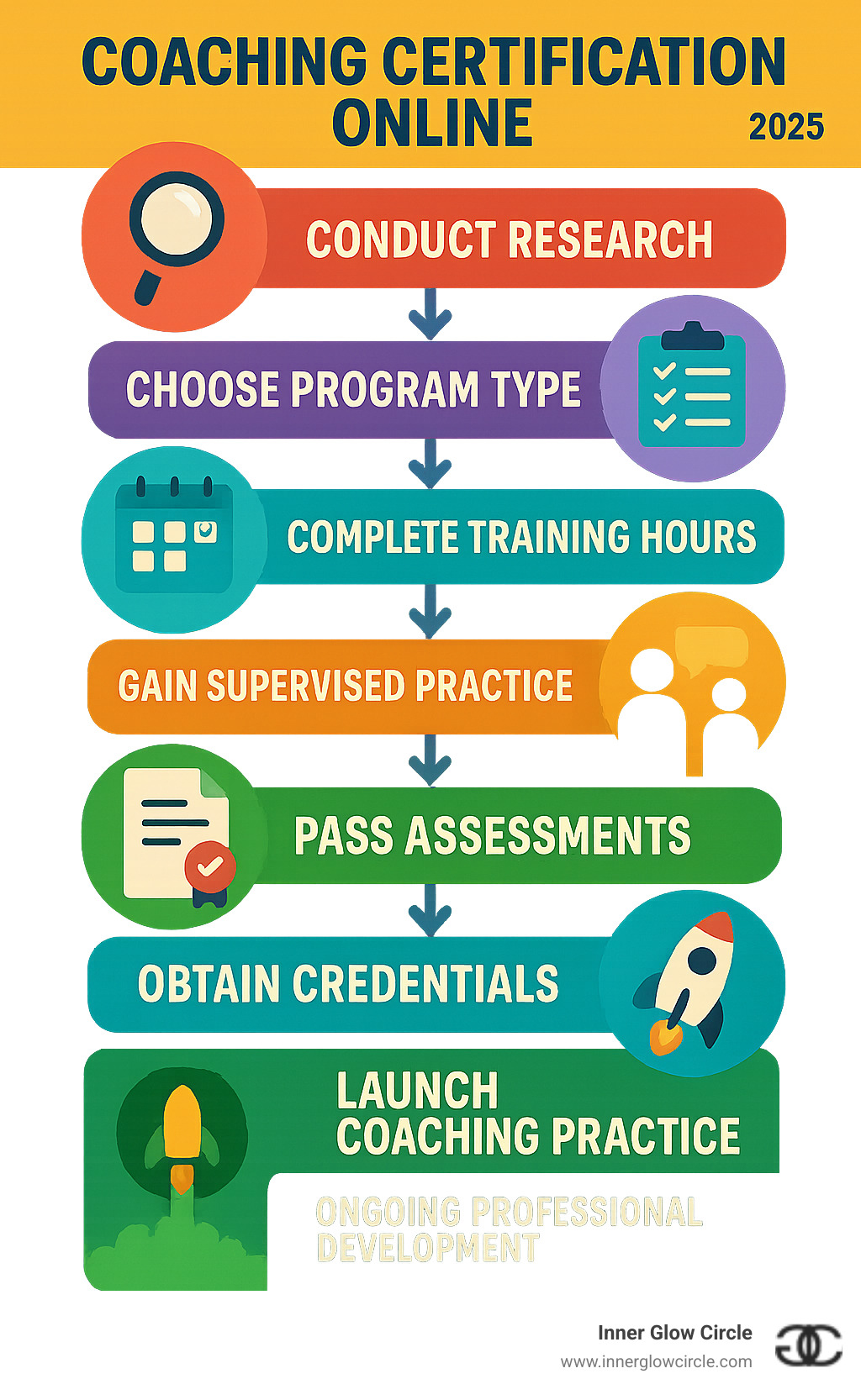
Basic Coaching certification online terms:
Certification vs. Course: Laying the Groundwork
When exploring coaching certification online programs, understanding the difference between a coaching course and a full certification program is crucial for your coaching career success.
A coaching certification is a comprehensive credential that proves you’ve mastered the art and science of coaching. You’ll complete structured training based on proven coaching methods, practice with real clients under supervision, pass rigorous assessments, and commit to following ethical standards that protect both you and your future clients.
A coaching course, on the other hand, might be a weekend workshop or online class that teaches you some coaching techniques. While these can be valuable for learning specific skills, they don’t give you the depth, credibility, or professional recognition that comes with true certification.
ICF requires a minimum of 60 hours of coach-specific training just to become a member. For higher-level credentials like Professional Certified Coach (PCC), you’ll need 125+ hours or more. This reflects how much knowledge and practice it actually takes to become skilled at changing people’s lives.
The most respected certification programs include several key elements that courses simply can’t match: specific prerequisites, structured learning hours taught by qualified instructors, mentor coaching from experienced practitioners, competency demonstration through actual practice sessions, and commitment to ongoing ethics training.
| Aspect | Short Course | Certification Program |
|---|---|---|
| Duration | 1-3 days | 3-12 months |
| Training Hours | 6-20 hours | 60-125+ hours |
| Assessment | Optional quiz | Comprehensive exam/portfolio |
| Supervised Practice | None | Required with feedback |
| Ongoing Support | Limited | Alumni community & mentoring |
| Credential Recognition | Certificate of completion | Accredited credential |
| Cost | $200-$1,000 | $4,000-$15,000 |
Key Differences in Depth, Assessment, and Credibility
The learning experience in certification programs goes much deeper than short courses. The most comprehensive certifications spread 60-125+ hours across several months, allowing for supervised practice sessions where you actually coach real people while an experienced mentor provides feedback.
The assessment process in certification programs is thorough and meaningful. Instead of a simple quiz, you’ll face comprehensive exams that test both knowledge and application. Peer review processes and portfolio requirements document your growth and demonstrate competency over time.
This rigorous evaluation process is exactly why ICF credentials are recognized and trusted worldwide. When potential clients see that you’ve earned a legitimate certification, they know you’ve been thoroughly trained and tested.
Coaching Certification Online: Types, Niches, and Core Curriculum
The world of coaching certification online offers pathways for every passion and calling. Whether you’re drawn to helping executives open up leadership potential or supporting individuals through major life transitions, there’s a specialized certification designed for you.
All quality programs are built on the same core competencies that make coaching powerful. These include establishing deep trust with clients, mastering active listening, and learning to ask game-changing questions that create real awareness.
You’ll also develop skills in designing meaningful actions with clients, setting goals that stick, and creating accountability systems that maintain momentum. Many programs incorporate positive psychology frameworks and emotional intelligence concepts, recognizing that great coaching draws wisdom from multiple fields.
These foundational skills get applied differently across coaching niches. A life coach might use powerful questioning to help someone find their values, while an executive coach applies the same skill to help leaders steer organizational challenges. Health coaches focus these tools on wellness goals, business coaches on entrepreneurial growth, and sports coaches on peak performance.

Life Coaching Certification Online – Broad Foundations for Personal Growth
Life coaching certification provides the broadest foundation possible, preparing you to walk alongside clients pursuing virtually any personal or professional dream.
The curriculum covers everything you need to become a catalyst for change. You’ll master goal-setting methodologies that help clients move from vague wishes to crystal-clear visions with actionable steps. The accountability systems you’ll learn keep clients motivated even when life gets messy, while self-findy techniques help people uncover their deepest values, hidden strengths, and obstacles holding them back.
What makes life coaching appealing is its incredible versatility. As one graduate put it: “The skills I learned apply not only to coaching but also to business, relationships, and personal growth.” You’re developing tools that improve every conversation and relationship in your life.
The financial picture is encouraging. Research shows that life coaches report an average annual income of about $61,900, with newer coaches typically starting around $31 per hour and experienced practitioners commanding $150+ per session.
More info about Life Coach Certification
Executive Coaching Certification Online – Leadership & Performance Focus
Executive coaching takes a targeted approach, diving deep into leadership development and organizational performance. If you’re drawn to helping high-achievers reach their next level, this specialization offers fascinating challenges and rewarding outcomes.
These programs explore organizational culture dynamics and teach you to steer workplace relationships and power structures. You’ll learn to measure success through ROI metrics that demonstrate real business value of your coaching interventions.
Emotional intelligence frameworks become crucial as you help leaders understand how their emotions ripple through entire organizations. You’ll also develop systems thinking skills that help leaders see the bigger picture and understand how their decisions create organizational change.
Research reveals that HR professionals with coaching certification see a 28% increase in salary potential. Executive coaches typically command higher rates and work with clients who have substantial budgets for professional development.
Scientific research on coaching in organizations
Accreditation, Duration & Cost: What You Need to Know
Understanding accrediting bodies is crucial for making the right investment in your future. The International Coach Federation (ICF) reigns as the gold standard in our industry. With over 30 years of experience, they’ve shaped what professional coaching looks like today.
Other respected accrediting bodies serve specific niches. The National Board for Health and Wellness Coaching (NBHWC) focuses on health coaching programs, while the Board Certified Coach (BCC) offers broader coaching credentials.
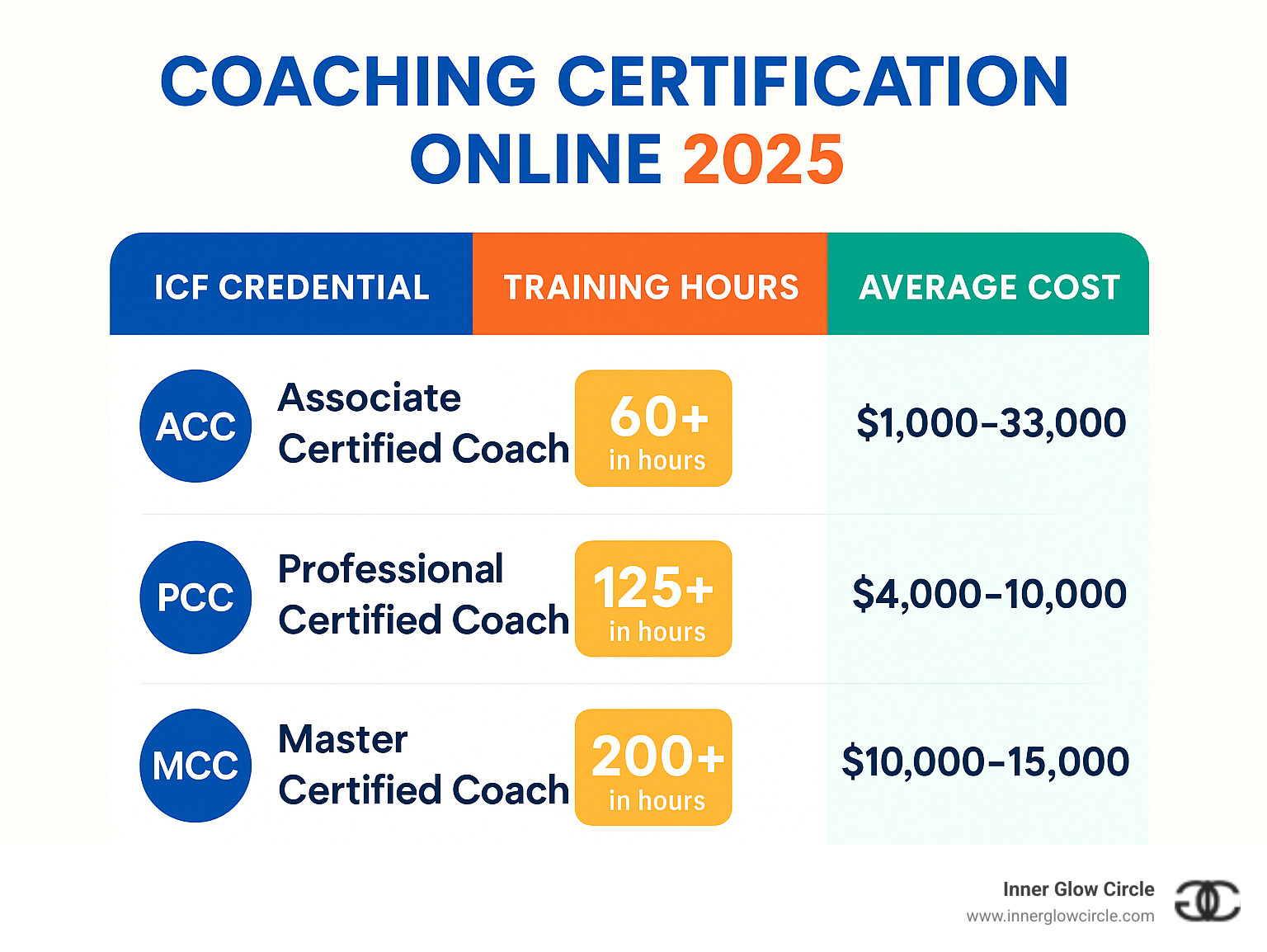
The ICF offers three credential levels that create a clear pathway for professional growth. The Associate Certified Coach (ACC) requires 60+ training hours and 100 coaching hours. The Professional Certified Coach (PCC) steps up to 125+ training hours and 500 coaching hours, while the Master Certified Coach (MCC) represents the pinnacle with 200+ training hours and 2,500 coaching hours.
Training duration varies dramatically based on your lifestyle and goals. Some women thrive in 3-day intensive programs that pack 33 ICF contact hours into a concentrated experience. Others prefer 6-month part-time cohorts that allow them to balance family and work commitments. 12-month comprehensive programs provide the deepest learning and most extensive practice opportunities.
The investment reflects this variety. Short intensives typically range from $1,000 to $3,000. Comprehensive programs usually cost $4,000 to $10,000, while premium university programs can reach $10,000 to $15,000 or more.
Many programs offer scholarships and payment plans specifically designed to make certification accessible to women ready to transform their careers.
Why ICF Matters and How to Qualify
The ICF’s influence extends far beyond just handing out credentials. Their Core Competencies form the backbone of every quality coaching program, ensuring you learn skills that actually work. Their ICF Code of Ethics guides you in handling situations around confidentiality, boundaries, and professional conduct.
Getting ICF credentials requires completing several key components: accredited training programs that meet ICF’s strict standards, mentor coaching hours with experienced ICF-credentialed coaches, coaching experience with real clients, and continuing education to keep your skills sharp.
The research confirms that ICF accreditation represents the leading global standard for coach training. Programs must prove their curriculum quality, verify instructor credentials, and demonstrate positive student outcomes.
Scientific research on credential impact
Time & Money: From Bootcamps to Mastery Tracks
Coaching certification online programs adapt to your life, not the other way around. Whether you’re a busy mom, corporate executive, or someone ready for a complete career change, there’s a format that works.
Fast-track options appeal to women who want to dive in quickly. These intensive programs compress months of learning into concentrated periods through weekend training over 2-3 months or week-long retreats.
Part-time programs spread learning over 6-12 months, giving you breathing room to absorb new concepts while maintaining your current job and building meaningful relationships with cohort members.
Blended programs offer the best of both worlds – flexibility of self-paced online study combined with real-time interaction during live sessions.
The financial investment varies significantly. Research shows that six-month coaching courses typically cost between $4,000 and $10,000, while short intensives start around $1,000. Many certified coaches recoup their investment within their first year of practice.
Choosing the Right Program & Launching Your Practice
Finding the perfect coaching certification online program becomes manageable when you focus on what truly matters for your unique journey.
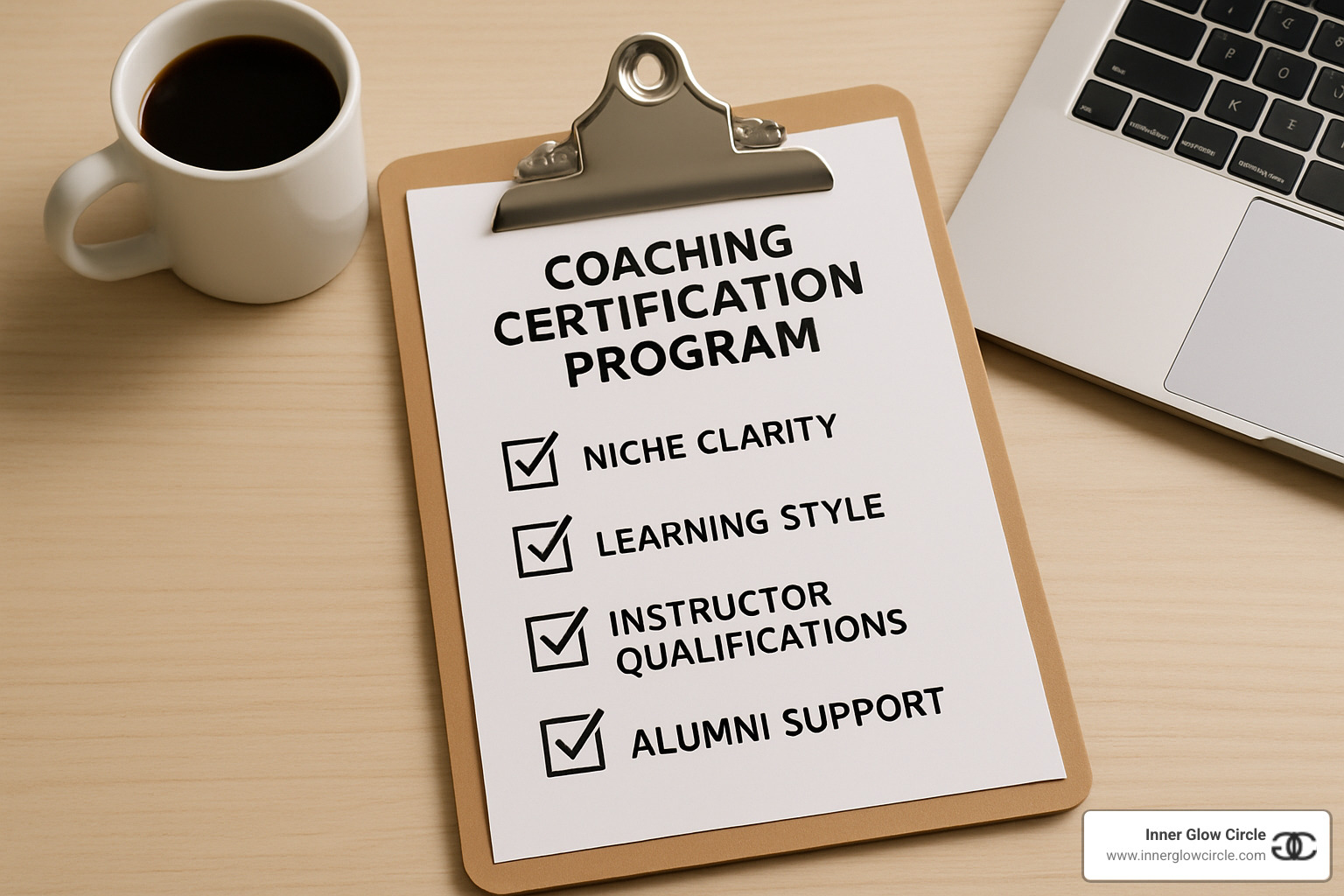
First, get crystal clear on your coaching niche. The research shows that “life coaching as a marketing niche is too general for successful positioning.” Instead, consider what lights you up: career transitions for women, leadership development for entrepreneurs, health and wellness coaching, or relationship and communication skills.
Your learning style matters tremendously. Do you thrive in live, interactive environments or prefer self-paced study? Maybe you need hands-on practice opportunities or value peer interaction and community. There’s no right or wrong answer – just what works best for you.
Don’t skip the detective work on instructor qualifications. Look for coaches who are actively practicing what they teach. What are their coaching credentials and experience? Do they have expertise in your area of interest? What do alumni say about their teaching effectiveness?
The voice of experience speaks loudest through alumni reviews and outcomes. Look for programs that share detailed testimonials from recent graduates, career outcome statistics, and evidence of ongoing support after certification. As one graduate said: “The curriculum is in-depth and thought provoking. The experience was enlightening, positive and also somewhat challenging.”
Graduates consistently highlight the importance of “lifetime support” and “alumni community” in their long-term success.
More info about Choosing a Coach Training Certification
Building a Sustainable Coaching Business After Certification
Getting your certification is just the beginning. The real journey starts when you begin building your coaching practice.
Let’s talk money first. Research shows that experienced coaches charge $150+ per hour, but getting there requires strategic thinking. Consider hourly rates for individual sessions as your foundation, but also explore package deals for multi-session commitments, group coaching programs, and online courses for passive income.
Marketing doesn’t have to feel scary. The most effective coaches focus on content marketing that demonstrates expertise, networking within your target market, referral systems from satisfied clients, and a thoughtful social media presence that builds trust.
You’ll need to get comfortable with video conferencing tools for remote sessions, scheduling and payment processing systems, client management and progress tracking tools, and a professional website and social media presence.
But what really makes the difference is ongoing community support and development. Look for programs offering regular alumni networking events, advanced training opportunities, mentorship programs with experienced coaches, and business development resources.
One successful graduate captured this perfectly: “I left my 9-5 and built a coaching business using the blueprint I learned.” This change is possible for you too, but it requires both solid coaching skills and practical business knowledge.
More info about How to Start Making Money as a Coach
Frequently Asked Questions about Coaching Certification Online
Do I legally need a certification to coach?
Here’s something that might surprise you: you don’t legally need certification to call yourself a coach in most places. Unlike therapists or counselors who must have specific licenses, coaching remains largely unregulated.
But here’s the thing – just because you can coach without certification doesn’t mean you should. The research shows that certification significantly impacts your credibility and success in ways that really matter for your business.
Think about it from a client’s perspective. When someone is choosing between two coaches – one certified and one not – which would you pick? Potential clients feel much more confident hiring certified coaches because that credential signals you’ve invested in proper training and follow professional standards.
There are practical benefits too. Many professional liability insurance policies require certification, which protects both you and your clients. If you want to work with corporations, organizations typically prefer certified coaches for employee development programs. Plus, certification opens doors to professional coaching communities where you can network and learn from other practitioners.
The ICF credentials are globally recognized markers of coaching competence and ethics. Even though certification isn’t legally required, it’s often the difference between struggling to find clients and building a thriving practice.
How long does it take to get certified online?
The timeline for coaching certification online varies quite a bit, and honestly, that’s good news because it means you can find something that fits your life.
Self-paced programs give you maximum control over your schedule. If you’re really motivated and can dedicate significant time, you might complete basic certification in just 3-6 weeks with intensive study. But most people prefer to spread learning over 6-12 months while keeping their day job or managing family responsibilities. The beauty is you can access materials 24/7 from anywhere with internet.
Cohort-based programs work differently. These provide structured learning with weekly sessions over 3-6 months. You get built-in accountability and peer support, but you’ll need to commit to a fixed schedule. Many women love this format because it creates lasting friendships with fellow coaches.
The research shows programs range from 3-day workshops to comprehensive 12-month certifications. Most quality programs fall somewhere in the middle – giving you enough depth without overwhelming your schedule.
That for ICF credentials specifically, you’ll need extra time beyond the training itself. You’ll complete required coaching hours with real clients, participate in mentor coaching sessions, and prepare for exams. This additional work is what makes ICF credentials so respected in the industry.
What ongoing education is required to keep my credential active?
Once you’re certified, the learning doesn’t stop – and that’s actually a wonderful thing for your growth as a coach. Continuing Coach Education (CCE) requirements ensure you stay current with new developments and keep sharpening your skills.
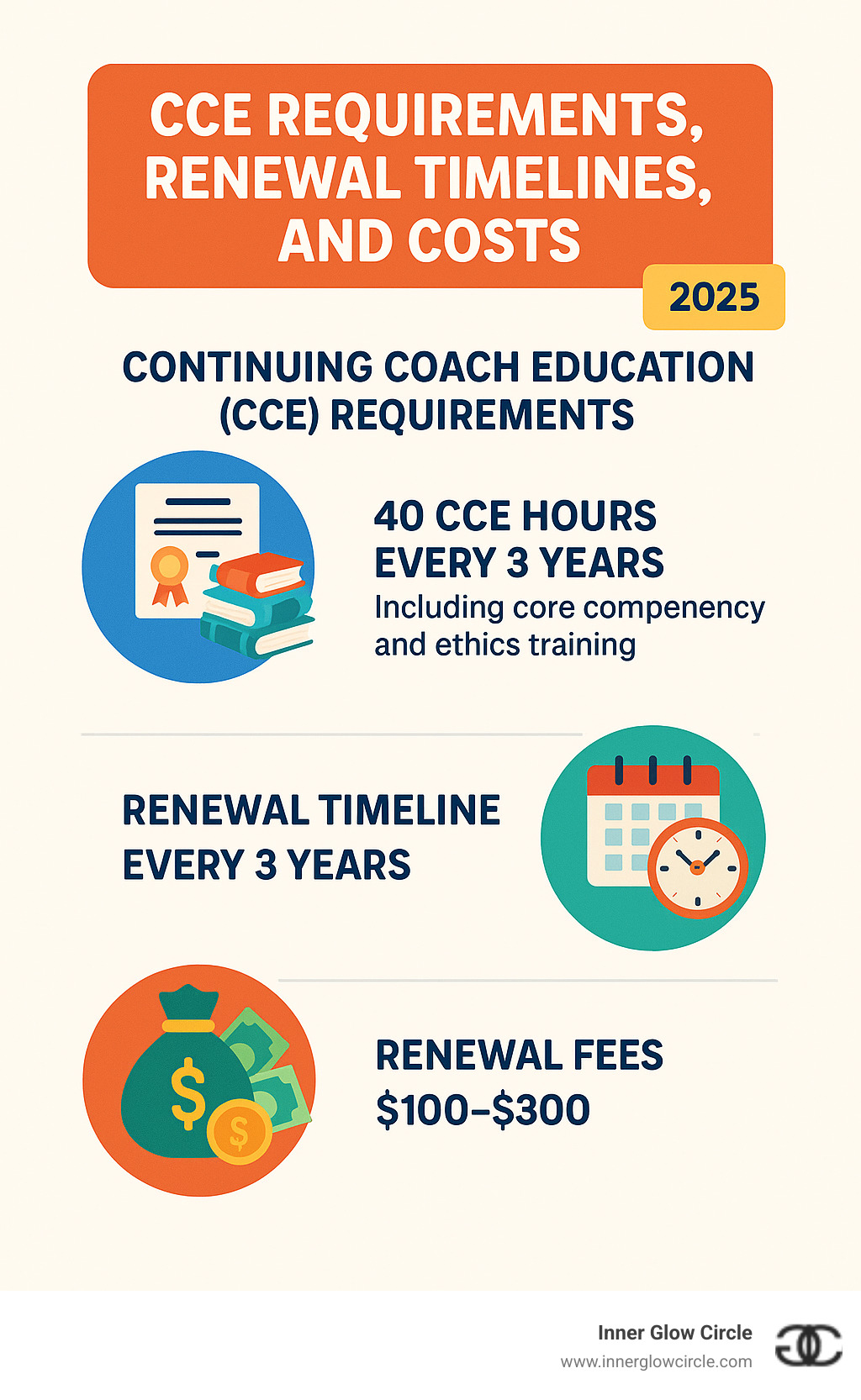
ICF requires 40 CCE hours every 3 years for all credential levels – whether you’re an ACC, PCC, or MCC. Here’s how it breaks down: at least 24 hours must focus on Core Competency areas (the fundamental coaching skills), while 10 hours must be in Resource Development like ethics training or coaching research.
The good news is there are lots of ways to earn these hours. You can attend advanced training workshops, participate in coaching conferences, engage in mentor coaching sessions, or take coaching-related university courses. Ethics courses are required periodically, and the ICF actually offers three complimentary hours through their ethics training to help you meet requirements affordably.
Renewal fees typically range from $100-$300 every three years, depending on your credential level. While this represents an ongoing investment, it ensures your credential maintains its value and recognition. Plus, the continuing education keeps you growing as a coach – and your clients definitely benefit from that ongoing development.
Conclusion
Your journey toward coaching certification online is about stepping into a role where you can create real, lasting change – both in your own life and in the lives of countless others who need your unique gifts and perspective.
The numbers tell an encouraging story. With over 30,000 ICF-credentialed coaches worldwide and life coaches earning an average of $61,900 annually, this isn’t just a feel-good career path – it’s a financially viable one too. The coaching industry keeps growing because people desperately need what coaches provide: someone who believes in their potential and helps them bridge the gap between where they are and where they want to be.
Choosing the right certification program sets the foundation for all of this. The research shows that accredited programs with comprehensive training create coaches who succeed long-term. Quick courses might seem tempting, but they rarely provide the depth of knowledge and supervised practice you need to feel truly confident with clients.
Your niche matters too. The most successful coaches get specific about who they serve and how they help. Whether that’s career transitions for women, leadership development, or wellness coaching, clarity helps both you and your ideal clients find each other.
Building business skills alongside coaching competencies isn’t optional – it’s essential. The most gifted coach in the world won’t succeed without understanding pricing, marketing, and client relationships. The good news? These skills can be learned, just like coaching itself.
At Inner Glow Circle, we’ve watched hundreds of women transform their lives through our coaching certification program. We know the doubts you might be feeling right now. “Am I qualified enough? Will people actually pay me? Can I really make this work?”
Here’s what we’ve learned: the women who succeed aren’t the ones without fear – they’re the ones who move forward despite it. They invest in quality training, surround themselves with supportive community, and commit to ongoing growth. Most importantly, they believe that their desire to help others matters more than their fear of not being perfect.
This investment in yourself creates ripple effects that extend far beyond your bank account. Every client you coach becomes more confident, more purposeful, more alive. They go home to their families as better partners and parents. They show up at work as more effective leaders. They contribute to their communities with renewed energy and vision.
The world needs what you have to offer. There are people out there right now who are stuck, frustrated, or simply ready for more – and you could be exactly the coach who helps them break through. Your unique combination of life experience, natural gifts, and professional training will resonate with clients in ways that no one else can replicate.
Your coaching journey starts with a single decision – the decision to believe in yourself enough to begin. Whether you’re just exploring possibilities or ready to dive into certification, know that you’re not alone. You’re joining a community of women who chose courage over comfort, growth over staying small, and service over playing it safe.
The change you want to see in the world? It begins with the change you’re willing to make in yourself.
More info about our ICF Accredited Coach Training Program


