

Understanding the Path to Becoming a Certified Practitioner of Neuro-Linguistic Programming
A certified practitioner of neuro linguistic programming has completed formal training in NLP to help themselves and others create lasting change. This certification provides powerful tools to improve communication, shift limiting beliefs, and achieve personal and professional goals.
Quick Answer: What You Need to Know
- Practitioner Level: The foundational certification (typically 50-70 hours) where you learn core NLP techniques
- Training Options: Available online, in-person, or hybrid formats to fit your schedule
- Cost Range: Programs typically cost $1,200-$3,500 for Practitioner certification
- No Prerequisites: Most programs require no prior experience or formal qualifications
- Career Applications: Use NLP in coaching, therapy support, business, sales, HR, and leadership
- Accreditation: Look for programs recognized by organizations like ICF, INLPTA, or ABNLP
Have you ever wondered how some people seem to effortlessly connect with others, overcome challenges quickly, or help people make profound changes in minutes? Many of them are using NLP.
NLP stands for Neuro-Linguistic Programming. It’s a toolkit for understanding how we think, communicate, and behave—and how we can change those patterns to get better results.
Think of it as learning the code behind human habits. The “neuro” part is about how your brain processes information. The “linguistic” part is about how language shapes your thoughts and actions. And “programming” refers to the patterns of behavior you can observe and change.
Developed in the 1970s, NLP is a practical way to help people improve their feelings, goals, and relationships. Today, it’s used by coaches, therapists, leaders, and others who want to communicate effectively and create positive change.
Certification is more than learning from books; a formal program provides structure, hands-on practice with feedback, and professional credibility. Many graduates report that the training transformed their own lives by boosting confidence, improving relationships, and helping them become more focused.
For Sarah, who’s struggling with self-doubt about launching her coaching business, NLP certification offers both the practical skills and the personal change she needs. It provides a proven framework for helping clients make changes while simultaneously addressing her own limiting beliefs and building the confidence she craves.
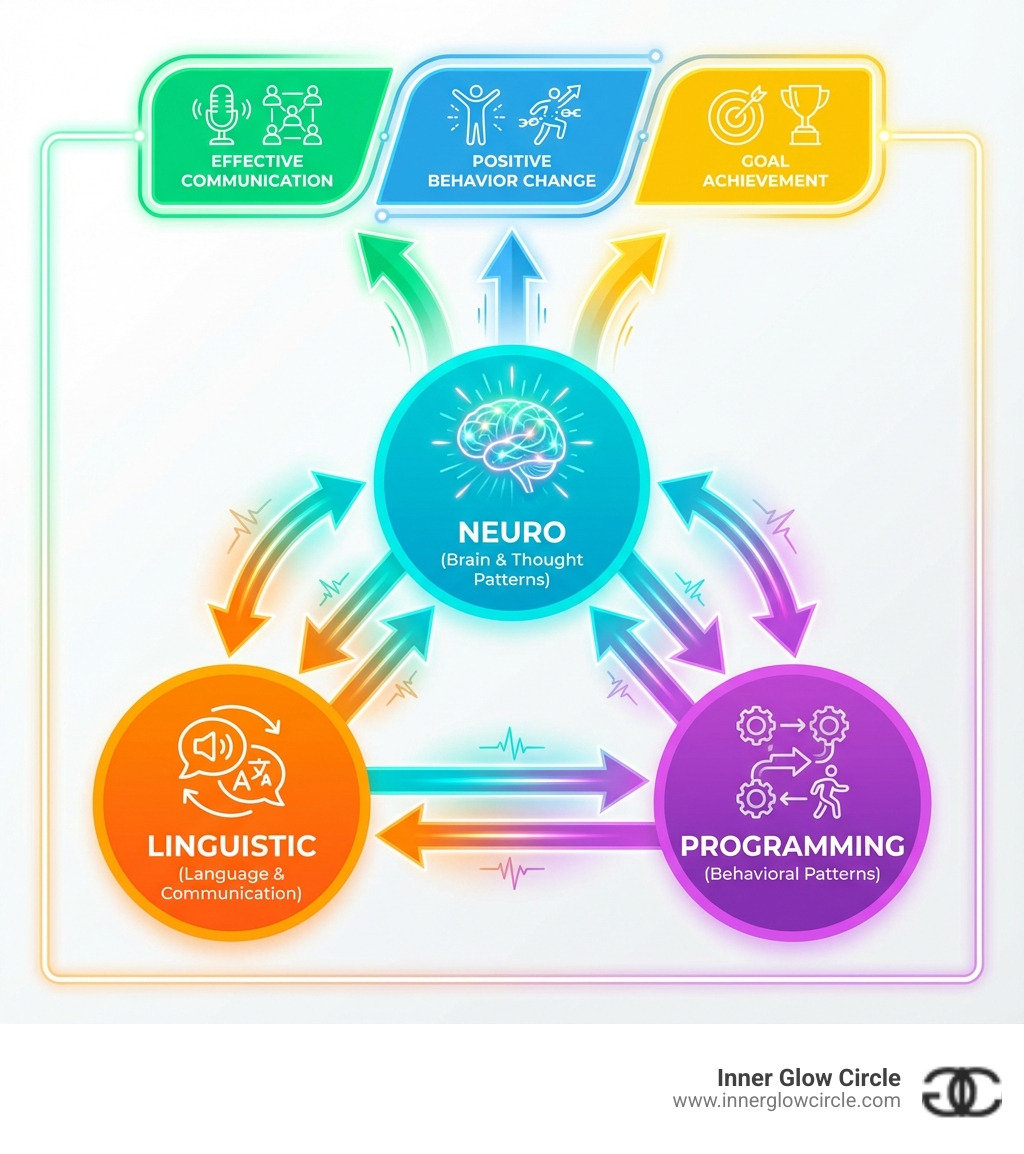
Essential certified practitioner of neuro linguistic programming terms:
The Path to Certification: Understanding the Levels and Benefits
If you’re reading this, you’re likely curious about how NLP can transform your life or career. We believe that becoming a certified practitioner of neuro linguistic programming is a powerful step towards open uping your full potential and helping others do the same. It’s a journey that offers profound personal growth and opens doors to exciting professional opportunities.

Levels of NLP Certification
While NLP is an unregulated profession, there’s a universally agreed-upon certification structure that guides our learning journey. This structure ensures a progressive development of skills, much like advancing through martial arts belts.
Introduction/Diploma/Foundation Courses: These are often short, typically two to four days long, and serve as an excellent starting point. They cover basic NLP methodologies like managing emotional states, an introduction to language patterns, and creating and maintaining rapport. Think of it as a taste test to see if you like the flavor of NLP and the trainer’s style. These courses can be helpful to determine if full certification is for you, but they are not a full Practitioner certification.
Practitioner Level: This is the first official level of certification and the foundational course for serious NLP study. There are generally no prerequisites to join a Practitioner training. Here, you’ll acquire core NLP skills to manage your thoughts, recognize patterns in others, and communicate effectively. A typical Practitioner program involves around 70 hours of training. You’ll develop competence with:
- Rapport Building: Learning to establish and maintain deep connection through pacing and leading, mirroring, and matching.
- Anchoring: Eliciting and installing anchors to access resourceful states, change personal history, and future-pace.
- Reframing: Techniques to change the meaning or context of situations, like the Six-Step Reframe, to shift perspectives and overcome challenges.
- Meta Model & Milton Model: Linguistic tools for information gathering and influencing communication.
- Well-Formed Outcomes: Learning to set clear, ecological goals.
- Submodalities: Understanding how to change the building blocks of subjective experience to alter beliefs and perceptions.
Master Practitioner Level: After Practitioner certification, you can advance to this level. Master Practitioner training deepens foundational skills, especially in modeling and language, and introduces techniques for changing beliefs and values. You’ll hone your skills as a master communicator and change worker. Programs are often 90 hours or more. Key aspects include:
- Modeling Excellence: Focusing on identifying and replicating the strategies of successful individuals, not just replicating techniques.
- Advanced Language Patterns: Delving deeper into the nuances of linguistic influence and persuasion.
- Belief & Value Change: Learning powerful techniques to identify and transform limiting beliefs and align values for greater congruence.
- Strategy Elicitation & Utilization: Understanding and applying the sequences of thoughts and behaviors that lead to specific results.
Trainer Level: For those who wish to teach NLP to others, this level is essential. It is widely accepted that a trainer delivering NLP Practitioner and Master Practitioner courses should hold a certified NLP Trainers certificate themselves. This training focuses on presentation skills, demonstrating techniques, and structuring courses effectively.
Master Trainer Level: The pinnacle of NLP certification, only a Master Trainer of NLP (or someone who has reached an equivalent standard within recognized professional guilds) can deliver NLP Trainers Training and issue an NLP Trainer’s certificate.
Becoming a skillful NLP practitioner requires consistent practice of the right skills over time; one training course alone is not sufficient. Continuous professional development is key!
Personal and Professional Benefits of NLP Certification
The advantages of becoming a certified practitioner of neuro linguistic programming extend far beyond a piece of paper. It’s about changing yourself and gaining the tools to empower others. We’ve seen how NLP can be a game-changer.
Personal Growth and Self-Improvement:
- Improved Mindset: Break bad habits, shift negative thought patterns, and build confidence. NLP provides a manual for your mind, helping you manage thoughts and emotions to become more present and focused.
- Emotional Resilience: Learn to manage emotions, handle stress, and respond rather than react, leading to greater adaptability in challenging situations.
- Improved Goal Setting and Motivation: Use clear NLP frameworks to define outcomes and build strategies, making motivation more consistent.
- Better Communication: Learn to read others accurately, build rapport effortlessly, and communicate persuasively. This improves relationships and deepens your understanding of human interaction.
Professional Development and Career Paths:
A certified practitioner of neuro linguistic programming finds their skills applicable in a wide array of professions:
- Coaching (Life, Executive, Business): NLP is a powerful behavior change methodology for coaches. It allows us to help clients overcome mental blocks, set clear goals, and make lasting changes. ICF-accredited programs often integrate NLP, providing 24 Coach Core-Competency Hours for Practitioner and Master Trainings.
- Therapy and Counseling Support: While not a replacement for clinical therapy, NLP techniques like reframing, anchoring, and timeline work can complement traditional approaches, helping clients manage anxiety, trauma responses, and limiting beliefs.
- Human Resources and Leadership: NLP can significantly improve workplace communication, conflict resolution, team motivation, and leadership effectiveness. It helps leaders understand and influence the patterns driving choices within their teams.
- Sales, Marketing, and Negotiation: Building rapport quickly, understanding buyer language, tailoring messages, and overcoming objections become second nature. NLP can be a game-changer in closing deals and writing persuasive copy.
- Public Speaking and Training: NLP techniques can reduce stage anxiety, improve storytelling, and help you adapt your message for different learners, making you a more engaging and memorable presenter.
- Education: Teachers can use NLP to better understand student learning styles, improve classroom management, and foster more effective learning environments.
As one nutritional therapist shared, our training helped them increase their financial potential and willingness to take risks, ultimately allowing them to help more people. The benefits are truly far-reaching.
How to Become a Certified Practitioner of Neuro-Linguistic Programming
Starting on the journey to become a certified practitioner of neuro linguistic programming requires careful consideration of various factors, from choosing the right program to understanding the time and financial commitment. We’re here to guide you through this process.

What to Look for in a Quality NLP Certification Program
Choosing the right NLP program is crucial for a successful and impactful learning experience. Here’s what we advise our students to consider:
Accreditation and Recognition: While NLP is an unregulated field, reputable organizations provide standards and recognition. Look for programs accredited by established bodies such as:
- ICF International Coaching Federation: Particularly if you plan to integrate NLP with coaching, ICF accreditation ensures the curriculum aligns with professional coaching standards. Some NLP programs offer ICF Coach Core-Competency Hours.
- International NLP Association: Qualifies for PNLP or MNLP credentials.
- The Society of NLP: This is the original certifying body for NLP.
- ANLP (Association for NLP): They provide guidance on certification structures and best practices.
- Other reputable associations like INLPTA or ABNLP.
Ensure any training you undertake is delivered by a trainer who holds the correct certification themselves.
Instructor Qualifications and Experience: Your instructor’s quality is critical. Look for trainers who are:
- Certified themselves, preferably at the Trainer or Master Trainer level.
- Actively using NLP in their practice (e.g., coaching, therapy, business).
- Experienced and have good reviews.
- Able to adapt NLP to align with current science, changing information into practical application.
- Engaging, challenging, and able to guide participants effectively.
Curriculum Depth and Practical Application: A quality program must go beyond theory, covering core NLP tools, mindset techniques, and language patterns with real-time practice and feedback.
- Look for programs that emphasize practical coaching skills and integration into daily life through exercises, small-group sessions, and “stealth missions.”
- The curriculum should thoroughly cover foundational concepts as well as advanced models if you pursue Master Practitioner.
- Ensure the program focuses on developing behavioral flexibility and sensory acuity.
Learning Style and Support: Consider how you learn best. A good program will offer:
- Combinations of different learning modalities (classroom, online, independent study).
- Opportunities for ongoing support, such as alumni communities, practice partners, and direct access to trainers.
- A satisfaction guarantee, which can build trust and demonstrate the program’s confidence in its value.
Choosing Your Learning Format: Online vs. In-Person vs. Hybrid
The flexibility of modern education means you have choices in how you pursue your NLP certification.
- Online Training: This format offers unparalleled convenience and global accessibility. Many online programs, especially those with live, interactive sessions, can be as effective as in-person training. Advantages include:
- Learning from your own space, potentially improving focus.
- Easier access to a wider range of instructors and future sessions.
- Improved performance in online meetings, a valuable skill in today’s world.
- Often self-paced for independent study, allowing you to fit learning into your schedule.
- In-Person Training: For many, the immersive experience of a physical classroom is invaluable. It offers direct, face-to-face interaction with trainers and fellow students, fostering immediate feedback and a strong sense of community. This can be particularly beneficial for beginners who thrive on hands-on practice.
- Hybrid Models: Combining the best of both worlds, hybrid programs often include intensive in-person modules supplemented by online learning and practice. This can provide both the deep immersion and the flexibility needed for comprehensive skill development.
When choosing, consider your learning style, schedule flexibility, and how much direct interaction you desire. For some, a purely pre-recorded online course might be less effective for initial learning compared to live, interactive sessions or in-person training.
Understanding the Commitment: Costs, Duration, and Requirements
Investing in an NLP certification is an investment in yourself. Here’s what you can expect regarding the practicalities:
- Typical Costs: The cost for an NLP Practitioner certification can vary significantly. Practitioner courses can range from $1,200 to $3,500. Master Practitioner courses typically cost more. Some institutions offer combined Practitioner & Master Practitioner bundles at a discounted rate. Payment plans are often available to make the investment more manageable.
- Program Duration:
- Practitioner Certification: Programs typically range from 50 to 70 hours of instruction and practice. This might be structured as 5-10 intensive days, or spread out over several weeks or months. For example, some programs include a mix of classroom days (e.g., 30 hours), online clinical training (40 hours), and independent study (70 hours). Others may offer an intensive 8-day live training format.
- Master Practitioner Certification: These programs are usually longer, often around 90 hours or 6-8 days of live training, building on the Practitioner material.
- Admission Requirements: Generally, admission requirements for NLP Practitioner programs are minimal:
- Completion of an application and an interview (in-person or by phone).
- Minimum age of 18.
- Completion of secondary education or equivalent.
- For Master Practitioner, a prior NLP Practitioner Training Certificate (or equivalent) is typically required.
We encourage you to contact institutions for an admissions consultation and book a free findy call to discuss your goals and ensure the program is the right fit for you. Early bird tuition rates and limited class sizes are common, so registering in advance can be beneficial.
Applying Your Skills: NLP in the Real World
Once you become a certified practitioner of neuro linguistic programming, your toolkit will be overflowing with strategies to create powerful change. It’s not just about what you learn, but how you apply it to make a tangible difference in the world.
How a certified practitioner of neuro linguistic programming uses their skills
NLP applications are vast, touching nearly every aspect of personal and professional life. Graduates use their skills in innovative ways:
- Coaching Applications: This is one of the most natural fits for NLP. As an NLP coach, you’ll help clients:
- Overcome mental blocks and limiting beliefs.
- Set clear, well-formed goals and develop strategies to achieve them.
- Improve communication and relationships.
- Manage emotions and build resilience.
- Business and Leadership: In the corporate world, NLP helps professionals to:
- Improve leadership capabilities by understanding and influencing team dynamics.
- Improve negotiation skills and conflict resolution.
- Boost creativity and problem-solving.
- Motivate teams and individuals more effectively.
- Sales and Negotiation: NLP provides a distinct edge by enabling practitioners to:
- Build rapport quickly and authentically with clients.
- Understand customer needs and motivations at a deeper level.
- Tailor their communication to be more persuasive and impactful.
- Public Speaking and Training: For those who stand in front of groups, NLP offers tools to:
- Reduce stage anxiety and manage performance states.
- Become more engaging and memorable through effective storytelling and language patterns.
- Adapt messages to resonate with diverse audiences.
- You can explore specific NLP techniques that trainers, educators, and speakers often use to become more engaging and memorable.
- Education and Therapy Support: While not a primary therapy, NLP offers valuable support by helping individuals to:
- Address learning blocks and improve study strategies.
- Manage phobias and anxieties (e.g., Fast Phobia Cure).
- Change personal history and reframe past events for a more positive future.
One of our unique insights is that NLP helps people to move away from the problem to move toward the solution. It equips you to guide clients to gaining critical insight when nothing is obvious, and to relate to complex situations with ease.
Ethics and Evolution: The Modern NLP Practitioner
As with any powerful tool, ethics are paramount for a certified practitioner of neuro linguistic programming. Using NLP with integrity means prioritizing the client’s well-being and autonomy.
Ethical Considerations:
- Client Safety: Ensuring a safe and supportive environment where individuals feel comfortable to explore and grow.
- Scope of Practice: Understanding that NLP is a skillset for learning, development, and change, but it is not a licensed profession like psychology or medicine. Practitioners should know their limits and refer clients to other professionals when appropriate.
- Integrity and Honesty: Maintaining integrity and honesty as the core foundation of any coaching or client relationship.
- Client-Centered: Demonstrating sensitivity to the client’s identity, environment, experiences, values, and beliefs, and adapting our approach to their unique needs.
Continuous Professional Development (CPD): Since NLP is an unregulated field, continuous learning is not just a recommendation, it’s a responsibility. We encourage our practitioners to:
- Regularly practice their NLP skills to maintain fluency.
- Seek advanced training and workshops to deepen their knowledge.
- Stay updated with how NLP is adapting to align with current science. Reputable programs continually adapt the core of NLP to align with scientific understanding of how the brain/body/mind system works.
- Engage in peer supervision or mentoring to refine their craft.
Debunking Myths about being a certified practitioner of neuro linguistic programming
Despite its proven benefits, NLP sometimes falls prey to misconceptions. Let’s clear up a few:
- Myth: NLP is manipulation.
- Reality: NLP teaches powerful influence skills, but ethical use is key. Practitioners use these skills to empower clients and create mutual understanding, not to control or exploit. The focus is on win-win outcomes, not coercion.
- Myth: It’s a quick fix.
- Reality: While NLP can create rapid change for specific issues, lasting change requires consistent practice and integration. It provides the tools, but the individual must apply them. Skillful practice develops over time, beyond a single course.
- Myth: It’s pseudoscience.
- Reality: NLP was developed by modeling effective communication and behavior. While not created in a lab, its techniques align with principles from cognitive psychology and neuroscience. For instance, anchoring is similar to classical conditioning, and reframing is a cognitive restructuring technique. Reputable programs adapt NLP to align with current science.
Frequently Asked Questions about NLP Certification
We know you might have more questions as you consider becoming a certified practitioner of neuro linguistic programming. Here are answers to some common inquiries.
Is NLP certification regulated?
No, NLP is an unregulated profession. This means there isn’t a single, overarching governmental body that licenses or regulates NLP practitioners in the same way that doctors or therapists are regulated.
However, this doesn’t mean there are no standards. As we’ve discussed, there is a universally agreed-upon certification structure (Practitioner, Master Practitioner, Trainer, Master Trainer) that reputable training organizations adhere to. Many programs also seek accreditation from independent professional bodies like the International Coaching Federation (ICF) or the International NLP Association, which provide a stamp of credibility and ensure a certain level of quality and ethical practice. When you certify with an accredited institution, you stand with other practitioners who respect a commitment to current and evolving training.
What is the difference between an NLP Practitioner and a Master Practitioner?
The distinction between an NLP Practitioner and a Master Practitioner lies in the depth, complexity, and application of their skills:
- NLP Practitioner: This is the foundational level. As a certified practitioner of neuro linguistic programming at this stage, you’ll have a fundamental ability to use the basic concepts, skills, processes, and patterns of NLP. You’ll learn to manage your own thoughts and feelings, recognize motivation and patterns in others, and use words effectively. Key skills include basic rapport building, anchoring, reframing, and understanding linguistic models. There are usually no prerequisites for this level.
- NLP Master Practitioner: This is the advanced level, requiring prior Practitioner certification. Master Practitioners build on their foundational skills by delving into greater depth, especially in modeling, advanced language patterns, and techniques for changing beliefs and values. They are expected to improvise and adapt NLP techniques with greater flexibility and maintain control over client sessions to reach planned outcomes. This level focuses on developing rock-solid confidence and determined optimism, enabling you to handle more complex client situations.
A Practitioner learns the tools, while a Master Practitioner learns to masterfully apply, adapt, and integrate those tools at a deeper level.
Can I get certified in NLP entirely online?
Yes, absolutely! The rise of digital learning has made it entirely possible to become a certified practitioner of neuro linguistic programming through online programs. Many reputable institutions now offer comprehensive online certifications.
These programs often feature:
- Live Interactive Sessions: Utilizing platforms like Zoom for real-time instruction, practice, and feedback, mimicking the classroom experience.
- Self-Paced Learning: Access to modules, audios, videos, and libraries of resources that you can work through at your own pace.
- Practice Opportunities: Matching students with practice partners and providing assignments to apply learned techniques.
- Ongoing Support: Access to trainers, online communities, and alumni networks.
Online training offers incredible flexibility, making it accessible regardless of your geographical location or busy schedule. In fact, some argue that online training can make you a better practitioner because it’s easier to train and practice consistently, leading to better retention and application of skills.
Conclusion: Start Your Transformative Journey with NLP
Becoming a certified practitioner of neuro linguistic programming is more than just acquiring a new skill set; it’s an invitation to a transformative journey. We’ve explored what NLP is, the progressive levels of certification, the profound personal and professional benefits, and the practical steps to choose the right program.
Whether your goal is to improve your communication, overcome limiting beliefs, excel in your career, or empower others as a coach, NLP provides the framework and tools to make it happen. It’s about learning the code of human habits, understanding how your mind works, and gaining the flexibility to create the results you desire.
At Inner Glow Circle, we believe in the power of NLP to open up potential and foster incredible growth. We’re committed to providing the knowledge, support, and community you need to thrive. If you’re ready to accept a future filled with greater clarity, confidence, and impact, we invite you to explore NLP and consider how becoming a certified practitioner of neuro linguistic programming can ignite your inner glow.


