

Your Path to Empowerment: The Coaching and Mentoring Certificate
A certificate in coaching and mentoring is a formal qualification that trains you in key skills to guide and support others. Earning one boosts your credibility, improves your leadership abilities, and opens new career opportunities by helping you master effective communication, feedback, and goal-setting.
Powerful skills are needed to adapt and lead. This is where a certificate in coaching and mentoring becomes your next smart move. It’s more than just a piece of paper; it’s a commitment to growth—for yourself and for those you inspire.
With 83.4% of employees saying coaching should be part of every organization’s development program, there is a huge need for skilled coaches and mentors. For aspiring leaders or professionals looking to make a real impact, this certificate offers the practical tools and recognized expertise to turn potential into tangible success. It helps you move from being good at what you do to being truly great.
Must-know certificate in coaching and mentoring terms:
The Foundation: What is a Coaching and Mentoring Certificate?
A certificate in coaching and mentoring is a formal qualification providing the theoretical models and practical skills needed to guide and support others. These programs go beyond friendly advice, diving into established frameworks like the GROW model (Goals, Reality, Options, Will), ethical practices, and proven methods for helping others grow. Program options vary widely, from intensive multi-day workshops to more in-depth courses requiring 30+ hours of structured learning, some of which may even offer academic credit.
Coaching vs. Mentoring: Two Sides of the Same Coin
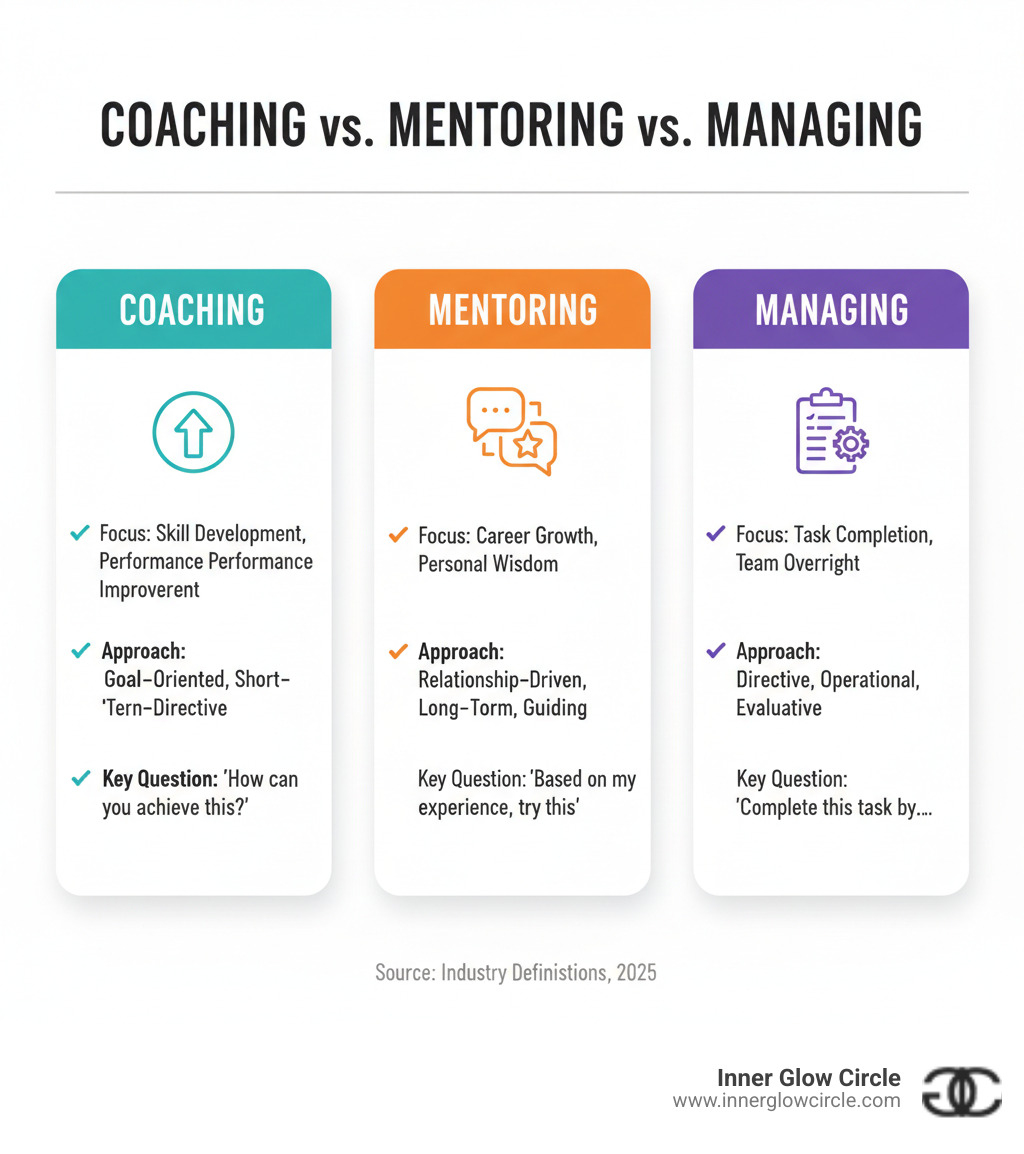
People often use “coaching” and “mentoring” interchangeably, but they are different. Understanding both makes you more valuable.
Coaching is performance-focused. It helps someone achieve specific, short-term goals. A coach asks powerful questions to help clients find their own answers, rather than telling them what to do. Think of helping someone prepare for a big presentation; you’re there to help them find their own brilliance.
Mentoring is development-focused. It takes a longer view, with a mentor sharing wisdom and experience. They act as a trusted advisor, helping to steer a career, avoid pitfalls, and see new possibilities. It’s like having a seasoned guide who knows the terrain.
Quality certificate in coaching and mentoring programs teach both approaches, preparing you for real-world situations where a team member may need coaching on a specific skill one day and mentoring for their career path the next. The best programs prepare you for both scenarios.
What is Life Coaching and How Does it Fit In?
Life coaching has become incredibly popular, focusing on personal goals like finding purpose, improving relationships, or creating work-life balance. While a general coaching certificate provides foundational skills, life coaching often requires specialized techniques to empower people to create the lives they truly want.
Overview of Qualification Levels and Pathways
Coaching qualifications come in different levels. Foundational levels are great for team leaders wanting to add coaching skills to their management toolkit. Intermediate levels are for managers with significant coaching responsibilities or those considering a move into development roles or freelance coaching. Advanced levels are for executive coaches, senior leaders, and HR professionals, often leading to credentials from professional bodies like the International Coaching Federation (ICF), such as Associate Certified Coach (ACC), Professional Certified Coach (PCC), or Master Certified Coach (MCC). This tiered system allows you to start where you are and grow. Your certificate in coaching and mentoring is the beginning of your journey, not the end.
The ROI of Development: Opening Up Your Potential with a Certificate in Coaching and Mentoring

Investing in a certificate in coaching and mentoring has a real-world impact on your career and life. It’s a strategic choice that improves how you lead, communicate, and inspire.
This training can lead to significant career advancement and higher pay. Equipped with indispensable leadership and communication skills, you become the person managers trust to develop talent and build strong teams. Organizations recognize this value, as skilled coaches can transform team dynamics, boost employee engagement, and create cultures where people want to grow.
For some, a certificate opens up entirely new career paths, such as becoming a professional coach or a leadership development consultant. We’ve seen women use their certification to build thriving coaching practices. If you’re curious about the power of focused coaching, executive coaching for professional growth shows how targeted support can transform leadership capabilities.
The improved leadership skills you’ll develop are perhaps the most exciting benefit. You’ll learn to inspire and motivate authentically, guiding teams through challenges by asking insightful questions rather than just giving answers. When you apply these skills, team performance naturally improves because you’re fostering potential and creating genuine opportunities for growth.
Who Should Enroll in a Coaching and Mentoring Program?
A certificate in coaching and mentoring applies to a wide range of professionals. Mid-career leaders can refine their leadership style, while HR professionals gain essential skills for talent development. For aspiring professional coaches, this is where the journey begins. Team supervisors, small business owners, and employee development specialists also find practical tools to improve communication, empower employees, and create lasting change.
Core Skills You’ll Master
A solid program immerses you in skills that fundamentally change how you interact with others:
- Active listening: This is about deeply understanding perspectives, emotions, and what’s not being said.
- Powerful questioning: Learn the art of asking questions that provoke real thought and self-findy, guiding people to their own insights.
- The GROW model: This framework (Goals, Reality, Options, Will) keeps coaching conversations focused and action-oriented.
- Giving constructive feedback: Master delivering observations in a way that inspires growth rather than defensiveness.
- Building rapport: Create safe, confidential spaces where people feel comfortable being vulnerable and exploring difficult topics.
- Goal setting and action planning: Help individuals define clear, achievable goals and create concrete steps to reach them.
These skills align closely with the International Coaching Federation’s Core Competencies, including Establishing Trust and Intimacy, Active Listening, Powerful Questioning, Creating Awareness, and Designing Actions.
Career Paths and Opportunities
With your certificate in coaching and mentoring, a world of possibilities opens up. You could become an internal coach or mentor, a freelance executive coach, or a leadership development consultant. HR managers and team leaders can integrate coaching into their daily work to foster high performance. And for those drawn to personal development, a career in life coaching becomes an attainable goal. If you’re wondering how to start your coaching business, a certificate is your essential first step. A certificate can genuinely help you find your purpose and start a movement, making a lasting impact on individuals and organizations.
The Gold Standard: How Certificates Relate to Professional Coaching Credentials

When exploring coaching education, it’s crucial to understand the difference between a certificate and a credential.
Certificate vs. Credential: Training vs. Professional Designation
Think of it this way: a certificate is proof that you completed your training. It shows you’ve learned coaching principles and practiced techniques. Some certificate programs include over 100 hours of coaching experience and mentoring, culminating in a certificate that recognizes your completion.
A credential, on the other hand, is a professional designation from an independent body like the International Coaching Federation (ICF). It validates that you’ve not only learned the skills but have also demonstrated them consistently in real coaching situations. Earning a credential requires completing an accredited certificate program, accumulating coaching hours, undergoing mentor coaching, and passing evaluations. It’s the difference between graduating from a program and becoming professionally certified.
The Role of Industry-Recognized Credentials
Professional coaching credentials are becoming essential. Many experts believe that holding an industry-recognized credential will soon be crucial for any practicing coach. Credentials provide improved credibility, offer professional recognition, and signal a commitment to a strict code of ethics, which builds client trust.
Overview of Credentialing Pathways
The ICF offers three credential levels: Associate Certified Coach (ACC), Professional Certified Coach (PCC), and Master Certified Coach (MCC). Each level requires progressively more training and client coaching experience. Many certificate in coaching and mentoring programs are designed as ICF-accredited training, fulfilling the educational requirements for these credentials and creating a direct pathway for graduates to pursue their ACC or PCC.
Importance of Accredited Programs
Choosing an ICF-accredited program ensures your investment moves you toward your goals. These programs meet global standards for coach education, align with ICF Core Competencies, and teach ethical practices. Completing an accredited program streamlines your path to earning a credential. Our own ICF-accredited coach training program provides exactly this kind of direct pathway.
Mentor Coaching Requirements
Mentor coaching is a required and valuable step toward ICF credentials. An experienced, credentialed coach provides detailed feedback on your actual coaching skills to help you align with the ICF Core Competencies. The ICF requires 10 hours of mentor coaching over at least three months. This process is where theory truly becomes practice. You can explore more about our mentor coaching programs to understand how this works.
How to Advance Your Coaching Career with Further Credentials
After completing an accredited certificate in coaching and mentoring program, you can pursue professional credentials. The journey typically involves accumulating client coaching hours, completing mentor coaching, passing the ICF Credentialing Exam, and submitting your application. The path from certificate to credential builds your confidence, sharpens your skills, and expands your ability to create meaningful change.
Navigating Your Options: How to Choose the Right Program

Choosing the right certificate in coaching and mentoring program can feel overwhelming, but finding the perfect fit is key. Your ideal program should match your learning style, career goals, and budget.
Key Factors to Consider for your certificate in coaching and mentoring
- Accreditation: This is non-negotiable. Look for programs accredited by respected organizations like the International Coaching Federation (ICF) or established educational institutions. This stamp of approval ensures high industry standards and means employers and clients will take you seriously.
- Curriculum Focus: What lights you up? Choose a program that emphasizes your area of interest, whether it’s executive coaching, life coaching, team coaching, or a niche like positive psychology.
- Program Format: Consider whether you prefer in-person, virtual, or hybrid formats. In-person programs offer direct interaction, while virtual classrooms provide flexibility. Hybrid models offer a blend of both.
- Duration: Programs can range from intensive 3- to 5-day workshops to comprehensive courses spanning several months to a year. The right duration depends on your goals and how deep you want to go.
- Investment: Costs vary widely, from a few hundred dollars for introductory courses to over $12,000 for comprehensive accredited programs that include mentor coaching and credential preparation. This is an investment in yourself and your future earning potential.
Here’s a helpful comparison to guide your thinking:
| Program Type | Typical Duration | Cost Range (USD) | Best For |
|---|---|---|---|
| Intensive Workshop | 2-5 Days | $2,500 – $4,000 | Managers seeking foundational skills |
| Online Certificate | 12-16 Weeks | $300 – $2,000 | Flexible, self-paced learning |
| Comprehensive Accredited Program | 6-12 Months | $5,000 – $12,000+ | Aspiring professional coaches seeking credentials |
Questions to Ask Before You Enroll in a certificate in coaching and mentoring
Before committing, do your due diligence by asking these questions:
- What are the instructor’s credentials? Learn from coaches with significant real-world experience and recognized credentials.
- What post-graduation support is offered? Look for alumni networks, career services, and ongoing professional development opportunities.
- How many practical coaching hours are included? To become a great coach, you need to practice. Ensure the program includes substantial hands-on coaching.
- Are there observed sessions with feedback? Having an experienced coach observe and provide feedback is how you refine your technique and develop your unique style.
- What is the community like? The relationships you build during training can become your professional lifeline. A vibrant community makes the journey more enjoyable and opens doors.
At Inner Glow Circle, we build a supportive community where women empower each other. Our transformative training doesn’t just teach coaching skills—it helps you find your own inner strength. Curious about what makes us different? Explore why IGC might be the perfect fit. If you’re ready to start your coaching business, we also offer guidance on how to start your coaching business with confidence.
Frequently Asked Questions about Coaching & Mentoring Certificates
We understand you might have a few more questions. Let’s tackle some of the most common ones.
How long does it take to get a coaching and mentoring certificate?
The duration of a certificate in coaching and mentoring program varies significantly. Intensive workshops can be completed in just 3 to 5 days, perfect for busy managers needing to quickly integrate coaching skills. Online certificate programs that offer more flexibility typically run from 12 to 16 weeks.
For those serious about becoming a professional coach and pursuing credentials from bodies like the ICF, comprehensive accredited programs are the best choice. These typically span 6 to 12 months and are designed to meet rigorous professional standards, often including over 100 hours of training. Some qualifications specify a minimum number of structured learning hours (e.g., 30-45 hours) rather than a set timeframe, plus time for self-study and assignments. There’s a program duration to fit every goal and schedule.
Can I become a professional coach with just a certificate?
Yes, a certificate in coaching and mentoring provides the foundational training and skills you need to begin practicing as a professional coach. It teaches you the methodologies, ethical guidelines, and practical techniques to guide clients effectively.
However, while a certificate gets you started, building credibility and standing out in the field often requires going a step further. This is where professional credentials from recognized bodies like the ICF come in. Your certificate is your training; a credential is your professional designation, validating your experience and competence to clients and employers. Many comprehensive programs are designed to prepare you for this next step.
You can start coaching with your certificate and build toward credentials as you gain experience. Many successful coaches begin by offering services to accumulate coaching hours while working toward their professional credentials. If you’re wondering how to start your coaching business, this is a common and valid pathway.
Is a coaching certificate worth the investment?
Yes, investing in a certificate in coaching and mentoring is one of the smartest investments you can make in your career. The return on investment is tangible and multi-faceted.
The skills you gain—powerful questioning, active listening, building trust—are exactly what today’s organizations need, often leading to career advancement, new job opportunities, and higher pay. For leaders, the impact on team effectiveness, employee engagement, and organizational performance is immediate.
Beyond the professional benefits, the personal growth is profound. You develop self-awareness, improve communication in all aspects of your life, and build genuine confidence. Most importantly, it empowers you to make a tangible difference in the lives of others, which is truly invaluable.
With a growing demand for coaching in the workplace, acquiring these skills now positions you at the forefront of modern leadership and development. The investment in a certificate pays dividends far beyond the initial cost. At Inner Glow Circle, we’ve witnessed countless women transform not just their careers, but their entire lives through coaching certification. That’s the kind of return on investment that truly matters.
Conclusion: Your Journey to Change Leadership Starts Now

This isn’t an ending—it’s the beginning of something beautiful. A certificate in coaching and mentoring is more than formal training; it’s a declaration that you’re ready to step into your power, guide others toward theirs, and create ripples of positive change.
We’ve seen how these certificates build essential skills, open doors to new career paths, and align with professional standards. But underneath it all lies the value of human connection and change. When you invest in this certificate, you’re investing in your ability to see and nurture the potential in others.
At Inner Glow Circle, this is our passion. We don’t just teach coaching techniques; we create a supportive community where women lift each other up. Our approach is built on the belief that when women are empowered with confidence and skills, they become catalysts for change in their families, workplaces, and communities.
Whether you dream of becoming an executive coach, a better leader, or building a life coaching practice, these skills will serve you for a lifetime. They’ll help you find your purpose and start a movement that matters deeply to you. The world needs more people who can truly listen, guide, and inspire. The world needs you.
Are you ready to become a powerful mentor and coach, changing lives and leading with purpose? Explore our mentor coaching program to start your journey today. Your future self—and all the lives you’re going to touch—will thank you.


