

Why Building Confidence in Women is Critical for Success
Building confidence in women starts with understanding that confidence isn’t something you’re born with – it’s a skill you can develop. The research is clear: women face unique challenges that create what experts call the “confidence gap.”
Quick strategies that work:
- Challenge negative self-talk with evidence-based responses
- Keep a “wins” file to track your achievements
- Practice power poses before important meetings
- Step outside your comfort zone regularly
- Build a support network of encouraging people
- Focus on your strengths rather than weaknesses
The numbers tell a sobering story. Seven in 10 girls believe they don’t measure up in some way when it comes to their appearance, performance in school, and relationships with family and friends, according to a report commissioned by Dove’s Self-Esteem Project, entitled “Real Girls, Real Pressure: A National Report on the State of Self-Esteem“. Among working women, 79% lack confidence at work and in other areas of life, as found in 2019 research by My Confidence Matters and the University of Glasgow. Even more striking – 75% of female executives across industries have experienced imposter syndrome in their careers, according to a KPMG study.
But here’s what the research also shows: confidence is learnable. It’s not a fixed trait you either have or don’t have. Women who build lasting confidence use specific strategies that address both the internal work (mindset shifts) and external actions (behavior changes).
The good news? Small, consistent actions create big changes. Whether you’re like Sarah, hesitating to launch your dream business, or you’re already successful but battling self-doubt, the strategies in this guide work because they’re backed by research and tested by real women.
Your confidence journey starts with understanding why women face these unique challenges in the first place – and then taking action to overcome them.
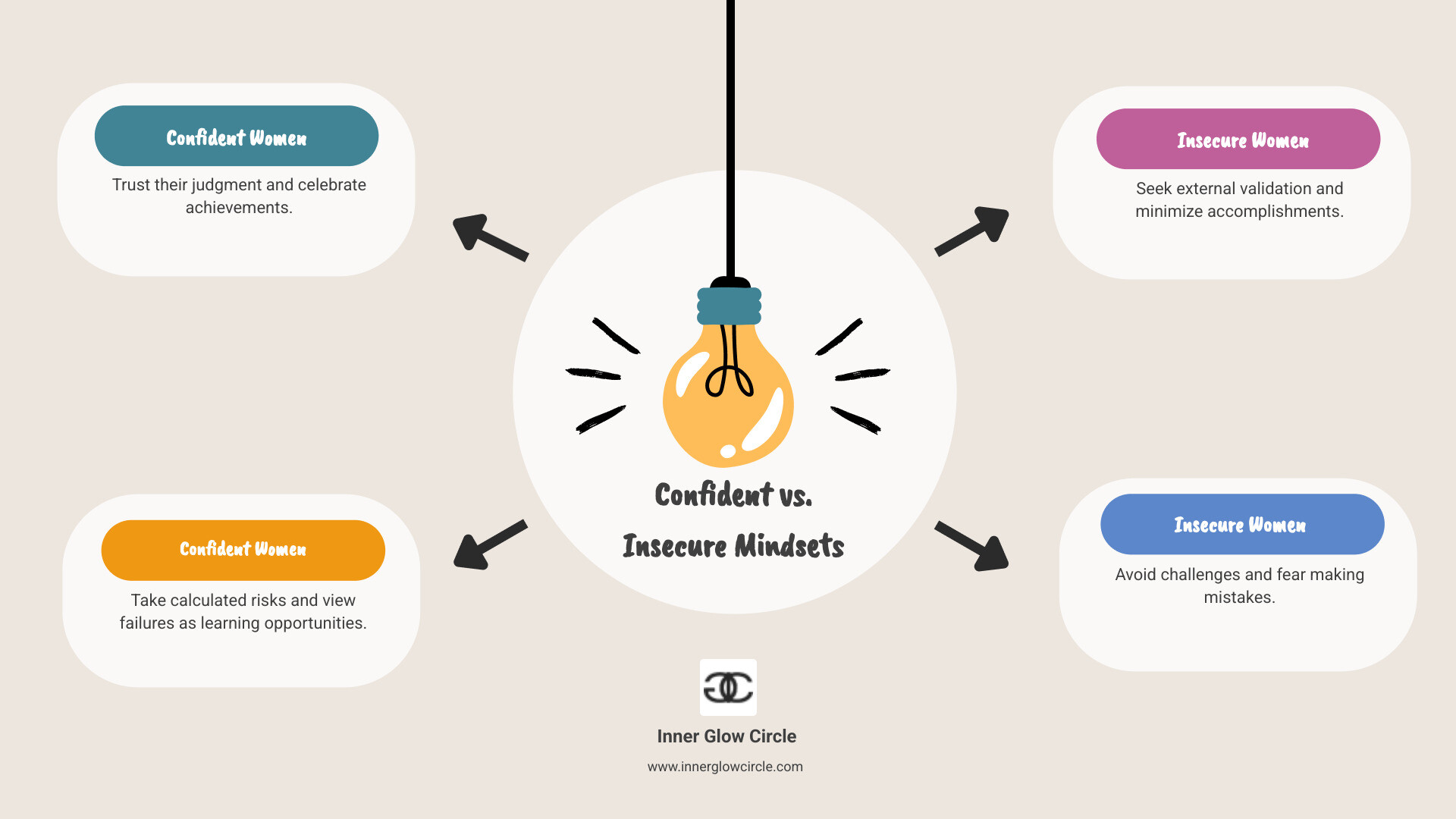
Basic Building confidence in women vocab:
Understanding the Confidence Gap: Why Women Face Unique Problems
Here’s the truth that many of us already know in our hearts: building confidence in women requires understanding why we face different challenges than men in the first place. The research backs up what we’ve experienced – there’s a real confidence gap, and it’s not just in our heads.
A Cornell University study highlighted in The Confidence Gap article found something striking: women consistently underestimate their abilities and performance, while men overestimate theirs. This isn’t just about feeling a little unsure – it has real consequences. Women set salary expectations that are 17% lower than men for identical jobs. For women of color, that gap widens to a staggering 40% compared to white men.
But why does this happen? The answer lies in a perfect storm of psychological factors, societal pressures, and cultural influences that create unique obstacles for women.
The perfectionism trap is one of the biggest culprits. While men might apply for a job when they meet 60% of the qualifications, women typically wait until they feel they meet 100%. We’ve been conditioned to believe we need to be flawless before we step forward, which keeps us stuck on the sidelines.
Imposter syndrome hits women particularly hard. Even when we achieve success, that nagging voice whispers, “You don’t belong here” or “They’re going to figure out you’re a fraud.” Statistic about 75% of female executives experiencing imposter syndrome? That’s three out of every four successful women doubting themselves despite clear evidence of their capabilities.
The Psychology of Self-Doubt
Let’s talk about what’s happening in our minds. Negative self-talk becomes like a broken record, playing the same discouraging messages over and over. “I’m not smart enough.” “I’ll mess this up.” “Everyone else knows more than me.” This internal critic doesn’t just visit occasionally – it moves in and makes itself comfortable.
Rumination makes things worse. While men might brush off a mistake and move on, women tend to replay failures and setbacks like a movie on repeat. We analyze every detail, wondering what we could have done differently. This mental loop keeps us stuck in self-doubt instead of moving forward.
Our fear of failure often stems from childhood experiences where we learned that love and approval came with conditions. Maybe we were praised for being “good girls” who never made mistakes, or criticized harshly when we didn’t meet expectations. These early messages get internalized, creating a voice that’s harder on us than any external critic ever could be.
Social media amplifies these struggles. When we’re comparing ourselves to others online, we’re seeing everyone’s highlight reel while living our behind-the-scenes reality. It’s like comparing your rough draft to someone else’s published masterpiece – of course you’ll come up short.
Societal and Cultural Influences

The confidence gap isn’t just about what’s happening in our heads – it’s also about the world we’re navigating. Media objectification and diet culture bombard us with impossible standards from childhood. We learn early that our worth is tied to how we look, not what we can do.
Double standards show up everywhere. A confident man is called a leader; a confident woman might be labeled bossy or aggressive. We face a no-win situation where being assertive risks backlash, but being too accommodating means being overlooked.
In the workplace, unconscious bias creates invisible barriers. We might not be taken seriously in meetings, our ideas might be credited to male colleagues, or we might face the assumption that we’re less committed if we have families. These experiences chip away at our confidence over time.
Gender norms tell us we should be nurturing, agreeable, and self-sacrificing. When we internalize these messages, we learn to put everyone else’s needs first, leaving little room for our own ambitions and dreams.
The salary negotiation gap reflects these deeper issues. It’s not that women are naturally worse at negotiating – it’s that we’ve been socialized to believe that asking for what we want makes us selfish or difficult.
Understanding these factors is the first step in building confidence in women. When we recognize that our self-doubt often comes from external messages we’ve absorbed rather than actual limitations, we can start to challenge and change them. The confidence gap is real, but it’s not permanent – and that’s where the real work begins.
The Inner Work: Cultivating a Confident Mindset from Within
The real magic of building confidence in women happens from the inside out. While external actions matter, the most powerful shifts come from changing how we think about ourselves and our abilities.
Here’s something amazing about your brain: it’s constantly rewiring itself through neuroplasticity. This means every time you challenge a negative thought or try something new, you’re literally building new neural pathways. Pretty incredible, right?
The foundation of inner confidence starts with developing a growth mindset – the belief that your abilities can improve through effort and learning. Instead of thinking “I’m not good at this,” you can train yourself to think “I’m not good at this yet.”
But let’s be honest – this inner work isn’t always easy. It requires self-compassion when you mess up (and you will), authenticity when the world pressures you to be someone else, and patience as you reshape that inner voice that’s been chattering in your head for years.
Overcoming Imposter Syndrome and Negative Self-Talk
That voice in your head telling you you’re not qualified? The one that whispers “they’re going to find out you’re a fraud”? You’re not alone – and you’re definitely not crazy.
Challenging your inner critic starts with catching those thoughts in action. When your brain serves up “I’m not good enough,” pause and ask yourself: “Is this actually true, or is this fear talking?” Often, our negative self-talk stems from old experiences, not current reality.
Affirmations might feel awkward at first, but they work. Mindset coach Poppy Delbridge explains that “using affirmations can retrain your subconscious to believe something new.” Start simple: “I am capable,” “I am enough,” or “I deserve success.” Say them while looking in the mirror, write them down, or even listen to hypnosis recordings to reinforce these new beliefs.
Mindfulness and journaling are powerful allies in this work. Mindfulness helps you observe your thoughts without getting swept away by them. Journaling gets those swirling fears out of your head and onto paper, where you can see them more clearly and challenge their validity.
The Inner Glow Circle coaching tools provide structured guidance for identifying where imposter syndrome comes from and specific strategies for reframing those limiting thoughts into empowering ones.
A New Perspective on Failure and Setbacks
Here’s a confidence game-changer: failure isn’t the opposite of success – it’s part of it.
When you start seeing failure as feedback, everything shifts. That project that didn’t go as planned? It’s showing you what to adjust next time. The presentation that felt awkward? It’s building your resilience muscle.
Resilience isn’t about being tough all the time – it’s about bouncing back, learning, and trying again. Every woman who looks confident today has a collection of failures behind her that taught her valuable lessons.
The biggest trap? Perfectionism. It’s not a virtue – it’s confidence kryptonite. Instead of waiting until everything is perfect (spoiler alert: it never will be), aim for progress. Celebrate finishing that rough draft, sending that imperfect email, or having that difficult conversation. These small acts of courage build real confidence.
Growth comes from challenges, not from staying in your comfort zone. The goal isn’t to avoid failure – it’s to fail forward and celebrate the courage it took to try.
The Power of Self-Care and Appearance for Building Confidence in Women

Let’s talk about something important: taking care of yourself isn’t vanity – it’s self-respect. While true confidence absolutely comes from within, how you treat your body and present yourself to the world can give you an immediate confidence boost.
Body positivity starts with treating your body well. Research shows that physical activity significantly improves self-esteem and body awareness. You don’t need to become a fitness fanatic – even a 20-minute walk can shift your energy and mood.
Healthy habits are confidence builders in disguise. When you prioritize good nutrition, get quality sleep (aim for 7-9 hours), and stay hydrated, you’re literally giving your brain and body the fuel they need to feel strong and capable.
Dressing for success isn’t about following fashion rules – it’s about personal style as authentic expression. When you wear clothes that make you feel like yourself (but maybe a slightly more polished version), it shows. There’s real power in looking in the mirror and thinking “Yes, this is me.”
Think about it: there’s a reason the post-breakup haircut is such a thing. Taking control of your image sends a message to yourself that you matter, that you’re worth the effort, that you’re ready for whatever comes next.
Self-care isn’t selfish – it’s the foundation that makes everything else possible. When you make yourself a priority, you’re building lasting confidence from the ground up.
From Insight to Action: Practical Strategies for Building Confidence in Women
Now that we’ve explored the inner work, let’s turn our attention to practical, actionable strategies. Confidence is built through consistent behavioral patterns that reduce anxiety and fear. It’s about skill development, taking small steps, and being consistent.
Leverage Your Strengths and Celebrate Achievements
One of the most effective ways to boost self-esteem is to focus on what you’re good at. Instead of fixating on weaknesses, identify and lean into your strengths—the activities you excel at and genuinely enjoy. Using your strengths not only boosts productivity and performance but also increases your confidence and engagement. You can take a strengths assessment like the VIA Character Test to pinpoint your unique qualities.
- Acknowledging Wins: We are often our own harshest critics, quick to dismiss our achievements. Regularly acknowledge and list your accomplishments, both big and small. This helps combat self-doubt and provides tangible proof of your capabilities.
- Positive Feedback File: Create a “positive feedback file” where you save emails, notes, or compliments you’ve received. When your confidence dips, review this file to remind yourself of your successes and positive impact.
- Articulating Your Value: Practice articulating your value and expertise. This isn’t about boasting, but about owning your knowledge and contributions.
Build Your Tribe: The Role of Support and Mentorship

No one builds confidence in a vacuum. Social support and mentorship play a crucial role in Building confidence in women. A study found a clear connection between higher self-esteem and positive outcomes, such as better social relationships and a sense of well-being.
- Finding a Mentor and Role Models: Seek out women who inspire you and embody the confidence you aspire to. A mentor can provide guidance, share experiences, and offer valuable feedback. Even if you don’t have a formal mentor, observing successful women and learning from their approaches can be incredibly empowering.
- Peer Support: Surround yourself with positive people who uplift and encourage you. A supportive network can provide validation, perspective, and a safe space to voice your fears. Our Inner Glow Circle community is built on this principle, fostering an environment where women empower each other.
- Asking for Help and Setting Boundaries: Confident women know when to ask for help; it’s a sign of strength, not weakness. Equally important is setting boundaries in relationships. Detaching from toxic relationships and cutting back on people-pleasing is crucial for maintaining high self-esteem. As one source noted, it can be difficult to maintain high self-esteem when your boundaries are being violated or you are constantly trying to please others.
Daily Practices for Building Confidence in Women
Consistency is key. Incorporating small, actionable practices into your daily routine can gradually build your confidence muscle.
- Power Poses: Before a big meeting or presentation, try striking a “power pose” for two minutes. Research suggests that adopting open, expansive postures can actually change your body chemistry, making you feel more confident and less stressed.
- Body Language and Eye Contact: Use confident body language by standing tall, making eye contact, and using open gestures. Making consistent eye contact signals self-assurance and engagement.
- Public Speaking Practice: Facing your fears is a powerful confidence builder. Engage in activities that push you outside your comfort zone, like public speaking or even trying a stand-up comedy class. The terror is often worse than the actual experience, and overcoming such a challenge can make future obstacles seem less daunting.
- Saying “No”: Confident women value their time and energy and know when to say “no.” This simple act of setting boundaries protects your energy and reinforces your self-worth.
- Taking on New Challenges: Small, low-lift exercises can be effective on days when larger challenges feel overwhelming. But don’t shy away from bigger challenges. Whether it’s volunteering to lead a project, learning a new skill, or trying a new hobby, stepping outside your comfort zone and successfully navigating new experiences builds competence and self-belief.
- Inner Glow Circle Confidence-Building Exercises: Our coaching programs provide specific, tested exercises designed to help you integrate these practices into your daily life, making confidence-building a natural part of your routine.
Frequently Asked Questions about Female Confidence
Let’s be honest – when it comes to Building confidence in women, we all have questions. Some we ask out loud, others we keep tucked away in our minds. Here are the ones I hear most often, along with answers that I hope will feel both practical and reassuring.
How can I feel more confident quickly before a big event?
I get it. You have that important presentation tomorrow, or you’re about to walk into a job interview, and your confidence feels nowhere to be found. While true, lasting confidence builds over time, there are some quick strategies that really work in the moment.
Power poses are your secret weapon here. Find a private space and stand like Wonder Woman for two minutes – hands on hips, feet shoulder-width apart, chin up. It sounds silly, but research shows this actually changes your body chemistry, making you feel more powerful and less stressed.
Dress the part because when you look good, you feel good. Choose an outfit that makes you feel competent and comfortable. There’s real psychology behind “dress for success” – your clothes can literally boost your confidence.
Try some quick affirmations with conviction. As mindset coach Poppy Delbridge explains, this can actually retrain your subconscious. Say things like “I belong here” or “I have valuable insights to share.”
Visualization works wonders too. Close your eyes and imagine yourself succeeding at the event. See yourself speaking clearly, feeling calm, and getting positive responses. Your brain doesn’t always know the difference between imagination and reality.
Finally, put on an energizing playlist that pumps you up, and take some deep, slow breaths to calm your nervous system. Sometimes confidence is just about showing up and acting confident until you feel it – and that’s perfectly okay.
What is the difference between being confident and being arrogant?
This question comes up a lot, and I’m glad it does. It shows you care about being authentic and respectful while still owning your worth.
Confidence is quiet strength. A confident woman trusts her judgment and knows her value, but she doesn’t need to prove it to everyone around her. She’s secure enough to admit when she doesn’t know something, and she genuinely celebrates other women’s successes. Confidence says, “I believe in myself, and I believe in you too.”
Confident women are comfortable saying no when something doesn’t align with their values or priorities. They take action despite feeling scared sometimes, because they know growth happens outside their comfort zone. They seek collaboration over competition and lift others up along the way.
Arrogance, on the other hand, is usually insecurity wearing a mask. It’s that need to constantly prove you’re better than others, to dominate conversations, or to dismiss other people’s ideas. Arrogant behavior often comes from a place of fear – fear of not being good enough, so it overcompensates by acting superior.
The key difference? How you treat others. Confident women make people feel valued and heard. Arrogant people make others feel small. If you’re worried about coming across as arrogant, that self-awareness probably means you’re not – truly arrogant people rarely question themselves that way.
Can confidence be learned, or is it an innate personality trait?
Here’s the most empowering truth I can share with you: confidence is absolutely a learnable skill. It’s not something you either have or don’t have from birth. Yes, some people might seem naturally confident, but that’s often because they learned these skills early or had experiences that built their self-belief.
Think of confidence like a muscle – the more you use it, the stronger it gets. Every time you challenge negative self-talk, step outside your comfort zone, or practice self-compassion, you’re building that muscle. Every time you celebrate your wins or set a healthy boundary, you’re strengthening it.
Building confidence in women happens through consistent behavioral patterns that reduce anxiety and fear. It’s about skill development, taking small steps, and being consistent with practices that support your self-worth.
The strategies we’ve covered – from leveraging your strengths to building supportive relationships to practicing daily confidence habits – these all work because confidence is learnable. It’s a journey of continuous growth, not a fixed destination you either reach or don’t.
Some days you’ll feel more confident than others, and that’s completely normal. What matters is that you keep showing up for yourself, keep practicing these skills, and trust that your confidence will grow stronger over time. Because it absolutely will.
Conclusion: Your Path to an Empowered, Confident Life
Here’s the beautiful truth about building confidence in women: it’s not about becoming someone you’re not. It’s about uncovering the powerful woman you already are beneath layers of self-doubt and societal conditioning.
Confidence is a journey, not a destination. Some days you’ll feel unstoppable, and other days you’ll question everything. That’s completely normal. What matters is that you keep showing up for yourself, even when it feels uncomfortable.
Think about where you were when you started reading this guide. Maybe you were like Sarah, hesitating to take that big leap. Or perhaps you were already successful but battling that nagging inner voice that whispered “you’re not enough.” Wherever you started, you now have the tools to transform those moments of self-doubt into stepping stones toward greater confidence.
The research we’ve explored paints a clear picture: when women accept their power and cultivate inner strength, everything changes. Higher self-esteem leads to occupational success, better relationships, improved well-being, and stronger coping skills. These aren’t just feel-good benefits – they’re life-changing changes that ripple out to touch everyone around you.
Your confidence journey will be uniquely yours, but the principles remain consistent. Challenge that inner critic when it tries to diminish your worth. Celebrate your wins, no matter how small they seem. Surround yourself with people who see your potential and cheer you on. Take action even when fear whispers “what if you fail?”
Every confident woman you admire started exactly where you are now. They faced the same doubts, the same societal pressures, the same imposter syndrome. What set them apart wasn’t the absence of fear – it was their willingness to move forward despite it.
At Inner Glow Circle, we’ve witnessed countless women transform their lives through our coaching programs. We’ve seen shy, self-doubting women become powerful leaders. We’ve watched women leave toxic relationships and build the careers of their dreams. We’ve celebrated alongside women who finally learned to say “no” without guilt and “yes” to opportunities that once terrified them.
This change is possible for you too. Whether you’re ready to work on your own confidence or you feel called to help other women on their journeys, Empower Your Path: Life and Career Coaching can be your next step toward an empowered life.
The world needs your voice, your talents, and your unique perspective. When you shine confidently, you give other women permission to do the same. That’s how we create lasting change – one empowered woman at a time.
Your confident life is waiting. Are you ready to claim it?


