

Why Building a Professional Network Changes Everything
To build professional network connections that support your career, focus on creating genuine relationships, not just collecting business cards. Here’s what you need to know:
Quick Steps to Build Your Professional Network:
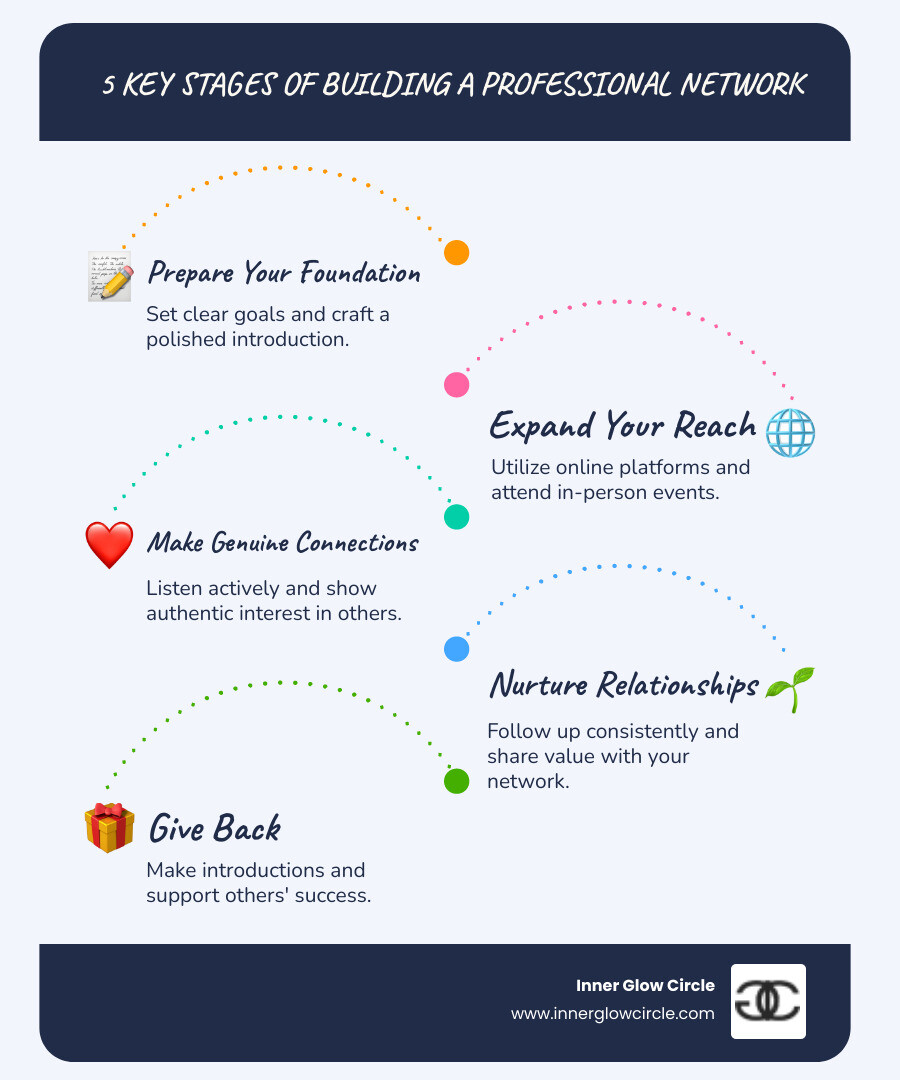
- Prepare Your Introduction – Craft a clear 30-second pitch about who you are and what you’re seeking.
- Optimize Your Online Presence – Build a complete LinkedIn profile and engage authentically with others’ content.
- Attend Strategic Events – Join professional groups, alumni networks, and industry meetups.
- Follow Up Consistently – Send personalized messages after meeting someone and check in periodically.
- Give Before You Get – Share resources, make introductions, and offer help without expecting immediate returns.
If networking feels overwhelming, you’re not alone. More than three-quarters of professionals, especially women, report connecting less frequently since the pandemic started.
But your network is a lifeline: 70-80% of job openings are never posted publicly and are filled through referrals. A referral can give you a 40% better chance of getting hired.
The good news is that networking doesn’t have to feel transactional. Effective networking is about building authentic, mutually beneficial relationships by sharing knowledge, offering support, and opening doors for each other.
Building a strong professional network means shifting from “What can I get?” to “How can I help?” It’s about finding your community, not just contacts.
The ‘Why’: Understanding the Power of a Professional Network
Investing time in networking can change your career trajectory and personal growth. When you build professional network connections, you’re creating a web of support that opens doors you didn’t even know existed.

Around 70-80 percent of all open positions are never publicly listed. This hidden job market is massive, and the only way to access it is through people you know. If you’re only scrolling job boards, you’re missing most of the opportunities.
A referral gives you a 40% better chance of getting hired over other applicants. That’s a game-changer.
Beyond landing jobs, your network is a support system for navigating career challenges and getting unbiased perspectives. As Julia Schaletzky, Ph.D., executive director at UC Berkeley, explains, “Networking opens the door to new collaborations—from working on various projects, to starting a business with someone who has similar interests and goals.”
Your network also provides mentorship, insights, and industry knowledge. It builds what McKinsey calls “social capital”—the glue that holds organizations together. This increases your job proficiency, builds personal credibility, and keeps you informed.
Consider that CEOs average 983 connections, while most professionals have around 75. With the average person changing jobs over 12 times in a career, a stagnant network won’t sustain you through those transitions.
Building a professional network means creating a community that will go to bat for you, offering support and helping you steer your career with confidence.
From Transaction to Change
The word “networking” often conjures images of awkward, forced conversations, making many people anxious. But effective networking is the opposite of transactional. It requires a mindset shift—from “what can I get?” to “how can I help?”
When you approach networking with a people-first, service-oriented mindset, you focus on providing value to others. This might mean offering support, sharing relevant information, making introductions, or simply listening.
As experts at Berkeley Extension point out, “A big part of networking is helping others; it lays the foundation for a reciprocal, mutually beneficial relationship.” When you genuinely help others, they naturally want to help you too.
Approaching people with genuine interest transforms networking from strategic maneuvering to building authentic connections. This alleviates anxiety and fosters trust and goodwill, the true currencies of a powerful network.
Here’s how to think about the difference:
| Transactional Networking Mindset | Relational Networking Mindset |
|---|---|
| Focused on immediate personal gain | Focused on mutual benefit and long-term relationships |
| Views people as means to an end | Views people as valuable individuals |
| Asks “What can you do for me?” | Asks “How can I help you?” |
| Exchanges business cards, rarely follows up | Invests in consistent follow-up and nurturing relationships |
| Feels forced, awkward, and anxiety-inducing | Feels natural, authentic, and fulfilling |

By adopting a relational mindset, you transform networking from a dreaded chore into a rewarding process of community building. When you stop worrying about what you can get and start thinking about how you can help, networking becomes genuinely enjoyable. You’re not just collecting contacts; you’re making real connections.
How to Strategically Build Your Professional Network
Building a professional network can feel intimidating, but a strategic approach with clear intentions transforms it into a rewarding process.

Before you start, clarify your networking goals. Are you seeking a mentor, career transition insights, collaborators, or just community? Clear goals provide direction.
Once you know your “why,” identify who to connect with. Avoid thinking too narrowly; a truly powerful network is diverse. Connect with peers, mentees, and seasoned leaders. Look beyond your immediate industry, as valuable connections can come from adjacent fields.
Find these people through alumni groups, professional associations, and former colleagues. Even regular contacts like clients or vendors can become valuable network connections.
The goal is to create a living web of relationships that grows with you. If you’re just starting out, A guide to networking for beginners offers excellent foundational advice.
Step 1: Prepare to build your professional network
Just as you’d prepare for an interview, preparing for networking transforms awkward encounters into confident, meaningful conversations.
First, craft your 30-second commercial: a miniature professional story about who you are, what you do, and what you’re exploring. This opens a door to conversation, rather than asking for a job. Practice different lengths (15, 30, and 60-90 seconds) for various situations to make it feel natural.
Next, research contacts before meeting. A quick look at their LinkedIn profile lets you ask informed questions and show genuine interest, which builds real connections.
Finally, prepare your essentials: a polished resume, a digital contact card, and physical business cards for in-person events.
Most importantly, set specific goals for each networking interaction, like learning about a career path or practicing conversation skills. A clear purpose keeps you focused.
Step 2: Master Digital Networking
Your digital presence is often a first impression, making it essential for modern networking.
Your LinkedIn profile is your digital handshake. Keep it complete, current, and authentic. Also, Google your name and clean up any questionable results, keeping personal social media accounts private to maintain a polished professional image.
Don’t just create a profile and wait. Real digital networking means engaging authentically. Add thoughtful comments to posts in your field and share articles with your own take. This consistent engagement positions you as a thought leader.
Always personalize connection requests. Mentioning something specific from their profile or content transforms a generic request into a real conversation, showing you’re interested in them as a person.
Building your professional network digitally is relationship-building at scale, allowing you to nurture connections consistently, even with a busy schedule.
Step 3: Excel at In-Person Events and Meetings
While digital tools are powerful, face-to-face connection is irreplaceable for picking up on non-verbal cues.
At events, focus on quality over quantity. Aim for three to five genuinely meaningful conversations. Approach people with warmth: a smile, eye contact, and a firm handshake. To start a conversation, try the ARE Method (Anchor, Reveal, Engage).
- Anchor by mentioning your shared reality: “What brought you to this event?”
- Reveal something about yourself: “I’m interested in this topic because I’m a coach.”
- Engage by asking an open-ended question: “What’s been your biggest takeaway so far?”
This method creates a real conversation, not a sales pitch.
Consider volunteering for events or joining committees. It positions you as a contributor and provides natural conversation starters.
Informational interviews are another powerful tool. In these one-on-one meetings, you ask about someone’s career journey to gain wisdom and perspective—not to ask for a job.
During these conversations, practice active listening. Ask follow-up questions to show you’re engaged. People remember how you made them feel. Here are some powerful open-ended questions:
- What do you find most rewarding about your work?
- What advice would you give someone in my position?
- What are the biggest challenges or opportunities in your industry?
- What resources or people would you recommend I connect with?
Before parting, get their contact information. Pro tip: jot a note on their business card about your conversation to personalize your follow-up. In-person connections build a unique foundation of trust, often leading to the most supportive and lasting relationships.
Nurturing Your Network: From Contact to Lasting Relationship
Making the connection is the easy part; the real work—and rewards—come from nurturing it. Think of your professional network as a garden that needs regular tending to flourish.

Follow-up etiquette is crucial. Within 24-48 hours of meeting someone, send a personalized message referencing a specific part of your conversation. This shows you were genuinely listening.
To build professional network relationships that last, stay in touch naturally. Instead of awkward “checking in” emails, find authentic reasons to reach out, like sharing a relevant article or congratulating them on a promotion. These small touches keep you on their radar.
Don’t wait months to reconnect. Your network needs consistent, brief moments of genuine connection throughout the year.
The most powerful way to nurture relationships is by consistently providing value. Shift your mindset from “what can this person do for me?” to “how can I help?” Offer your expertise, make an introduction, or provide a fresh perspective. Giving without keeping score builds trust, the foundation of any strong relationship.
This leads to becoming a connector. When you introduce two people in your network who could benefit from knowing each other, you add value and strengthen your position as a generous, thoughtful member of the community. People remember connectors when opportunities arise.
Building trust takes time but is worth it. It comes from consistency, follow-through, and genuine care. When people can count on you, your network becomes a true community.
How to build your professional network by giving back
To build lasting connections, give more than you take. The strongest networks are built by professionals who lead with generosity, not those keeping score.
Making introductions is a high-impact way to give back. Connecting two people who could benefit from meeting takes minutes but can create enormous value and positions you as a helpful connector.
Sharing resources is also powerful. Sending a relevant podcast, tool, or article shows you’re thinking of them without asking for anything in return, turning casual contacts into genuine relationships.
Proactively offer your help when you see a contact facing a challenge. Brainstorm solutions, review a proposal, or just lend an ear. To build a community that will “go to bat” for you, you must first go to bat for them.
Finally, celebrate others’ success. A genuine congratulations on a promotion or new launch takes seconds but reinforces your connection and shows you’re paying attention.
This continuous cycle of reciprocity transforms networking from a chore into meaningful community building, turning your network into a true support system.
Frequently Asked Questions about Building a Professional Network
Questions and doubts are normal when you work to build professional network connections. Let’s address common concerns about personality and time.
How do I network if I’m an introvert or have social anxiety?
If networking sounds like a nightmare for an introvert, you’re not alone. Many successful networkers are introverts; you don’t have to be a social butterfly.
The secret is to focus on one-on-one connections. Coffee meetings or virtual chats allow for the deep conversations where introverts shine, which is less draining than large events.
Starting online is a great strategy for social anxiety. Platforms like LinkedIn allow you to craft messages at your own pace and build connections from the comfort of your home.
Prepare your talking points before any networking event. Having a practiced 30-second introduction and a few questions ready can dramatically reduce anxiety and free you up to connect.
Set small, achievable goals, like having one quality conversation at an event or sending two personalized connection requests per week. Celebrate these small wins.
Networking is actually about listening, not talking—a skill at which introverts excel. Ask thoughtful questions and listen genuinely. This takes the pressure off and helps form deeper, more authentic connections.
How much time should I spend networking each week?
The time you spend networking depends on your goals, but consistency matters far more than intensity. You don’t need to dedicate entire days to see results.
For most professionals, blocking 1-2 hours per week for networking makes a real difference. Use this time for follow-ups, engaging on LinkedIn, or attending a virtual event.
The key is integrating networking into your routine. Spend 15 minutes each morning on LinkedIn or schedule one informational interview every two weeks. Small, regular touchpoints keep you connected without being overwhelming.
Focus on quality interactions, not quantity. Two meaningful conversations are better than ten superficial ones. Intentional networking makes even limited time highly effective.
Treat networking as habit formation. Small, consistent efforts will compound over time, building a robust, supportive network.
How do I measure the success of my networking efforts?
Measuring networking success isn’t like tracking sales, but it is possible. You just need to look at the right indicators.
Start by examining the quality of your relationships. Are they deepening over time? Do you feel comfortable asking for advice, and do they reach out to you? A shift from formal to supportive conversations indicates success.
Pay attention to referrals—both given and received. A healthy, reciprocal network involves a two-way flow of value, a clear sign your efforts are working.
Consider the knowledge and insights you’ve gained. Learning about your industry and expanding your perspective are direct benefits of successful networking.
Look at your increased confidence and sense of support. Having a community to lean on for advice and encouragement is one of the most valuable outcomes of a strong network.
Finally, while it shouldn’t be your only metric, new opportunities matter. Hearing about unlisted jobs or getting collaboration offers are tangible signs your network is working.
The real measure of a successful network is how it supports your personal and professional growth. If you feel more connected, informed, and empowered, you’re doing it right.
Conclusion: Your Network is Your Community
Remember Sarah, the aspiring coach paralyzed by self-doubt? We’ve learned that building a professional network isn’t about being the most outgoing person or collecting business cards. It’s about finding your people.
Your network is your community—a group that celebrates your wins, offers perspective, and opens doors. They provide advice, support, and access to unlisted opportunities. The long-term value of these relationships is immeasurable.
Networking is a continuous process, not a destination. Your network evolves as you and your career grow and change. That’s exactly how it should be.
We’ve covered the practical steps, but the real change comes from a mindset shift. When you move from “what can I get?” to “how can I help?”, networking stops being a chore and becomes genuine human connection.
At Inner Glow Circle, we’ve witnessed the power of authentic connection. Our community is built on women supporting each other, and your professional network operates on the same principle. It’s about relationships that lift everyone, not transactions.
So start where you are with small, consistent actions: send a personalized LinkedIn message, reach out for coffee, share a relevant article, or celebrate a connection’s success. These actions build the foundation of a thriving professional community.
Your network is waiting for you to engage with it. Not perfectly, but authentically, with a willingness to both give and receive support.
Ready to take the next step in your career journey with confidence and a supportive community by your side? At Inner Glow Circle, we understand the transformative power of having the right people in your corner. Learn more about how our career development coaching services can help you build the confidence and skills to create the professional life you’ve been dreaming about.
Because here’s the truth: you don’t have to build your career alone. Your community is out there, ready to support you. All you have to do is take that first step.


